
Algarve Travel Guide introduces one of Europe’s most spectacular coastal regions, where golden limestone cliffs rise above turquoise Atlantic waters and hidden sea caves shape the shoreline. The Algarve is often part of a wider Portugal trip, but the region itself offers enough variety for a complete and independent travel experience.
This Algarve Travel Guide covers everything you need to plan the perfect trip: the best beaches, where to stay, how to get around, hidden coves, travel costs, safety tips, weather advice, and practical planning insights.
If you are visiting the Algarve for the first time, this guide will help you avoid common mistakes and experience far more than just postcard views.
One of the most surprising things about the Algarve is how quickly the landscape changes. Within a short drive, you can move from busy beach towns to quiet cliffs and hidden coves that feel completely untouched.
Why Visit the Algarve?
The Algarve consistently ranks among the best beach destinations in Europe — and for good reason.
Here you’ll find:
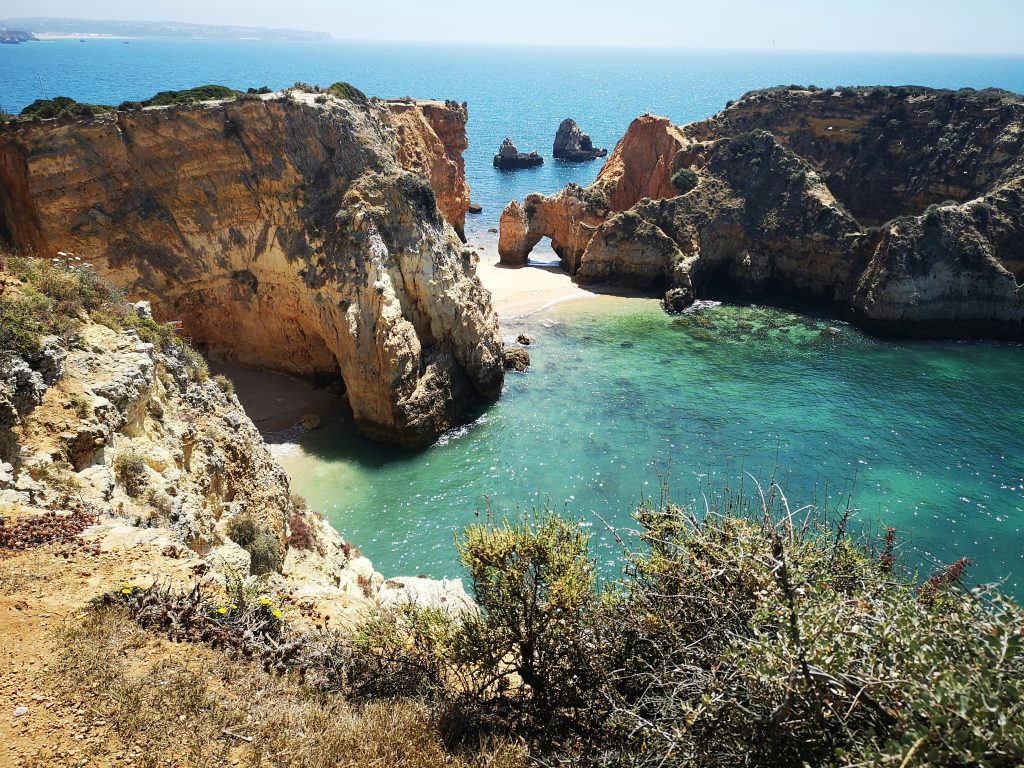
• Towering limestone cliffs and natural sea arches
• Crystal-clear Atlantic waters
• Over 150 beaches along the coastline
• More than 300 days of sunshine per year
• Affordable dining compared to Spain’s Costa del Sol
• A balance between luxury resorts and traditional fishing villages
The Algarve suits couples, families, surfers, digital nomads, photographers, and travelers planning a scenic Portugal road trip. The Algarve is easy to reach and well connected, making it one of the most accessible coastal regions in Portugal.
How to Get to the Algarve
Faro Airport (FAO)
The Algarve’s main airport is Faro International Airport. It connects to most major European cities and is the easiest entry point to the region.
From Faro Airport, you can:
• Rent a car (recommended)
• Take a train along the coast
• Use regional buses
• Book a private transfer
Train to the Algarve
Portugal’s rail system connects Lisbon to Faro in approximately 3 hours. Train connections also link the Algarve with other major parts of the country, making regional travel relatively straightforward.
Trains continue west toward Lagos, though they are slower than driving.
Bus Connections
Long-distance buses from Lisbon and Porto reach Algarve towns, but they are less flexible for beach exploration.
Getting Around the Algarve (Essential Advice)
Rent a Car
If there is one essential travel tip for the Algarve, it is this: rent a car.
Public transportation between towns and beaches is limited and slow. Many of the Algarve’s most spectacular beaches are only accessible by car.
Without a rental car, you may miss hidden coves, cliff viewpoints, and less crowded coastal areas.
Toll Roads (A22 Motorway)
The A22 highway operates with an electronic toll system.
When renting a vehicle, request a Via Verde device for automatic toll payments to avoid complications later.
Algarve Travel Guide: Best Beaches
Praia da Marinha
Often listed among Europe’s most beautiful beaches, Praia da Marinha is famous for its golden cliffs and dramatic rock arches rising from clear Atlantic water. Praia da Marinha is considered one of the most visually impressive beaches in Europe due to its dramatic cliffs and natural rock formations.
Benagil Cave
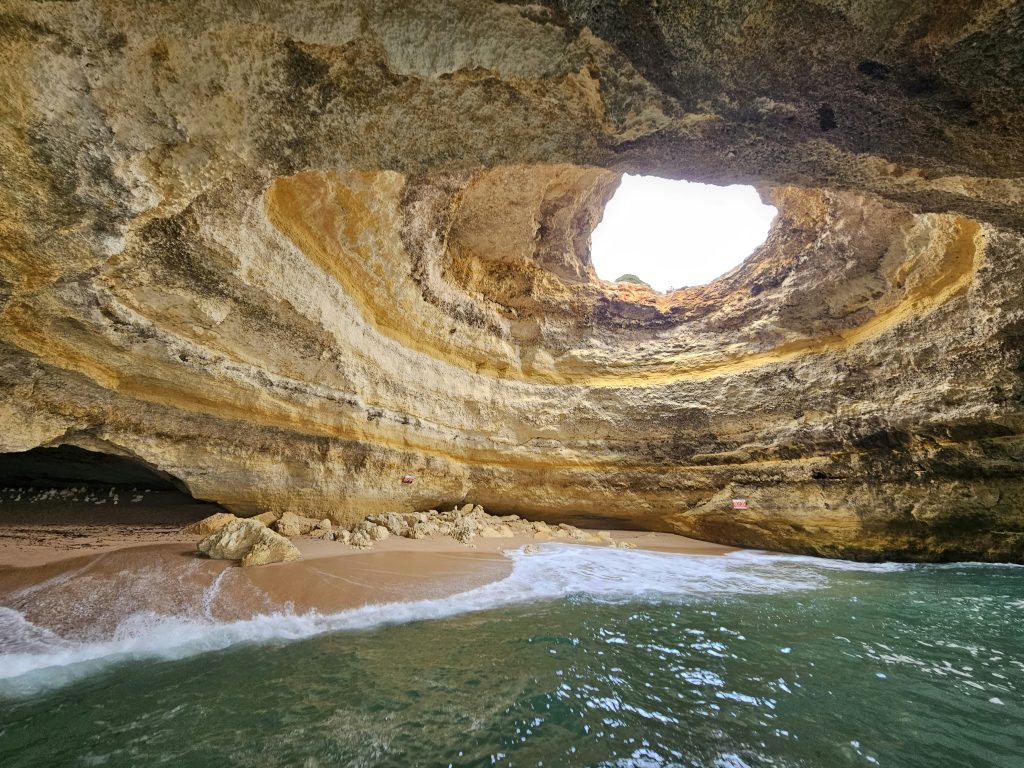
The Algarve’s most photographed sea cave features a circular skylight carved into its roof. Access is possible only by kayak, boat, or paddleboard.
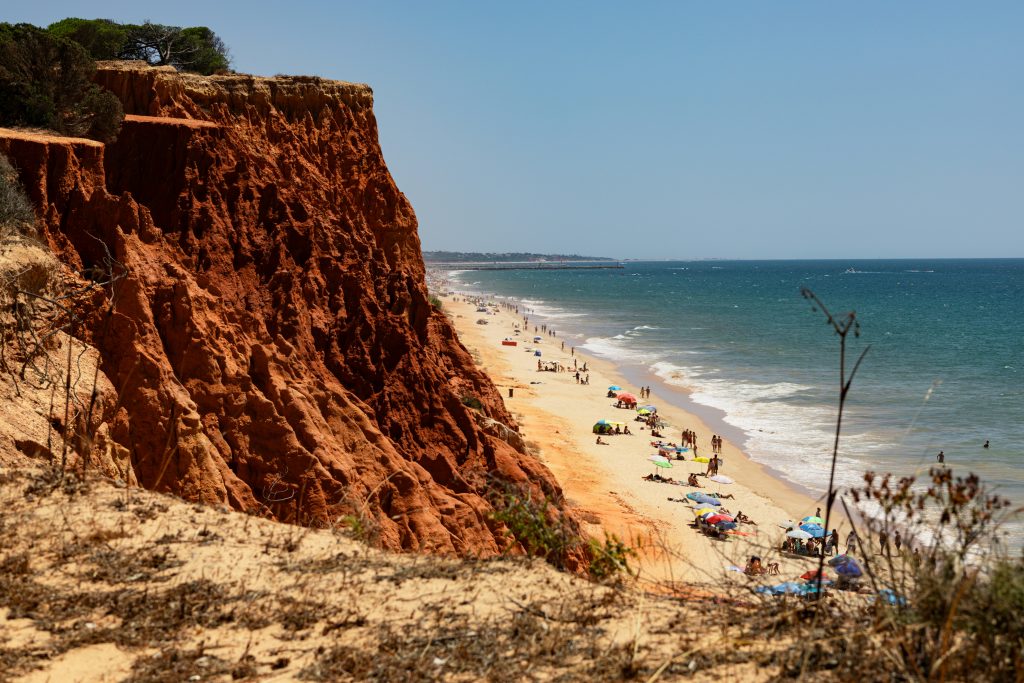
Praia da Falésia
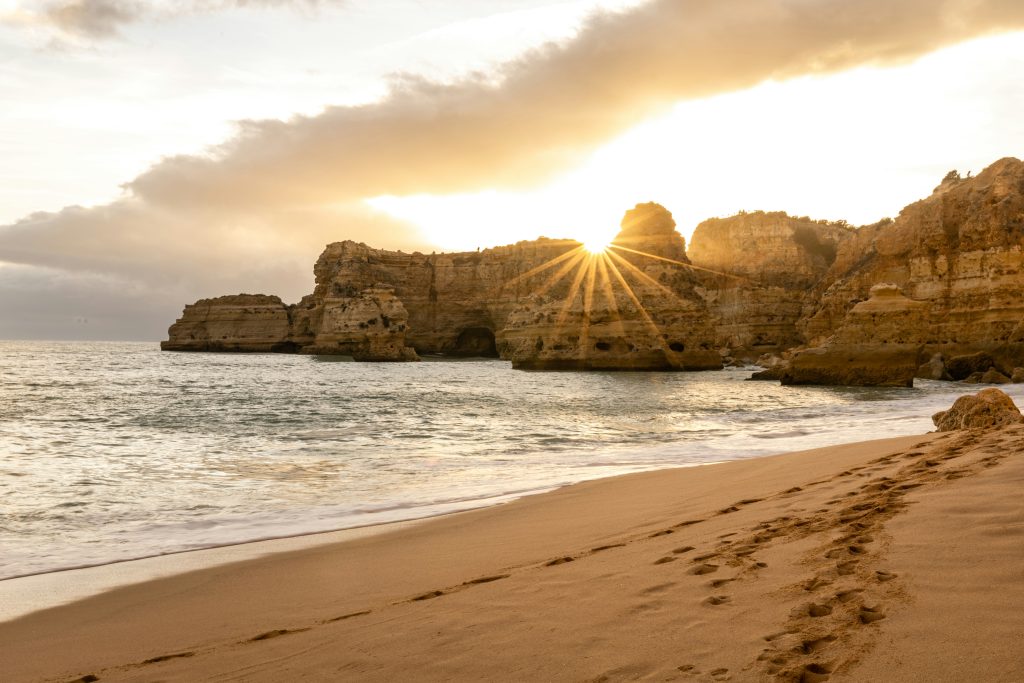
A long, expansive beach backed by red and orange sandstone cliffs — ideal for long walks.
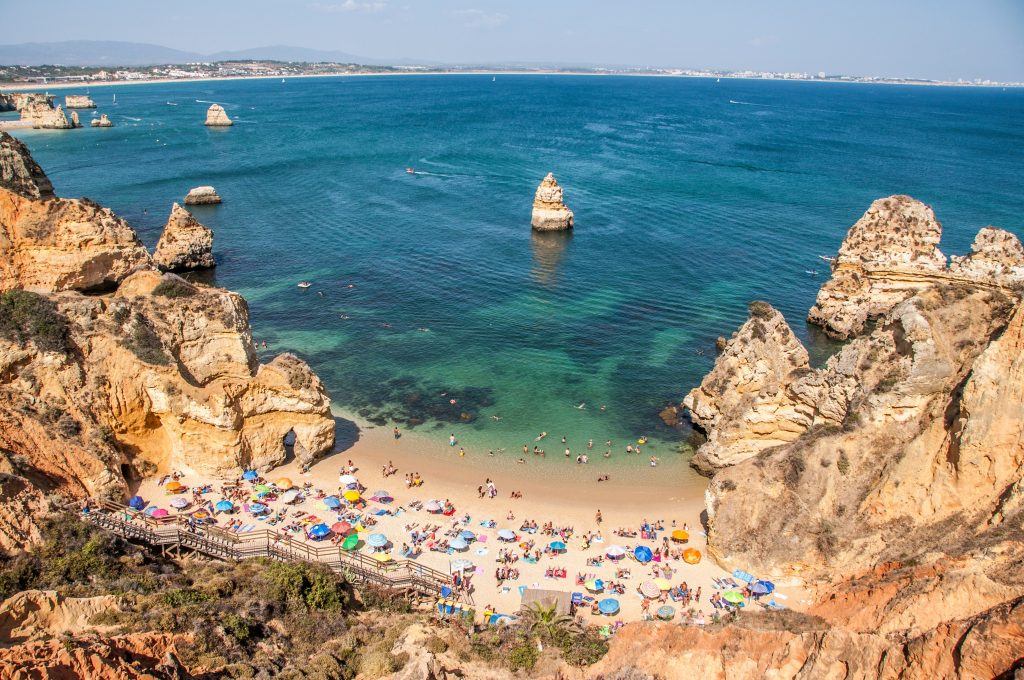
Praia do Camilo
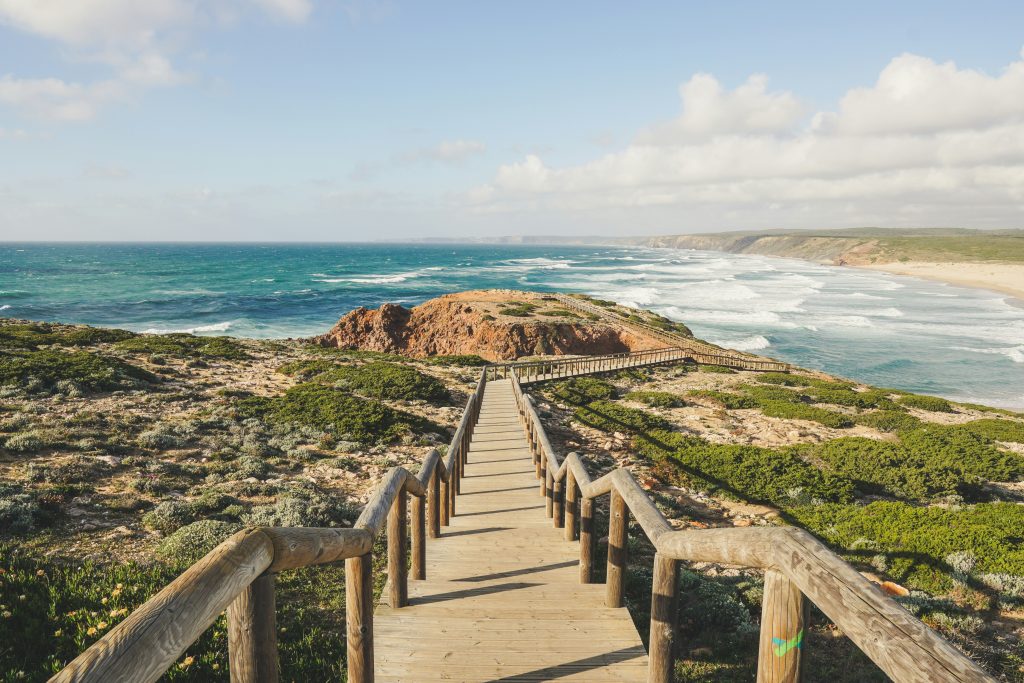
A smaller, picturesque beach reached via a long wooden staircase near Lagos.
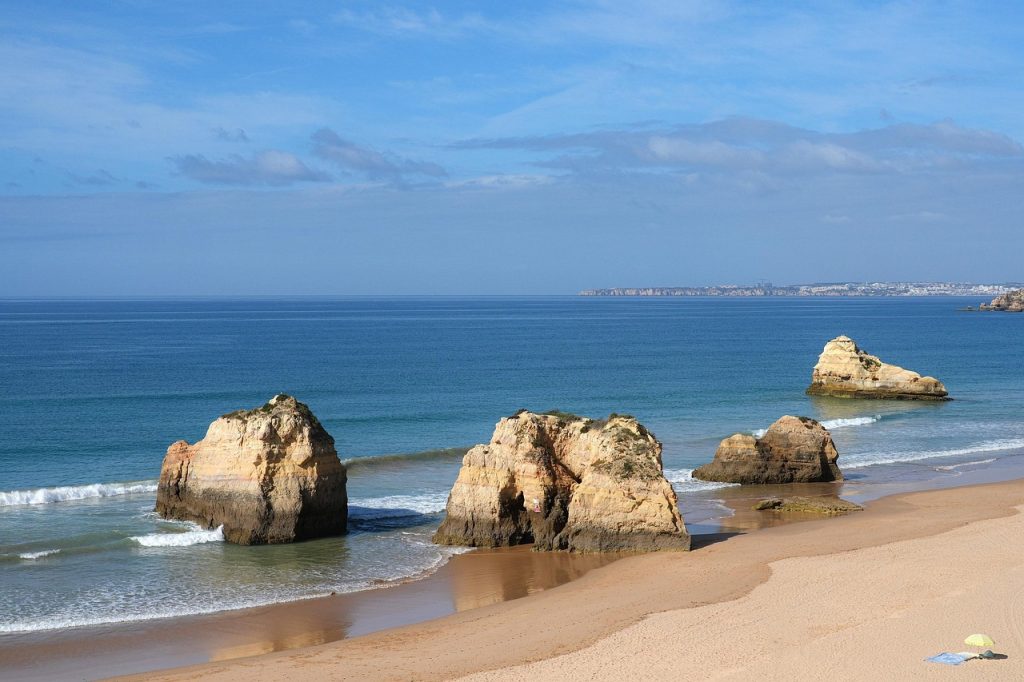
Praia da Rocha
A lively beach near Portimão with restaurants and summer atmosphere.
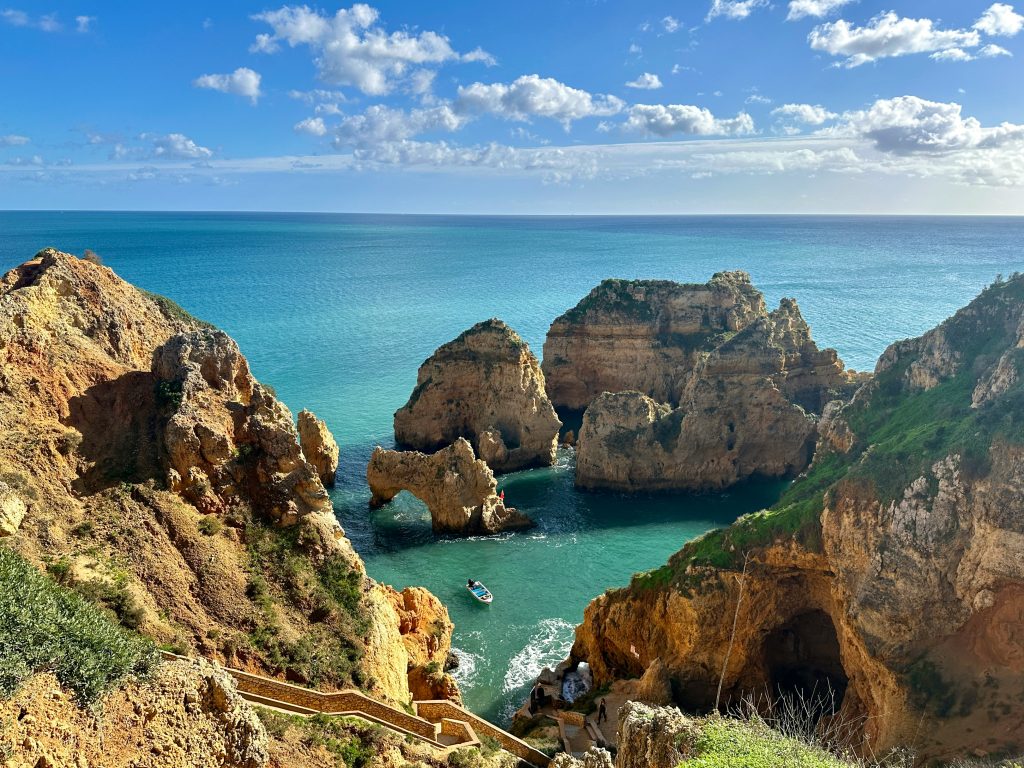
Ponta da Piedade
Not a traditional sunbathing beach, but a coastal landscape of rock formations and sea stacks near Lagos.
Prettiest Towns in the Algarve
Lagos
The most popular base in the Algarve. Historic center, nightlife, and proximity to Praia Dona Ana and Camilo.
Albufeira
Known for resorts and nightlife. Busy in summer.
Tavira
More traditional and relaxed, with Portuguese character and access to Ria Formosa beaches.
Carvoeiro
Compact seaside village close to Benagil Cave.
Sagres
Surf-focused town at mainland Europe’s southwestern edge.
Faro
Gateway city with a charming old town but not the best base for cliff beaches.
Algarve Itinerary Ideas
3 Days in the Algarve
Day 1 – Lagos and Ponta da Piedade
Day 2 – Benagil Cave and Praia da Marinha
Day 3 – Tavira or Albufeira
5 Days
Add Sagres and a scenic coastal drive.
7 Days
Explore hidden beaches, inland villages, and Ria Formosa Natural Park.
Algarve Food & Drinks
Cataplana
Traditional seafood stew cooked in a copper pot unique to southern Portugal.
Frango Assado (Piri-Piri Chicken)
Originating in the Algarve, this spicy grilled chicken is especially famous in the town of Guia.
Vinho Verde
Light, young Portuguese wine — perfect for hot summer days.

Travel Costs in the Algarve
Budget hotel: €50–100 per night
Mid-range hotel: €120–250 per night
Kayak tour (Benagil): €25–40
Daily food budget: €25–60
Estimated 5-day mid-range trip: €700–1,100 per person (excluding flights).
Budget Tips
Look for “Prato do Dia” menus for €10–12 including drink and coffee.
Supermarkets like Pingo Doce and Continente offer excellent local wines starting at €3.
Best Time to Visit the Algarve
Spring (April–June) – Warm and quieter
Summer (July–August) – Peak beach season
Autumn (September–October) – Warm sea and fewer tourists
Winter (November–March) – Mild, ideal for long stays but not swimming
Avoid August if possible. June and September offer the best balance of weather and crowd levels. These months offer the best balance between weather, crowds, and overall travel conditions in the Algarve.
Important Natural Factors to Know
The Atlantic Ocean Is Cold
Even in summer, the Atlantic remains significantly colder than the Mediterranean.
Tides in the Algarve
Tidal changes are noticeable throughout the day.
Some beaches and caves, including Benagil, are accessible only at low tide.
The Atlantic Breeze
Strong coastal winds are common, increasing sun exposure risk. High SPF sunscreen is essential.
Outdoor Highlights
Seven Hanging Valleys Trail
One of Europe’s most scenic coastal hikes, connecting Praia da Marinha and Praia de Vale Centeanes.
Sunset in Sagres
Watch the sun drop into the Atlantic at Sagres lighthouse — one of Europe’s most dramatic sunset points.
Cliff Safety in the Algarve
The cliffs are made of sandstone and are prone to erosion.
Respect warning signs.
Avoid standing at cliff edges.
Do not sit directly under unstable rock formations.
Is the Algarve Safe?
Yes. The Algarve is one of Portugal’s safest regions.
Violent crime is rare. Most risks involve minor theft during peak season or natural hazards near cliffs.
Algarve vs Spain: Is It Cheaper?
Compared to Mallorca or Costa del Sol, the Algarve is often slightly more affordable.Travelers comparing destinations may also consider Spain’s Balearic Islands or the volcanic landscapes of the Canary Islands.
Food and wine are generally cheaper, especially outside peak season.
Common Mistakes Tourists Make in the Algarve
• Not renting a car
• Staying only in Albufeira
• Visiting in August without planning
• Ignoring tide schedules
• Booking Benagil too late
• Underestimating sun and wind
• Taking risky photos near cliff edges
Avoiding these mistakes significantly improves your trip.
Frequently Asked Questions
Is the Algarve worth visiting?
Yes — it offers some of Europe’s most dramatic coastal scenery.
Is the Algarve expensive?
Moderate compared to Spain and Italy.
How many days do you need?
3–5 days minimum.
Is it family-friendly?
Yes — many beaches have lifeguards and safe access.
Explore Portugal Travel Guides
If you are planning a wider trip through Portugal, these travel guides may help:
More Mediterranean Coastal Destinations
If you enjoy dramatic coastlines and island scenery, these destinations may inspire your next trip:
- Amalfi Coast Travel Guide
- Sicily Travel Guide
- Sardinia Travel Guide
- Balearic Islands Travel Guide
- Canary Islands Travel Guide
Travel conditions, tide times, access to beaches, and opening hours can change depending on the season, so it is always recommended to check current information before your trip.
Final Thoughts
The Algarve is far more than just a summer beach destination. From dramatic limestone cliffs and hidden sea caves to charming coastal towns and scenic road trips, this region offers one of the most diverse travel experiences in Portugal.
This Algarve Travel Guide is designed to help you choose the right base, rent the right car, and plan around tides and seasonality for a smoother and more rewarding trip.
For travelers seeking sunshine, Atlantic scenery, and some of the best beaches in southern Portugal, the Algarve remains one of Europe’s most compelling coastal destinations in 2026.