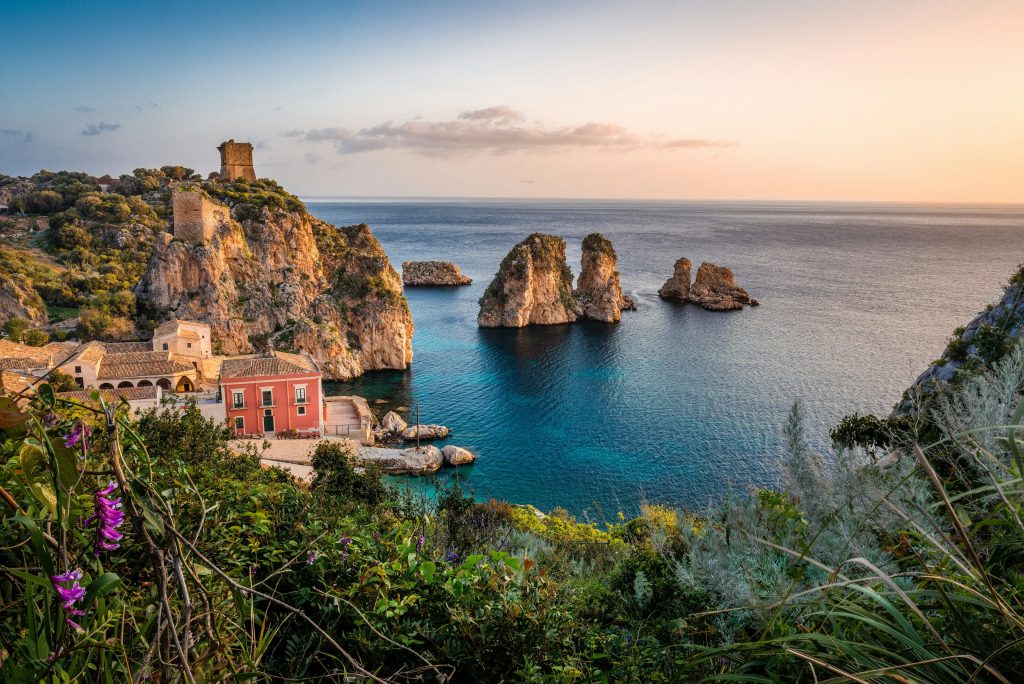
This Sicily Travel Guide begins with one simple truth: Sicily is not an island you simply travel to. It is an island you enter, slowly absorb, and carry with you long after you leave.
This is the Mediterranean at its most intense.
Travelers exploring southern Italy often combine Sicily with destinations such as Rome, Tuscany, or the dramatic coastline of the Amalfi Coast.
Sicily is layered, emotional, chaotic, ancient, and unforgettable. Greek temples stand under active volcanoes. Arab markets pulse next to Norman cathedrals. Quiet hill towns contrast with loud, raw cities. Food is bold, life is slow, and history is everywhere.
The island feels closer to antiquity than modern Europe, closer to North Africa than Northern Italy, and closer to instinct than routine.
You can explore Greek ruins at sunrise, swim beneath volcanic cliffs by midday, eat some of the richest food in Europe at night, and still feel like you’ve only touched the surface.
This complete Sicily travel guide covers where to stay, what to book early, how to get around, real travel costs, must-see places, volcanoes, traditional food, cultural details, hidden facts, photography spots, day trips, local rules, and the most common mistakes travelers make.
Why Visit Sicily?
Sicily is one of Europe’s most powerful destinations because of its depth.
- Multiple civilizations layered in one place (Greek, Roman, Arab, Norman)
- Dramatic landscapes: volcanoes, cliffs, beaches, mountains
- One of Italy’s strongest and most distinctive food cultures
- Emotional cities mixed with slow rural life
- Generally lower prices than Northern Italy
- A culture that feels independent, proud, and deeply rooted
For this reason, the island rewards travelers who accept imperfection, slow down, and remain curious. What surprises many travelers is how different Sicily feels from the rest of Italy — slower, louder, warmer, and far less predictable.
Sicily Is Not One Destination (Very Important)
The biggest mistake travelers make is treating Sicily as one experience.
In reality, the island changes completely depending on where you are:
- East Coast: volcanoes, baroque cities, dramatic coastlines
- West Coast: Arab influence, historic ports, raw energy
- South: ancient ruins, beaches, rural landscapes
- Interior: hill towns, silence, tradition, authentic Sicily
- Islands: isolation, black sand, wild nature
Choosing the right base matters far more than choosing the “best hotel. ”This is why Sicily works best as part of a broader Italy itinerary, especially for travelers who also want to experience Rome or the slower countryside rhythms of Tuscany.
Sicily Travel Guide: Best Areas to Stay
East Coast – Catania & Taormina (Energy and Scenery)
Best bases: Catania or Taormina
Mount Etna dominates the landscape. You’ll find volcanic beaches, baroque cities, strong nightlife, and intense food culture.
- Catania: raw, loud, authentic, alive
- Taormina: elegant, scenic, expensive, polished
Both are worth visiting — they offer opposite versions of Sicily.Travelers deciding between regions of southern Italy may also compare Sicily with the coastal towns of the Amalfi Coast or the inland landscapes of Tuscany.
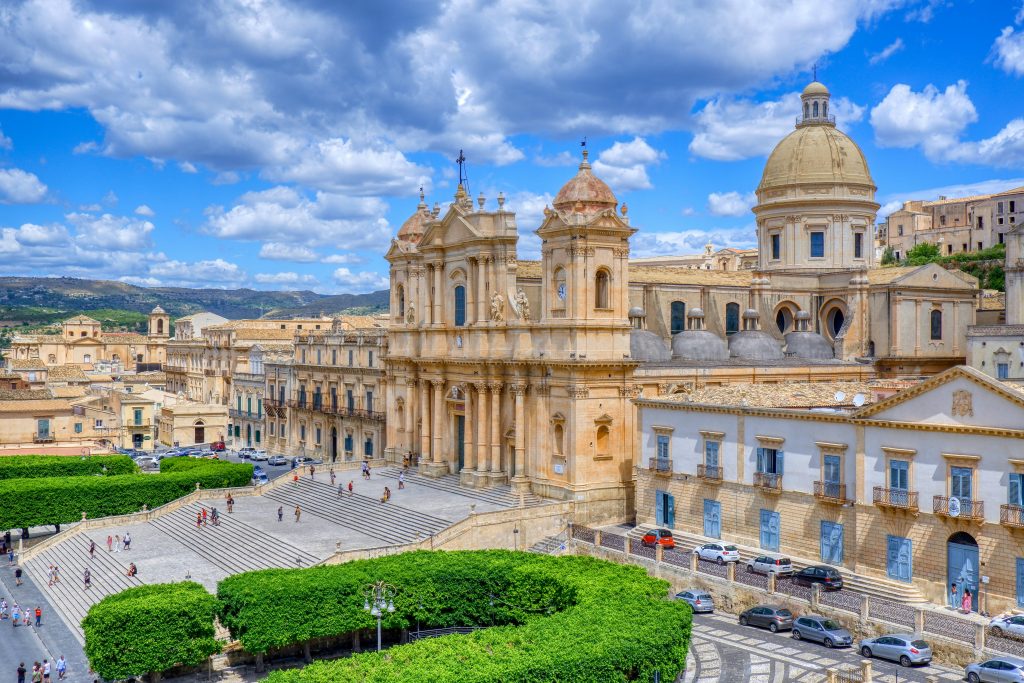
South-East – Noto, Modica & Ragusa (Baroque and Food)
Best bases: Noto or Modica
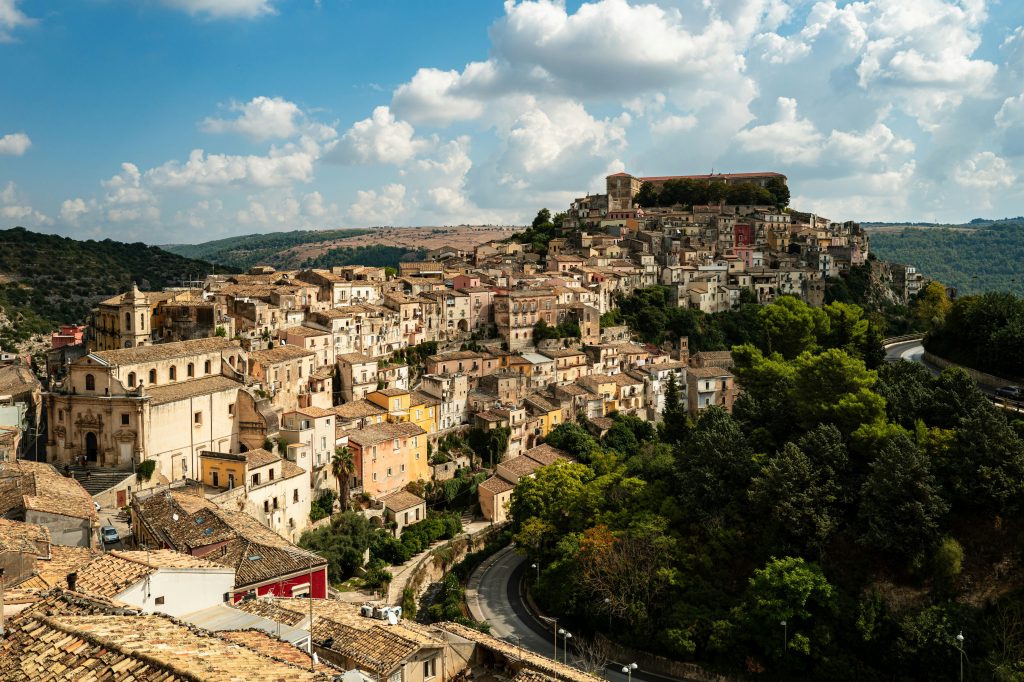
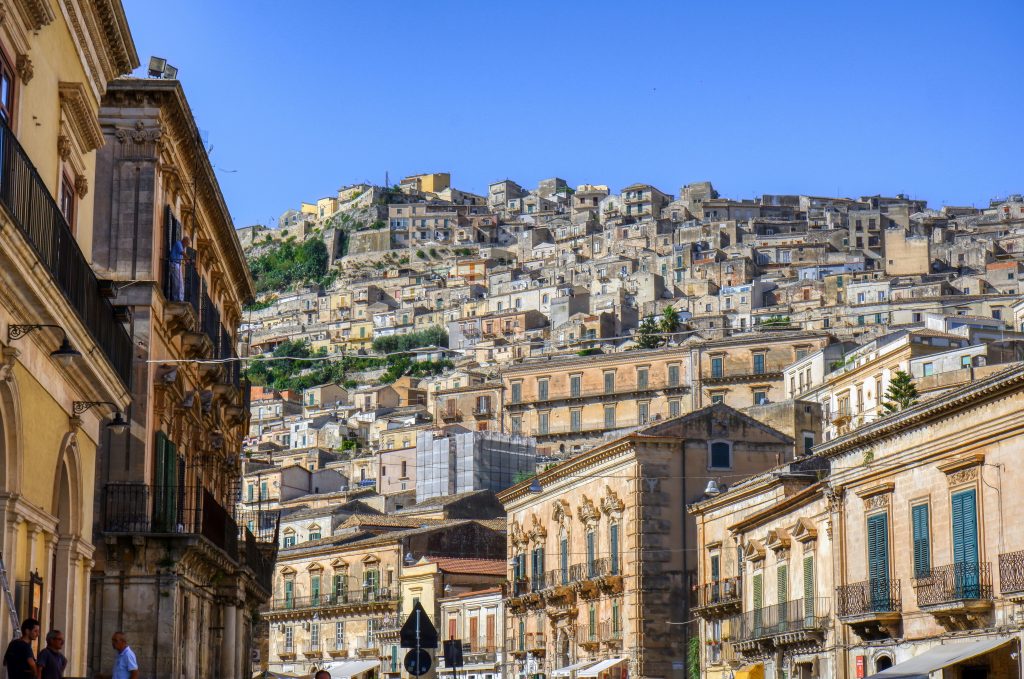
UNESCO-listed baroque towns, some of the island’s best food, slower rhythms, and stunning architecture.
Perfect for culture lovers and slow travelers.
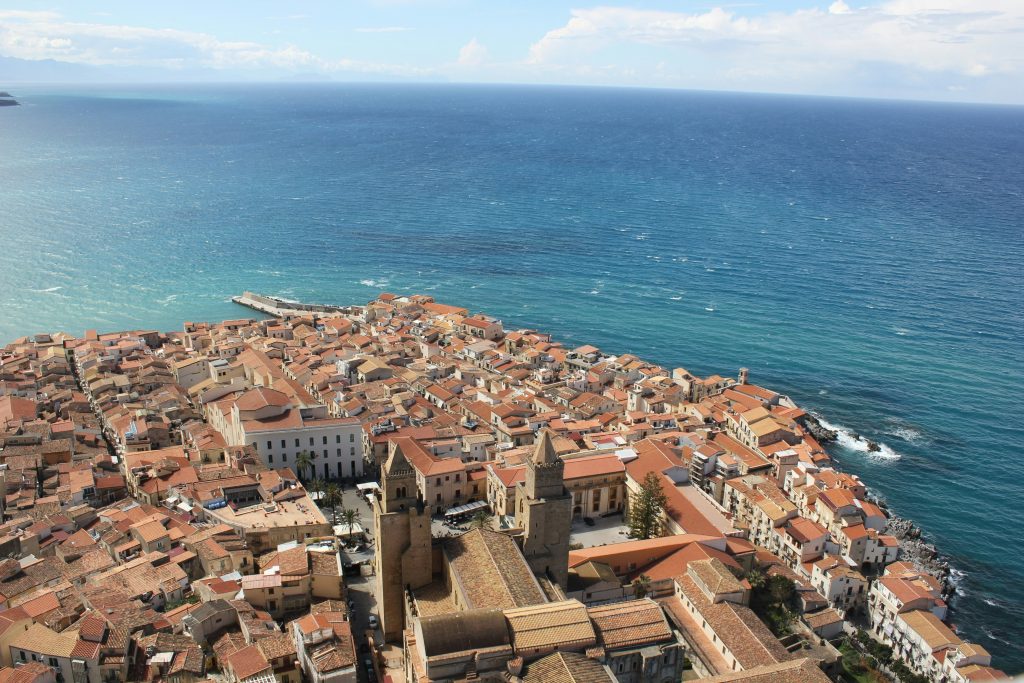
West Coast – Palermo & Trapani (History and Chaos)
Best bases: Palermo or Trapani
Arab-Norman architecture, historic markets, and Sicily’s most intense street life.
Palermo is loud, emotional, chaotic, and unforgettable — the island’s raw soul.
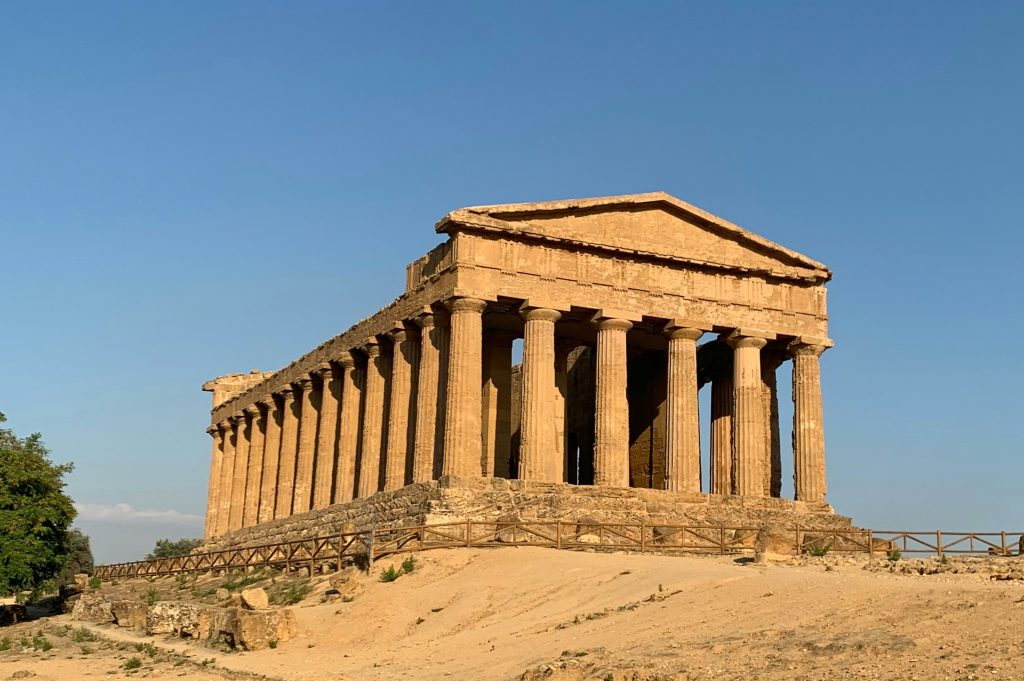
South Coast – Agrigento Area (Ancient Sicily)
Best base: Agrigento
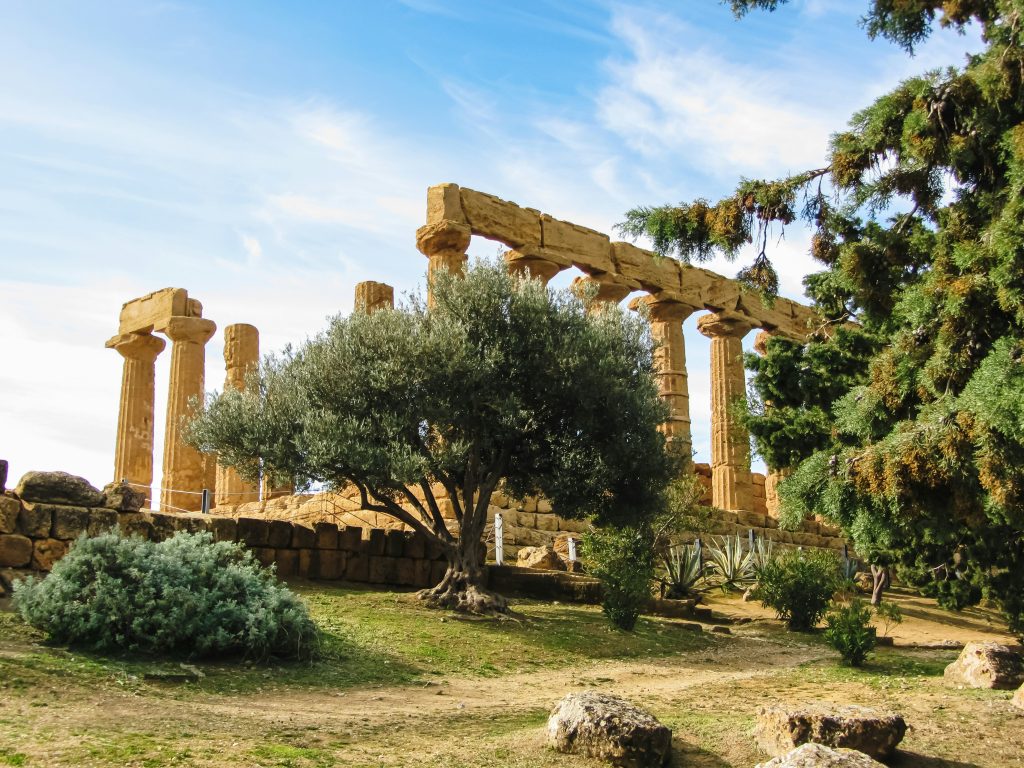
Home to the Valley of the Temples, quieter beaches, and ancient Greek ruins overlooking the sea.
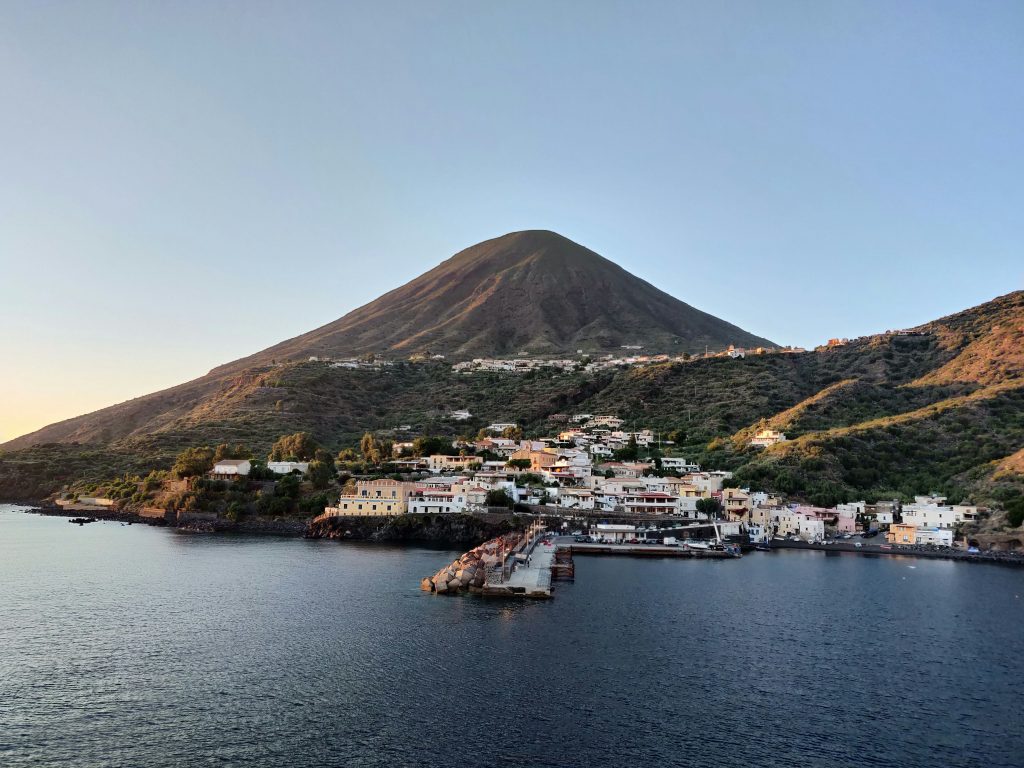
Aeolian Islands (Wild Nature and Volcanoes)
Best bases: Lipari or Stromboli
Volcanic islands, black sand beaches, isolation, and dramatic coastlines.
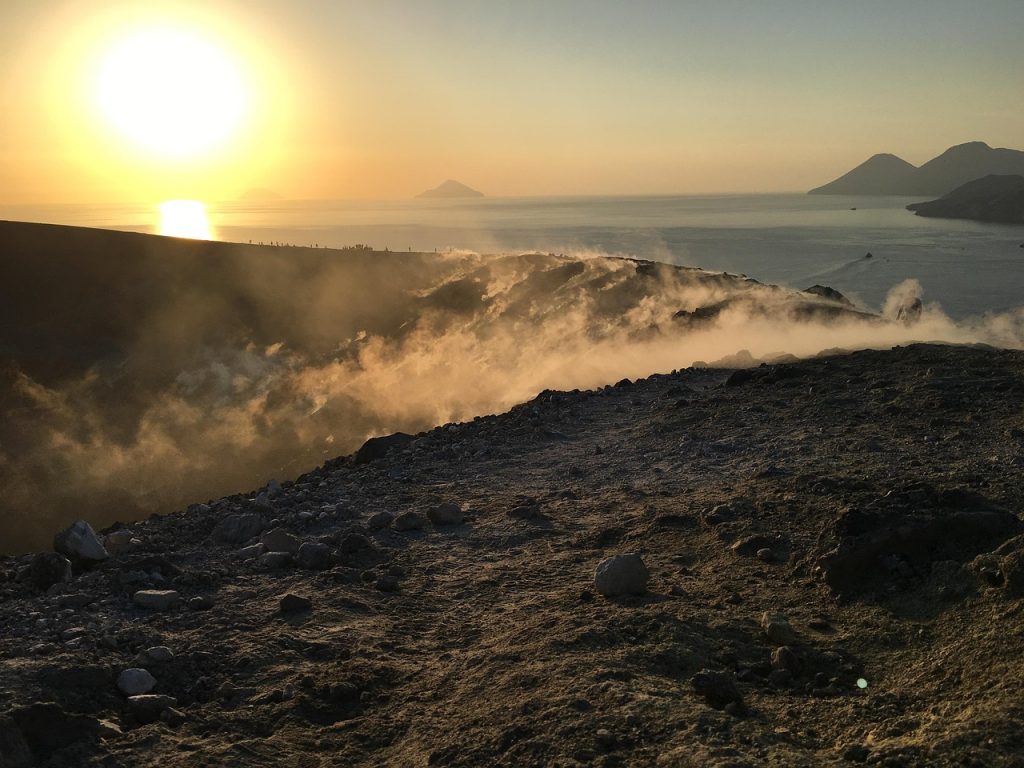
Stromboli’s volcano erupts regularly.
Sicily Travel Guide: Top Places to Visit
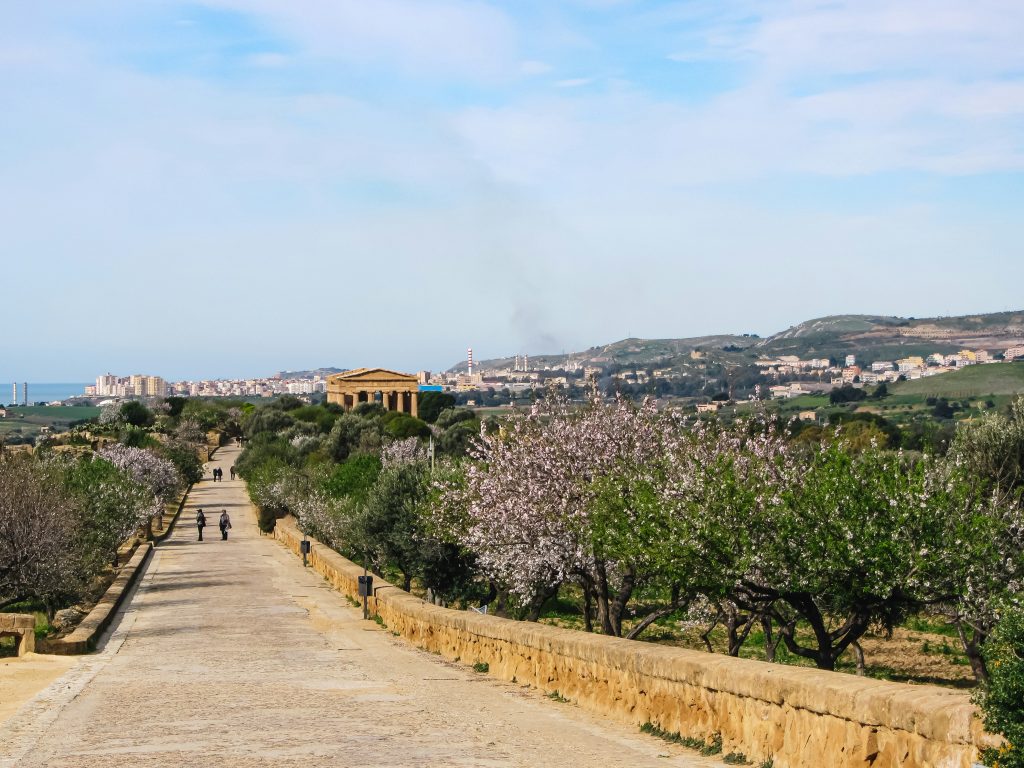
- Valley of the Temples (Agrigento)
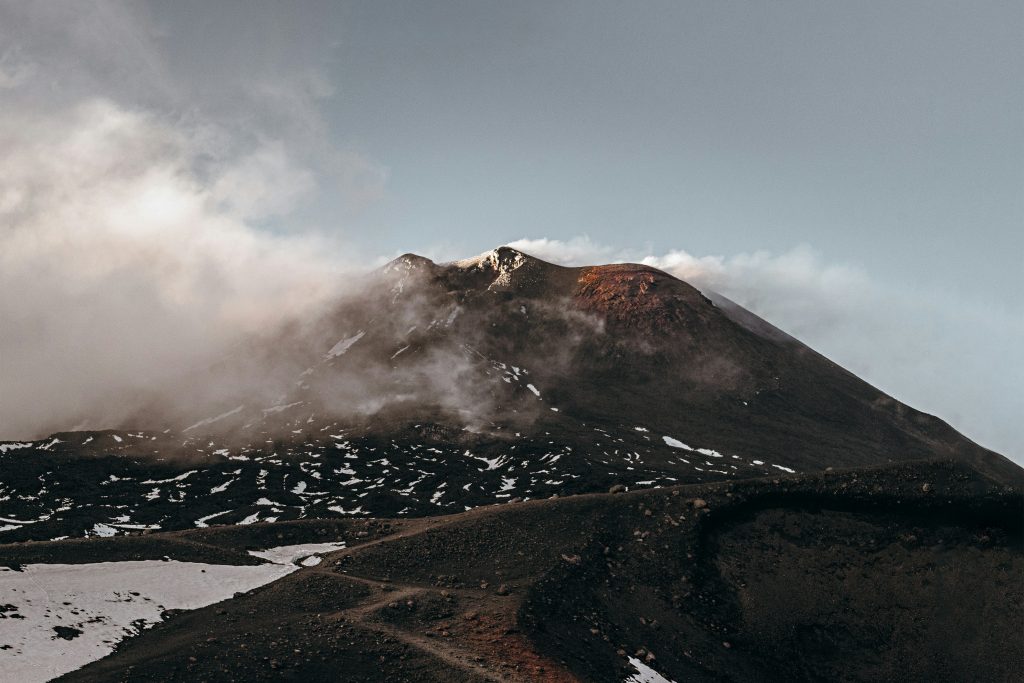
- Mount Etna
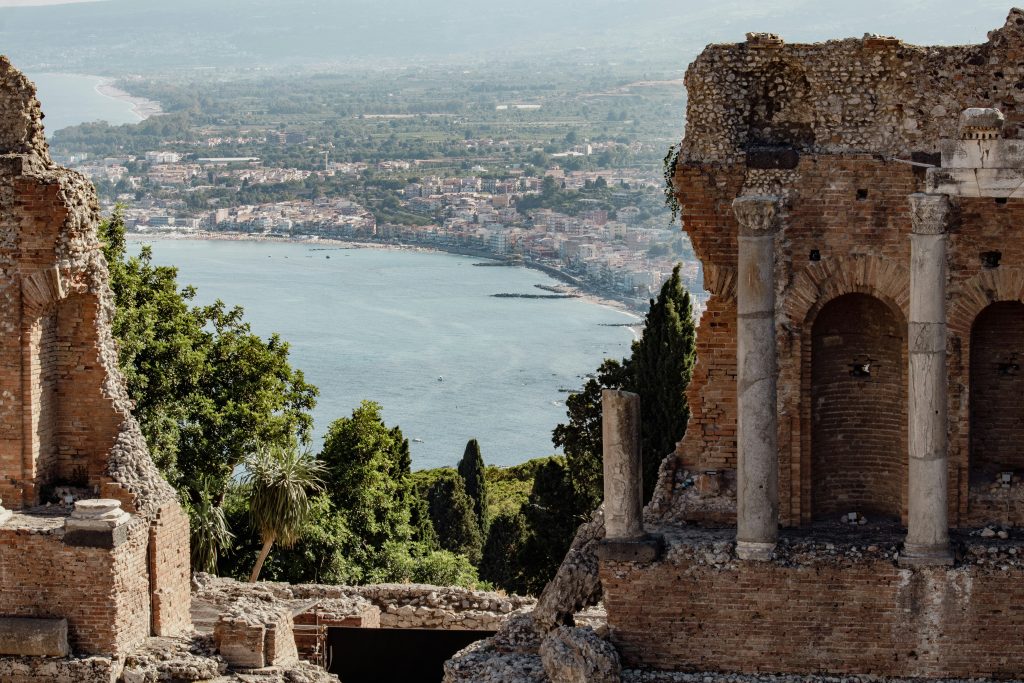
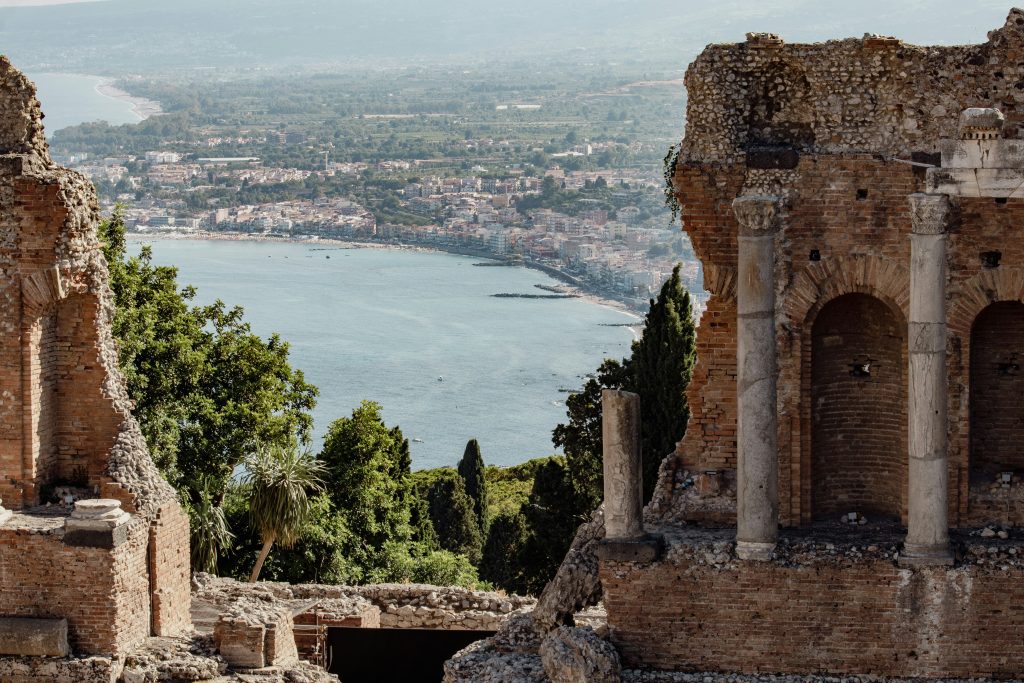
- Taormina and its ancient theater
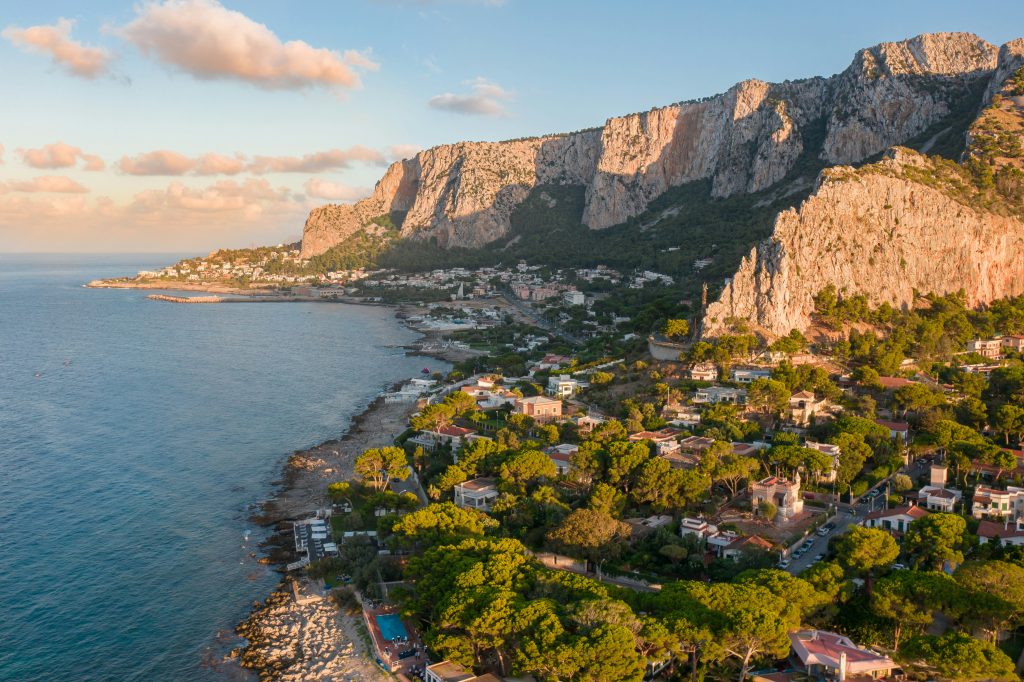
- Palermo and its markets
- Noto, Modica, Ragusa
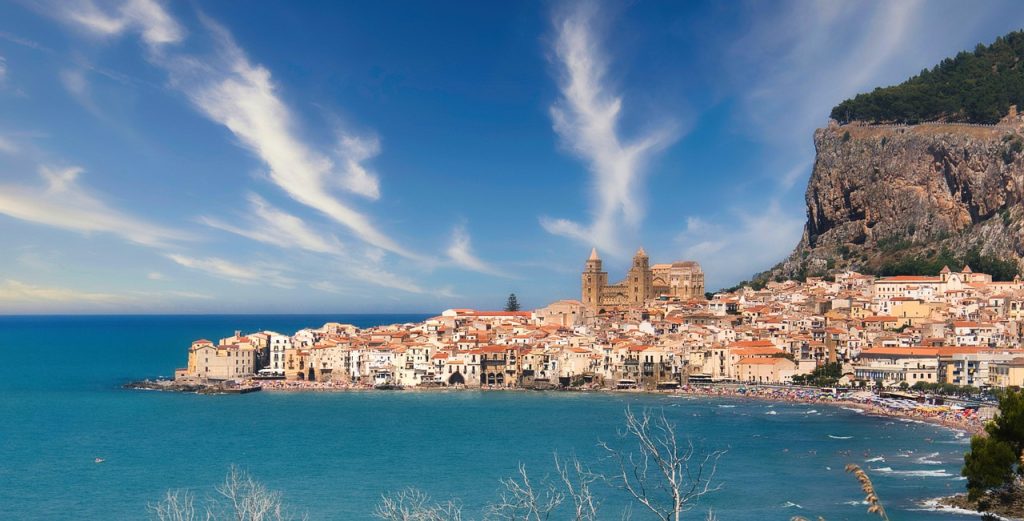
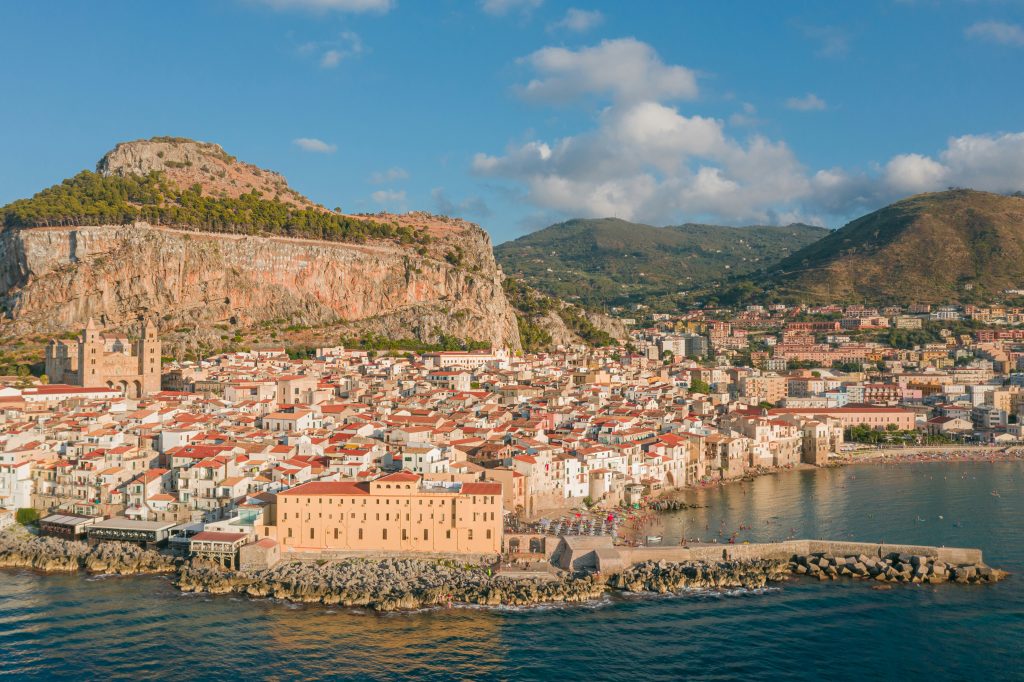
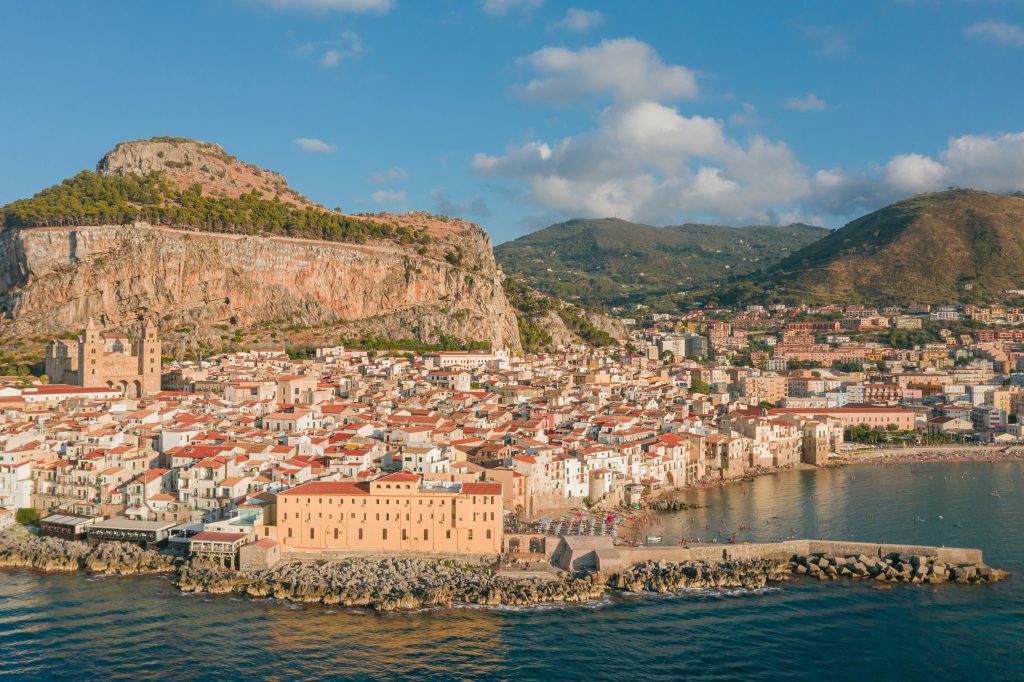
- Cefalù medieval town
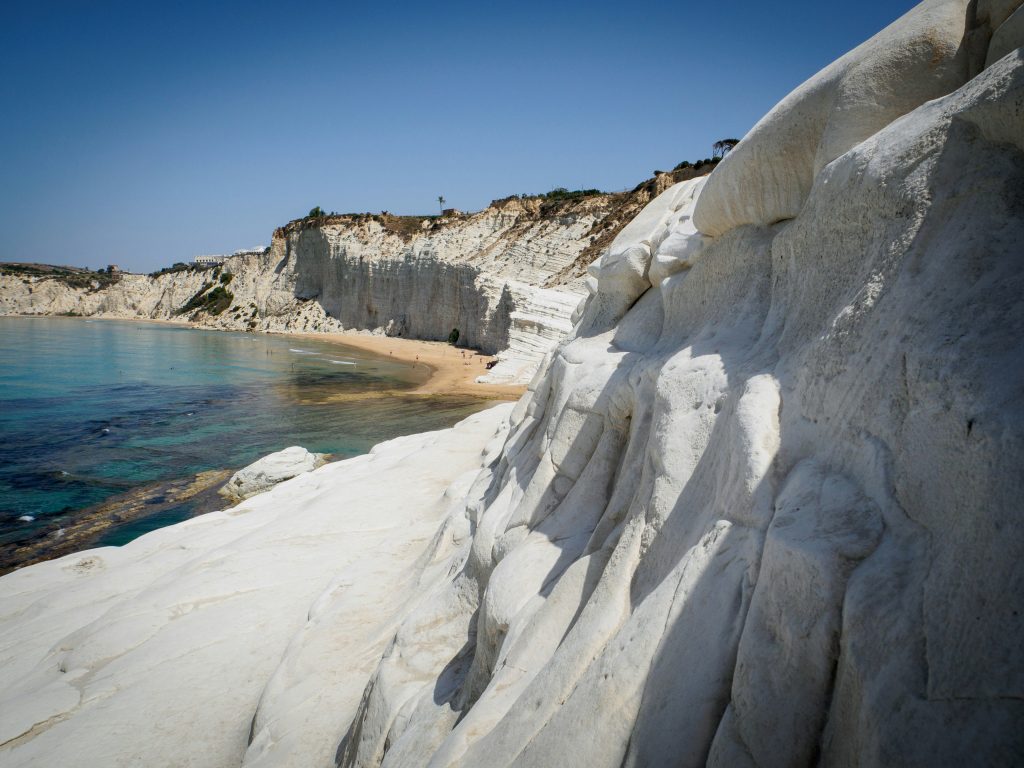
- Scala dei Turchi white cliffs.Coastal scenery lovers who enjoy Sicily’s dramatic landscapes may also appreciate islands such as Sardinia, known for a different but equally striking side of Italy.
Booking in Sicily (What You Must Reserve)
Sicily looks relaxed, but peak season fills quickly.
- Car rental is essential — book early
- Etna excursions sell out in summer
- Aeolian Islands boat trips must be reserved in July–August
- Popular beaches require early arrival or access limits
Getting to Sicily (Flights and Ferries)
Main airports:
- Catania Fontanarossa
- Palermo Falcone-Borsellino
Ferries connect Sicily with mainland Italy and nearby islands.Many travelers arrive after visiting Rome or continue north toward Tuscany as part of a larger Italy route.
Sicily Travel Guide: Getting Around & Transport
Do not rely on public transport.
- Trains are slow
- Buses are inconsistent
- Many top locations are unreachable without a car
A car is essential. Distances appear short but roads are winding and slow.
Travel Costs in Sicily
In general, prices remain reasonable outside peak summer months.
Accommodation (per night):
- Budget: €40–90
- Mid-range: €100–180
- Luxury: €220+
Food (per day):
- Budget: €15–25
- Comfortable: €30–50
- Fine dining: €70+
Street food offers some of the best value meals in Europe.
Best Time to Visit Sicily
- April–June: ideal weather, fewer crowds
- July–August: very hot, busy, energetic
- September–October: warm sea, calmer pace
- Winter: cultural, quiet, limited beach life
Best months: May, June, September. These months offer the best balance between weather, crowds, and overall experience.
Sicily Travel Guide: Food & Local Cuisine
Sicilian cuisine is bold, emotional, and deeply regional.
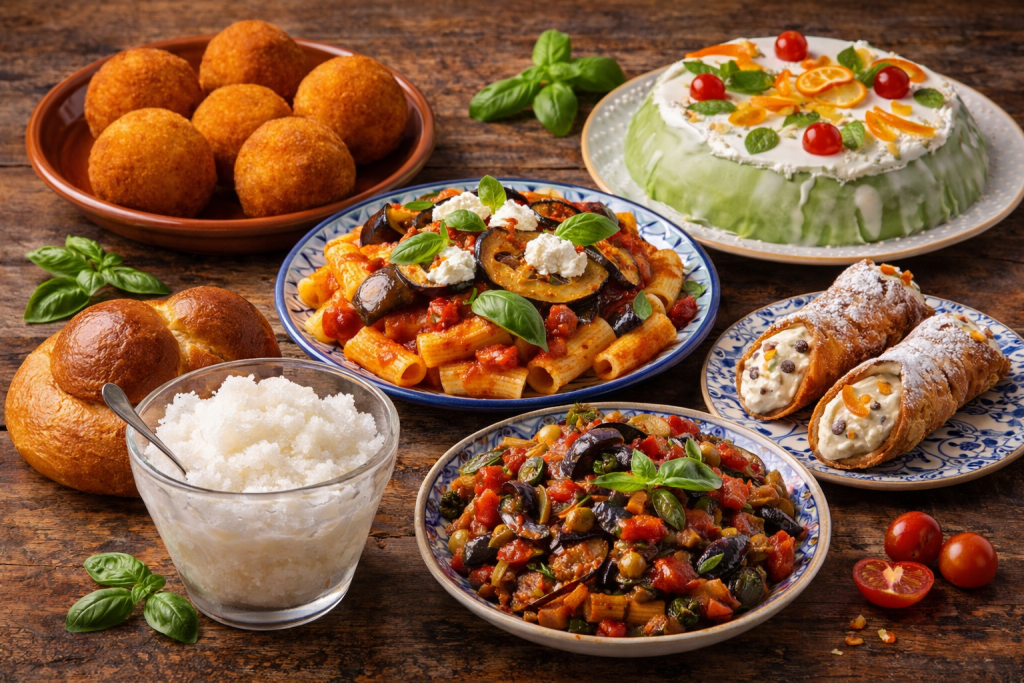
Must-try dishes:
- Arancini
- Pasta alla Norma
- Caponata
- Cassata
- Cannoli
- Granita with brioche
Food is not a detail in Sicily — it is central to daily life.
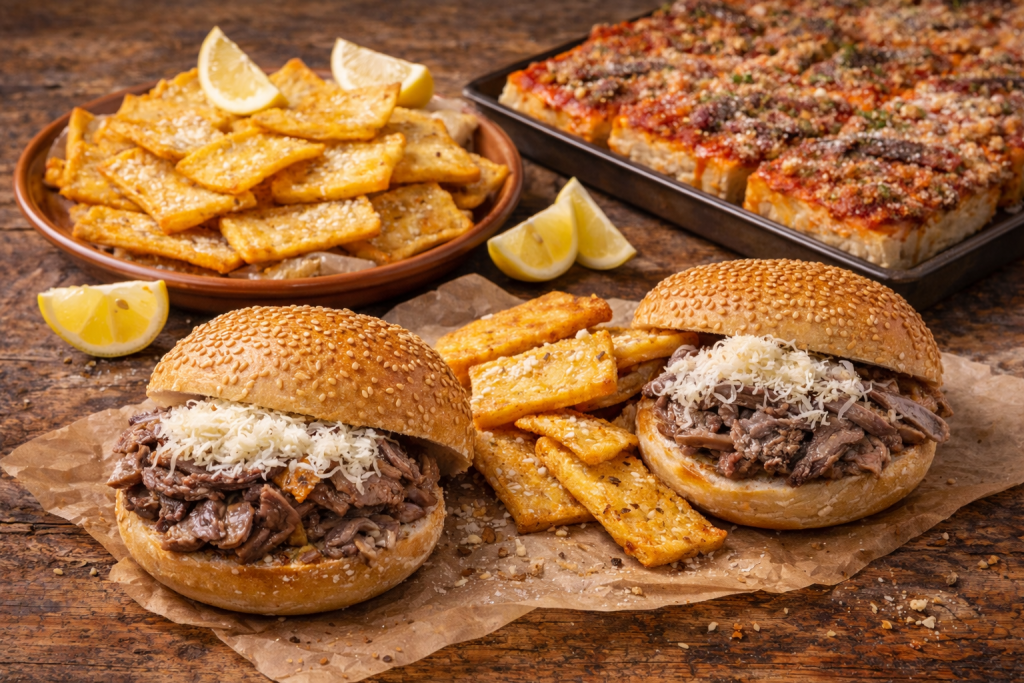
Palermo: Street Food Capital of Italy
Palermo’s street food is intense and authentic:
- Pane con la milza
- Panelle
- Sfincione
This is real Sicily, not tourist cuisine.
Volcanoes and Nature (Unique to Sicily)
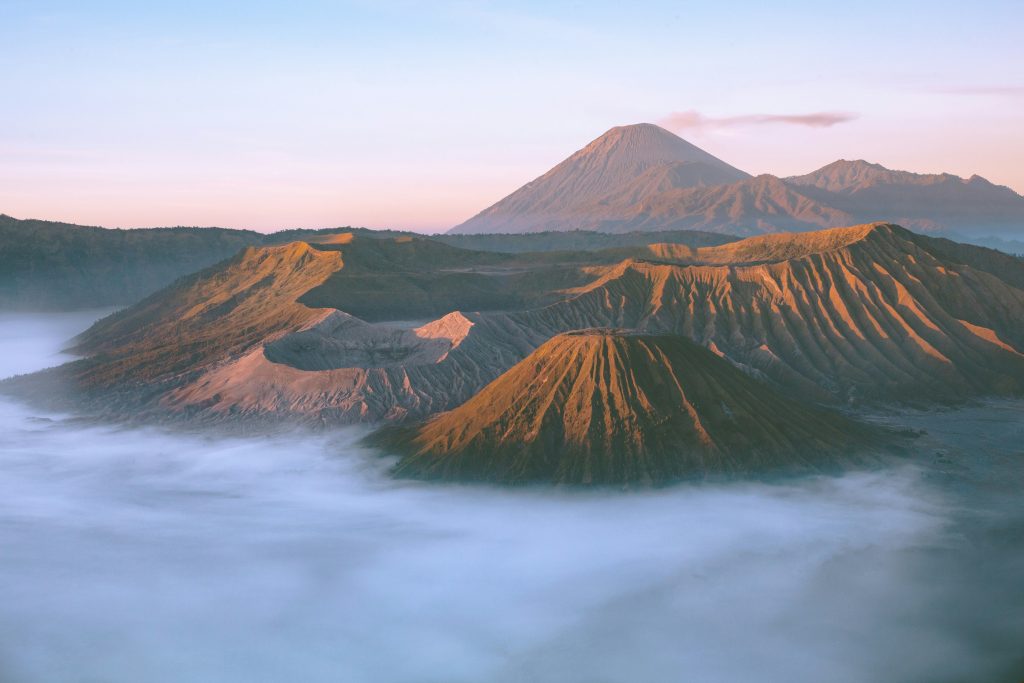
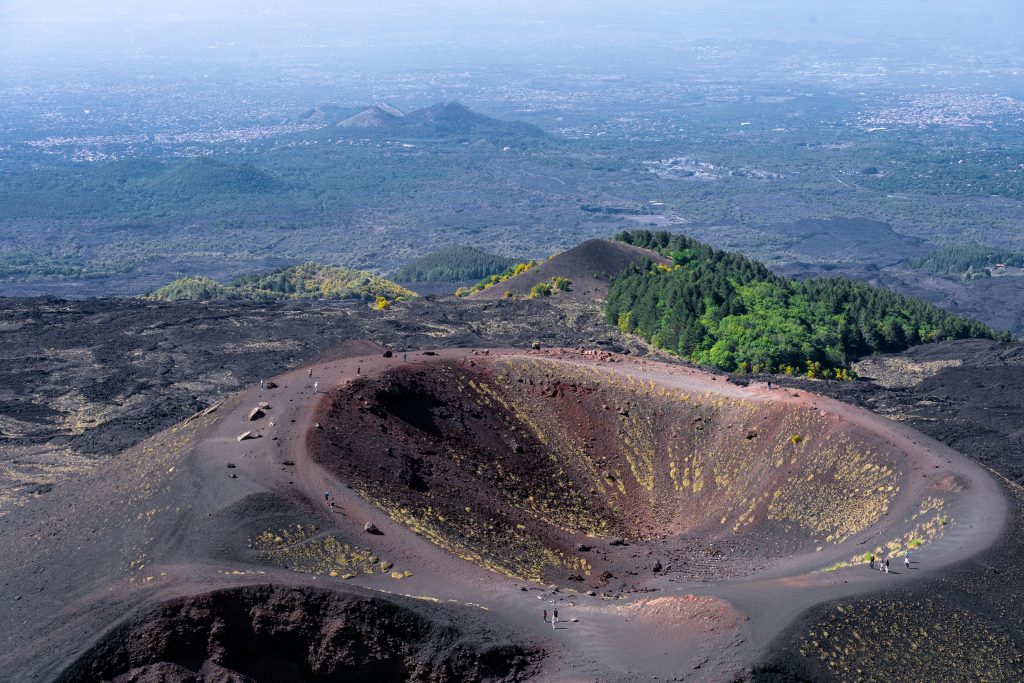
Mount Etna – The Queen of the Island
Europe’s highest active volcano dominates Sicily visually and culturally.
Visitors can reach high altitudes using cable cars and off-road vehicles, climbing to around 2,900 meters. Black lava fields, steaming craters, and views stretching to the sea create an almost alien landscape.
Always bring a jacket — cold winds are common even when coastal temperatures exceed 30°C.
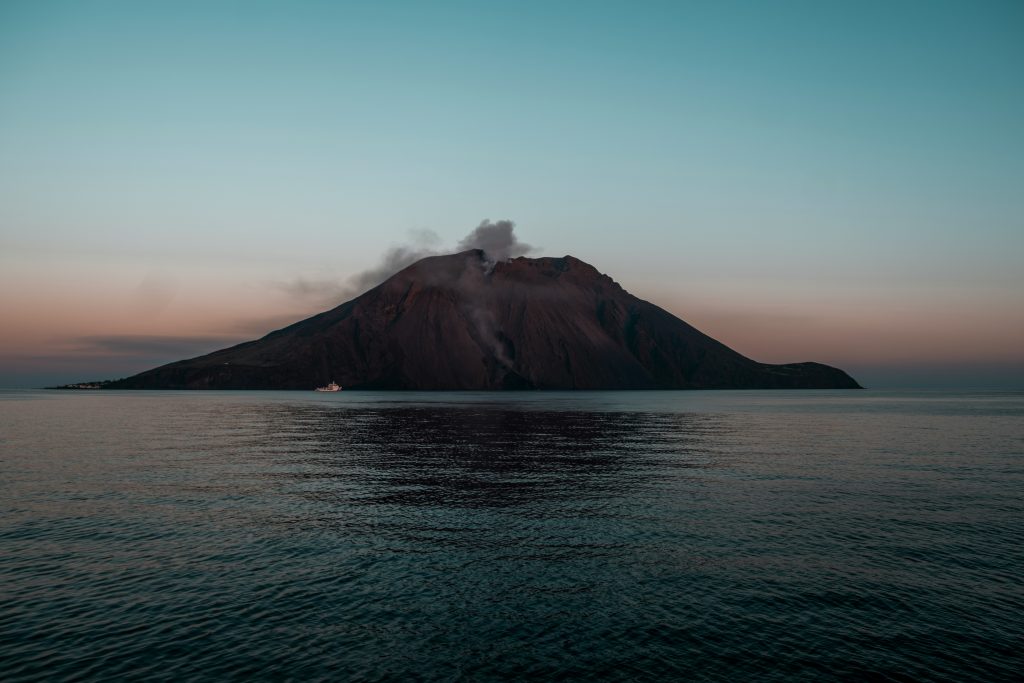
Stromboli
A constantly active volcano with frequent small eruptions.
Night hikes reveal glowing lava against the dark sky.
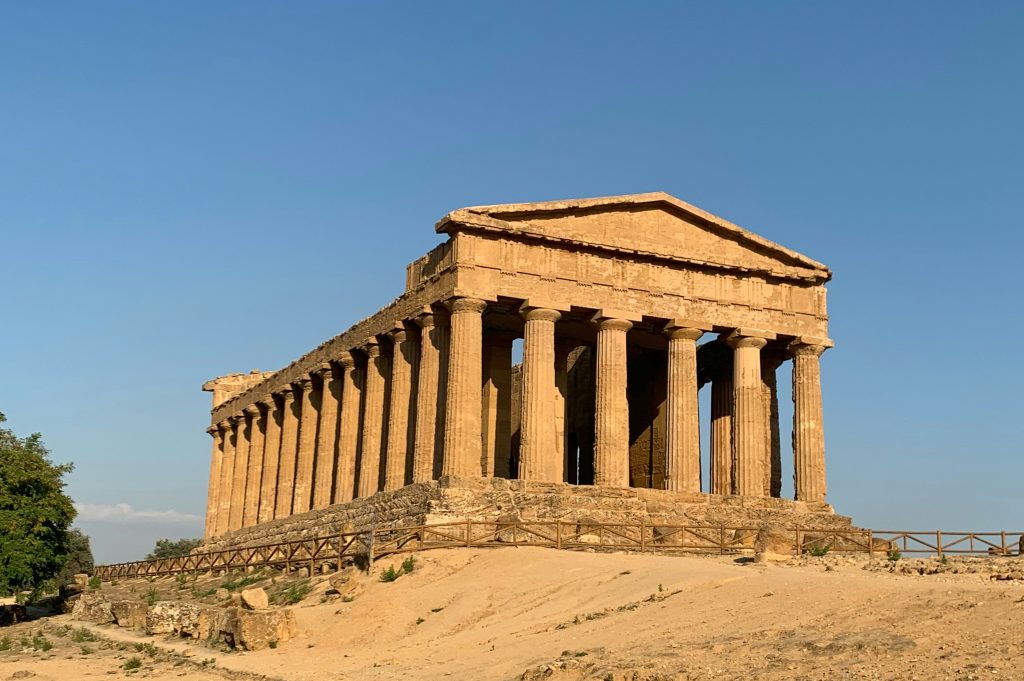
Valley of the Temples (Agrigento)
Some of the best-preserved Greek temples in the world — often better preserved than those in Athens.
The Temple of Concordia at sunset, illuminated in gold, is one of Sicily’s most powerful sights.
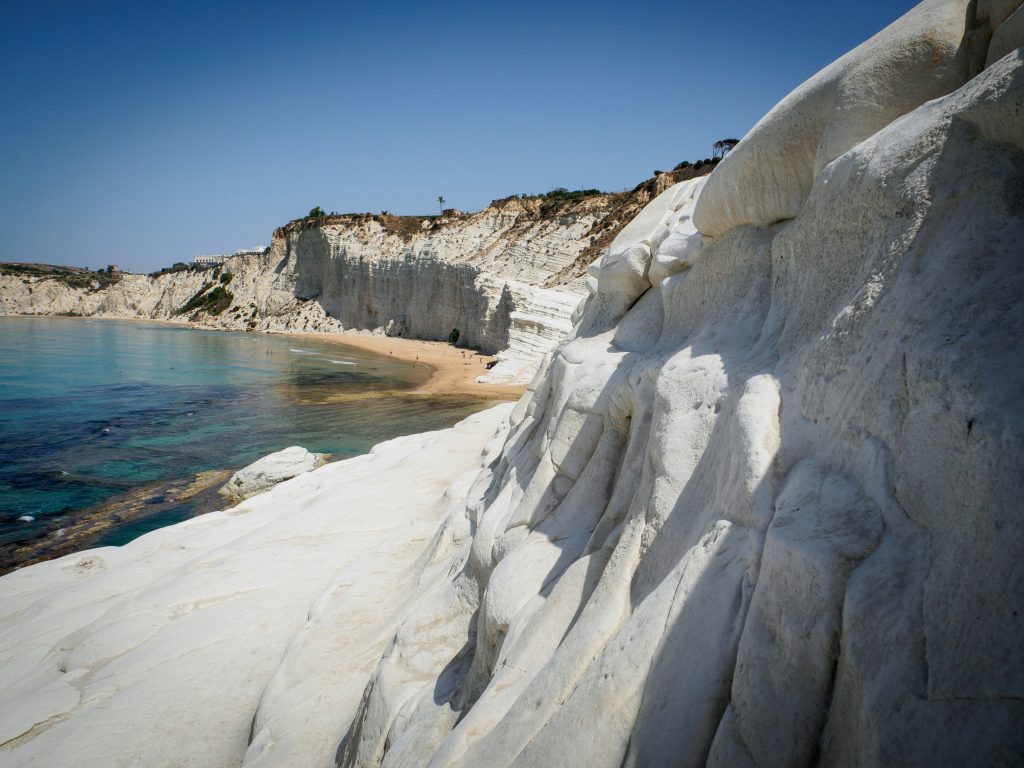
Scala dei Turchi – Stone, Not Sand
These white “steps” are made of soft limestone marl shaped by wind and sea.
Locals believe the white mineral clay benefits the skin, but access is often restricted to protect the site. Always follow posted rules.
Best Photo Spots in Sicily
- Taormina Greek Theatre with Etna behind
- Valley of the Temples at sunset
- Scala dei Turchi cliffs
- Palermo markets
- Stromboli eruptions at night
Golden hour transforms Sicily.
Best Day Trips in Sicily
- Mount Etna from Catania
- Cefalù from Palermo
- Noto–Modica–Ragusa loop
- Aeolian Islands boat day
- Agrigento ruins. Travelers building a longer Italy trip often combine Sicily with the cultural weight of Rome, the countryside of Tuscany, or the coastal beauty of the Amalfi Coast.
Practical Tips for Sicily
- Expect slower service — it’s normal
- Respect siesta hours
- Dress modestly in churches
- Carry cash in small towns
- Drive defensively
Safety in Sicily – What Travelers Should Know
Sicily is generally safe for travelers, but like any destination with large cities and heavy tourism, basic awareness is important.
Petty theft can occur in crowded areas such as markets, buses, and central streets in cities like Palermo and Catania. Pickpocketing is not aggressive, but backpacks, phones, and wallets should be kept secure.
Violent crime against tourists is rare. Normal travel precautions are enough:
- Avoid leaving valuables unattended
- Be cautious in crowded public transport
- Use hotel safes when available
Overall, Sicily feels safer than many large European cities when approached with common sense.
Beaches in Sicily – Sand vs. Rock (Know Before You Go)
Not all Sicilian beaches are sandy, and understanding this makes a big difference.
Northern and western Sicily offer more sandy beaches with gradual entry into the sea.
Eastern Sicily and the islands feature more rocky or volcanic coastlines with deep, clear water.
Many of the most beautiful coves have rocky entrances, which is why water shoes are highly recommended. These areas often have clearer water and fewer crowds.
Knowing this helps you choose the right beaches for swimming, relaxing, or snorkeling.
Where NOT to Eat in Sicily (Very Important)
Avoid restaurants that show these signs:
- Menus with photos of every dish
- Staff aggressively inviting you inside
- Very large menus in multiple languages
- Locations directly next to major landmarks
These places are designed for tourists, not quality.
Instead, eat where:
- Menus are short and handwritten
- Locals are dining
- Dishes are seasonal
- There is no rush to order
Sicily’s best food is found in simple places, not polished ones.
Environmental Rules Tourists Must Respect
Sicily protects many natural areas strictly.
In some beaches and reserves:
- Taking sand, stones, or shells is illegal
- Entering protected dunes or cliffs is forbidden
- Fines can be very high
Always respect signs and local rules. Preserving nature is taken seriously, especially in protected coastal zones.
Cultural Etiquette That Makes a Difference
Small gestures matter in Sicily.
Greeting staff with “Buongiorno” or “Buonasera” goes a long way.
Saying thank you and showing patience improves service noticeably.
Sicilians are warm but proud. Respect is returned with generosity.
Coffee Rules in Sicily (Yes, They Matter)
Coffee culture follows unwritten rules:
- Cappuccino is a morning drink only
- After meals, order espresso
- Standing at the bar is cheaper than sitting at a table
Following local habits helps you blend in and avoid tourist pricing.
Internet, SIM Cards & Navigation
Mobile signal is strong in cities and coastal areas but can be weak in mountains and rural interiors.
Recommendations:
- Use an eSIM or local SIM for data
- Download offline Google Maps
- Do not rely fully on Wi-Fi outside hotels
This is especially important for road trips and interior villages.
Practical Beach Planning Tips
Start beach days early during summer.
Parking fills quickly and access may be limited after mid-morning.
Bring:
- Water shoes
- Sun protection
- Cash for small parking areas
Plan beaches in the morning and towns or food stops in the afternoon.
Driving Reality Check in Sicily
Driving in Sicily requires patience.
Expect:
- Narrow streets
- Aggressive but predictable driving
- Informal parking habits
Always choose full insurance when renting a car and drive defensively, especially in cities.
Cultural Details That Make Sicily Different
Testa di Moro
Ceramic pots shaped like crowned heads, based on a legend of love and revenge. Sicily’s most iconic souvenir.
Pistachio Obsession – Bronte
Bronte pistachios grow in volcanic soil and are known as “Sicily’s green gold.”
Try pistachio pesto, pistachio pizza with mortadella, and pistachio desserts far beyond gelato.
Modica Chocolate
Made using an ancient Aztec-era technique.
Cold-processed, grainy texture, unique flavors like chili and citrus. It tastes nothing like modern chocolate.
Opera dei Pupi
Traditional hand-carved wooden puppets depicting medieval knights.
A UNESCO-protected art form and one of Sicily’s oldest traditions.
Mafia: Reality vs. Movies
For locals, the mafia is painful history, not entertainment.
Support businesses displaying the Addiopizzo sign — they openly refuse to pay protection money.
Salt Pans of Trapani
Salt fields dotted with windmills between Trapani and Marsala.
At sunset, reflections turn pink and gold. One of Sicily’s most underrated photo locations.
The Godfather Film Locations
Visit Savoca and Bar Vitelli, unchanged since 1972. One of Europe’s most authentic movie locations.
Final Insider Tip
Visit Ortigia, the historic island at the heart of Syracuse.
White stone streets, ancient ruins, sea views, and soft evening light make it one of the most magical small island-cities in Italy. Walking here at night feels timeless.For travelers who enjoy atmospheric places with strong identity, Sicily pairs especially well with Tuscany and Rome in a wider Italy travel itinerary.
Common Mistakes Travelers Make
- Trying to see the whole island in one trip
- Not renting a car
- Skipping the interior
- Expecting Northern Italian efficiency
- Ignoring local food culture
Mini FAQ – Sicily
Is Sicily safe?
Yes, with normal awareness.
Is Sicily expensive?
No — it offers excellent value.
Do you need a car?
Yes, for most travelers.
How many days are enough?
7–10 days for a strong experience.
Explore More Italy Travel Guides
If you are planning a wider trip across Italy, these guides may help:
- Italy Travel Guide
- Rome Travel Guide
- Tuscany Travel Guide
- Amalfi Coast Travel Guide
- Sardinia Travel Guide
More Mediterranean Destinations
If you enjoy islands, dramatic coastlines, and strong regional culture, these destinations may also inspire your next trip:
Travel conditions, prices, opening hours, access rules, and transport schedules in Sicily can change depending on the season and location, so it is always recommended to check current information before planning your trip.
Final Thoughts
Sicily is best experienced slowly.
It is not the easiest destination in Italy, but that is exactly what makes it memorable.
The island rewards travelers who accept its rhythm, explore beyond the obvious, and leave room for unexpected moments.
If you give Sicily enough time, it becomes much more than a beach or history trip — it becomes one of the most distinctive travel experiences in the Mediterranean.