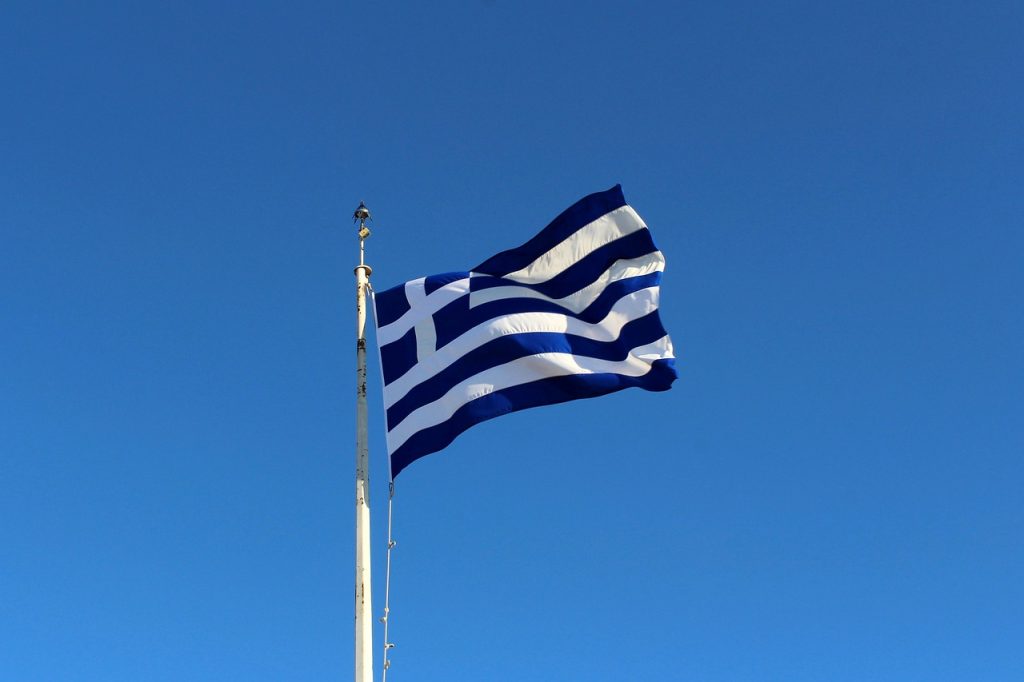
This Greece Travel Guide explores a country that is far more than a seasonal beach destination — it is a land shaped by sunlight, mythology, open sea, and centuries of memory.
Across the country, ancient ruins stand beside whitewashed villages. Mountain roads descend toward hidden beaches. Daily life unfolds slowly beneath the Mediterranean sun. The pace feels timeless. Meals last for hours. Conversations carry meaning. Even moments of silence feel deliberate. If you’re building your first Greece itinerary, it’s helpful to start with Athens and then choose an island style that fits your travel preferences — whether you prefer dramatic views, lively nightlife, or quieter beach-focused destinations.
Situated at the meeting point of Europe, Asia, and Africa, Greece combines thousands of years of history with island culture, dramatic terrain, and some of the most recognizable coastlines in the world.
This Greece Travel Guide covers the country’s main destinations, island groups, food culture, transport, and practical travel details.
Entry Requirements, Currency & Connectivity
Greece is a member of the Schengen Area.
Travelers from the European Union and many Western countries can enter visa-free for up to 90 days within a 180-day period. Always verify entry requirements based on your nationality before departure.
Currency
The official currency in Greece is the Euro (€).
Credit and debit cards are widely accepted throughout cities and tourist areas. However, smaller tavernas, beach bars, and rural villages may prefer cash payments, so carrying some physical currency is advisable.
SIM Cards & Internet
Local SIM cards are affordable and available at airports, kiosks, and mobile stores. eSIM options are convenient for short-term visitors. WiFi is generally reliable in Athens and larger islands, while smaller islands may have slower connections.
Airports & Arrival Information
Athens International Airport (ATH) serves as Greece’s main international gateway.
Travel options from the airport to central Athens include:
• Metro – approximately 40 minutes
• Taxi – around 30–40 minutes depending on traffic
• Airport bus – a budget-friendly option operating 24 hours
Major island airports include:
• Santorini (JTR)
• Mykonos (JMK)
• Heraklion, Crete (HER)
• Rhodes (RHO)
For most travelers, Athens is the best starting point before continuing to island destinations like Santorini and Mykonos.
On many islands, airport transfers require taxis, rental cars, or hotel-arranged pickups. During peak summer months, pre-booking transportation is strongly recommended.
Greece Travel Guide: Main Destinations
Athens
Athens is energetic, historic, complex, and undeniably alive.
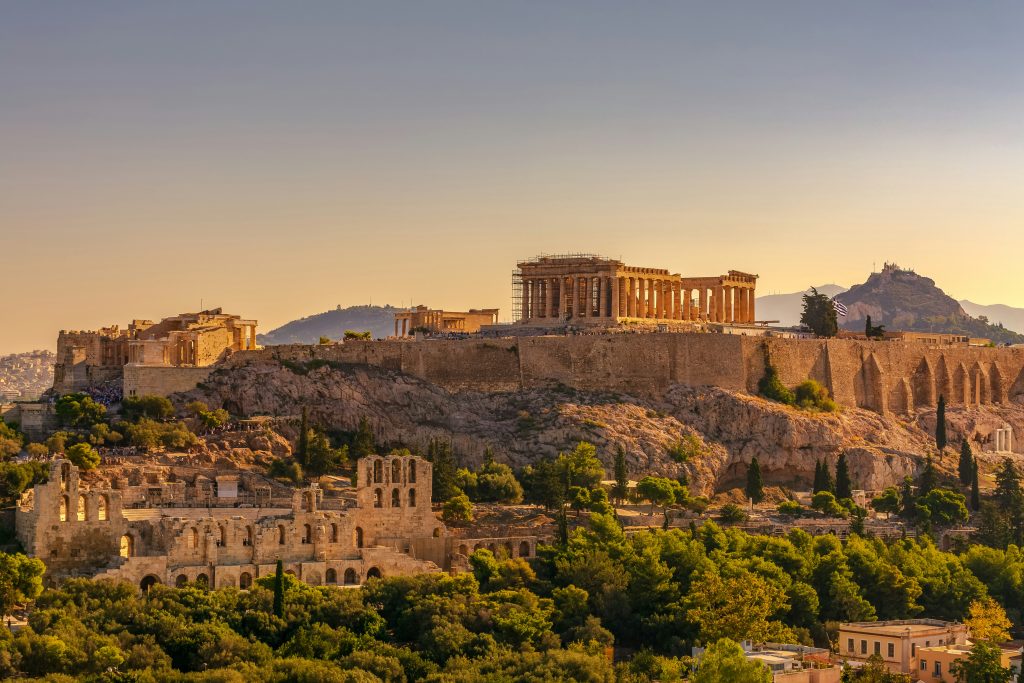
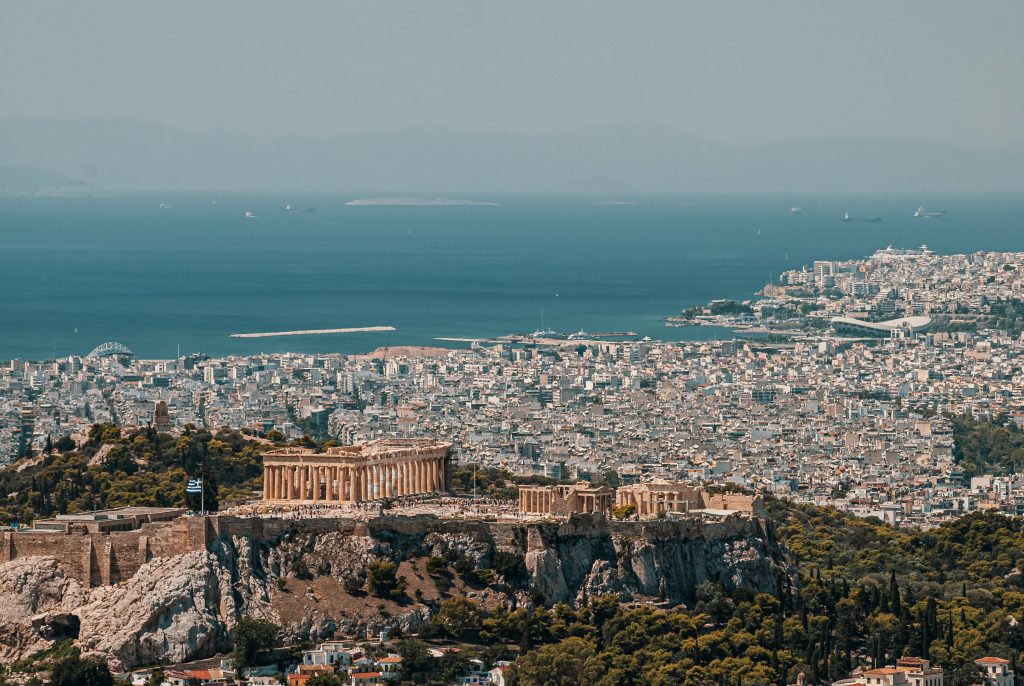
The Acropolis dominates the skyline, constantly reminding visitors of the city’s ancient legacy. At the same time, contemporary Athens thrives with rooftop bars, vibrant street art, and an evolving café culture.
Key experiences include:
• Exploring the Acropolis and Parthenon early in the morning
• Watching sunset from Lycabettus Hill
• Walking through the neighborhoods of Plaka and Anafiotika
• Dining at rooftop restaurants with views of the illuminated Acropolis
Athens reveals its character to travelers willing to look beyond first impressions. Athens has many neighborhoods, each offering a different experience in terms of atmosphere, food, and accessibility.
Santorini
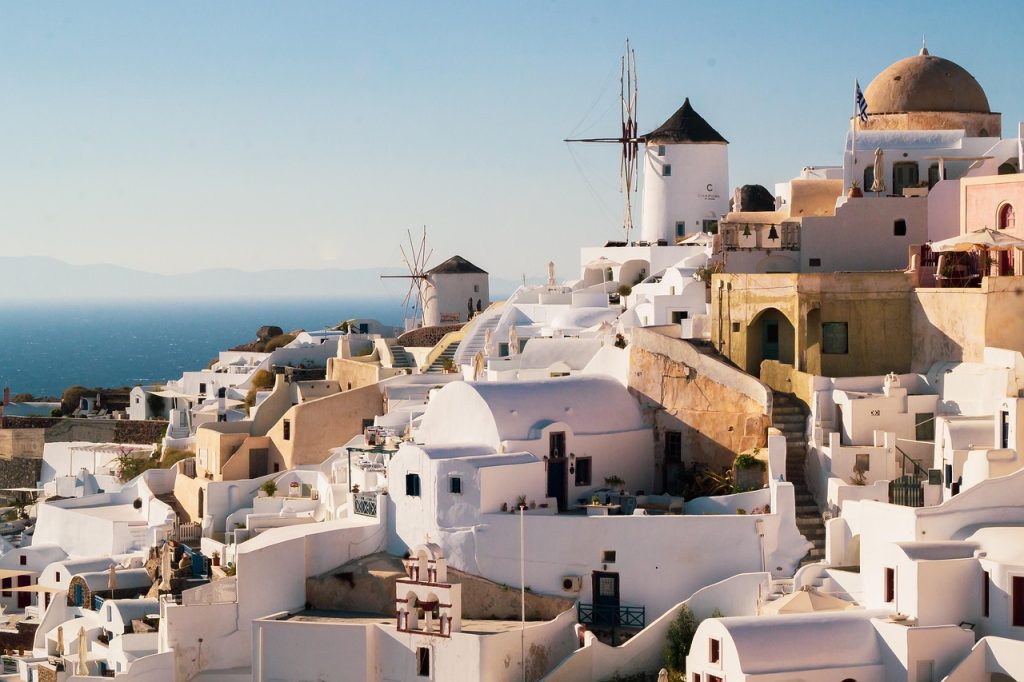
Santorini is visually dramatic and internationally recognized.
White homes carved into volcanic cliffs overlook the deep blue Aegean Sea. While sunsets in Oia draw large crowds, villages such as Pyrgos provide a quieter and more traditional atmosphere.
Expect:
• Volcanic sand beaches
• Cliffside walking paths
• Significant summer crowds
• Higher prices compared to most Greek islands
Santorini is defined by scenery, light, and contrast. Santorini offers a wide range of experiences depending on where you stay, from crowded viewpoints to quieter traditional villages.
Mykonos
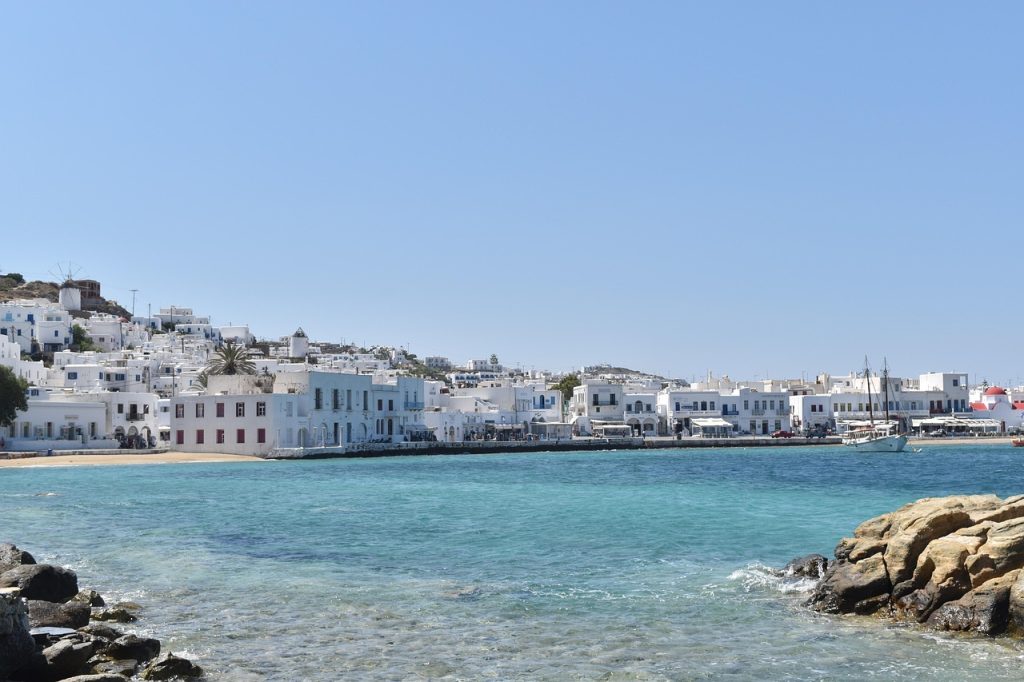
Mykonos represents freedom, celebration, and cosmopolitan energy.
Although globally famous for nightlife, the island also features beautiful beaches and charming old-town streets.
Expect:
• International beach clubs and DJs
• Luxury hotels and upscale accommodations
• Clear turquoise waters
• A strong global atmosphere
Mykonos is intense during peak summer but more relaxed in shoulder seasons. Mykonos varies significantly depending on the area and season, with both high-energy nightlife zones and more relaxed beach areas.
Crete
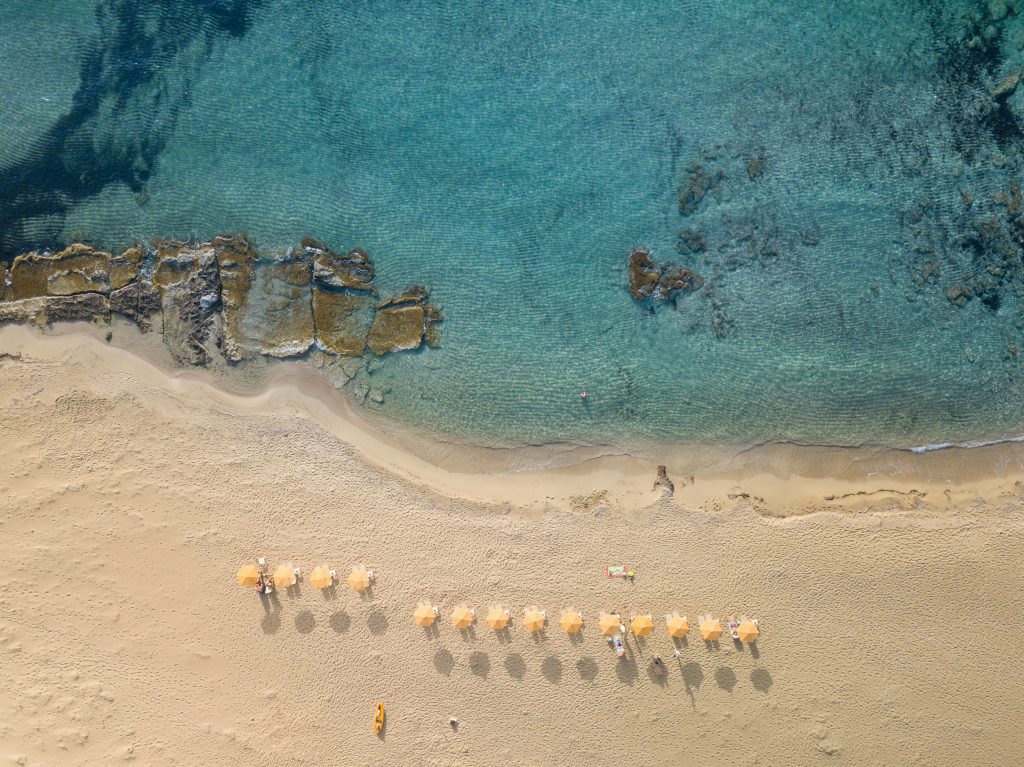
Crete feels distinct from the rest of Greece due to its size and identity.
The island combines mountains, beaches, archaeological sites, and strong regional traditions.
Highlights include:
• Hiking through Samaria Gorge
• Visiting Balos Lagoon
• Exploring Chania’s old town
• Discovering the Palace of Knossos
Crete provides a balance between cultural depth and natural diversity.
Rhodes
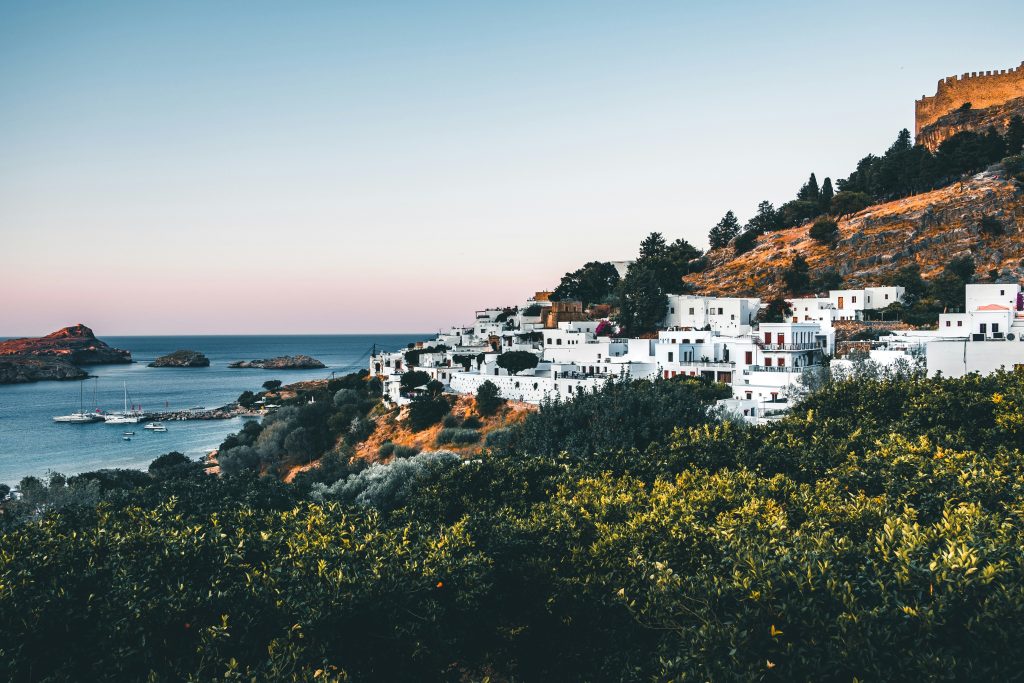
Rhodes merges medieval history with classic island scenery.
Its Old Town ranks among the best-preserved medieval centers in Europe. Compared to Santorini and Mykonos, Rhodes offers a more measured experience without overwhelming crowds.
Greek Islands Explained
Greece has more than 6,000 islands, though roughly 200 are inhabited.
The primary island groups include:
Cyclades – Santorini, Mykonos, Paros, Naxos
Dodecanese – Rhodes, Kos
Ionian Islands – Corfu, Zakynthos
Crete – geographically and culturally distinct
Sporades – Skiathos, Skopelos
If you want two proven island options with very different vibes, compare Skiathos (greener, sandy beaches) with Lefkada (dramatic cliff beaches and turquoise Ionian water).
Selecting the right island group plays a major role in shaping your trip.
How to Plan Island Hopping in Greece
Island hopping requires careful planning.
Focus on one island group whenever possible.
Avoid combining distant island chains unless using flights.
Plan to stay at least 2–3 nights per island.
One-night stops create unnecessary stress and reduce enjoyment.
Ferries offer scenic journeys but depend on weather conditions.
Flights save time but reduce flexibility.
Reserve ferry tickets early in July and August to avoid sold-out departures.
Island hopping works best when scheduled at a relaxed pace.
For first-time visitors, one of the easiest combinations is Athens + Mykonos + Santorini, while travelers who prefer a quieter beach rhythm often choose Athens + Skiathos or Athens + Lefkada.
Best Beaches in Greece by Type
Greece offers thousands of beaches, but choosing the right type matters more than simply following popularity lists.
Best Calm Beaches
Naxos – Agios Prokopios
Crete – Elafonissi
Rhodes – Tsambika
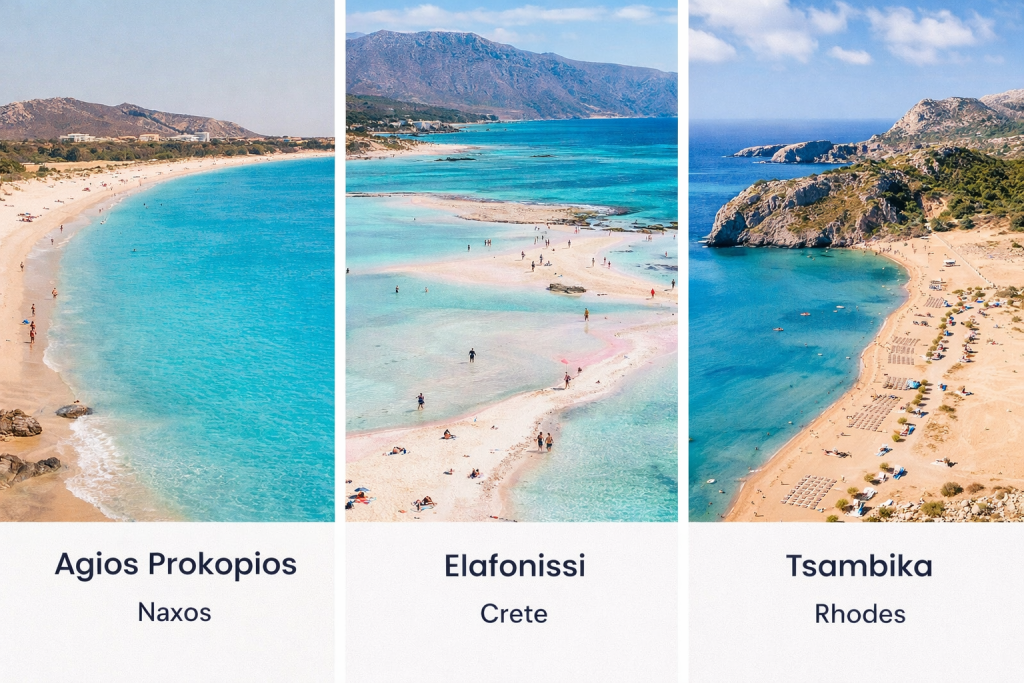
These beaches are ideal for relaxed swimming, soft sand, and clear, manageable waters.
Best Dramatic Cliff Beaches
Milos – Sarakiniko
Zakynthos – Navagio
Santorini – Red Beach
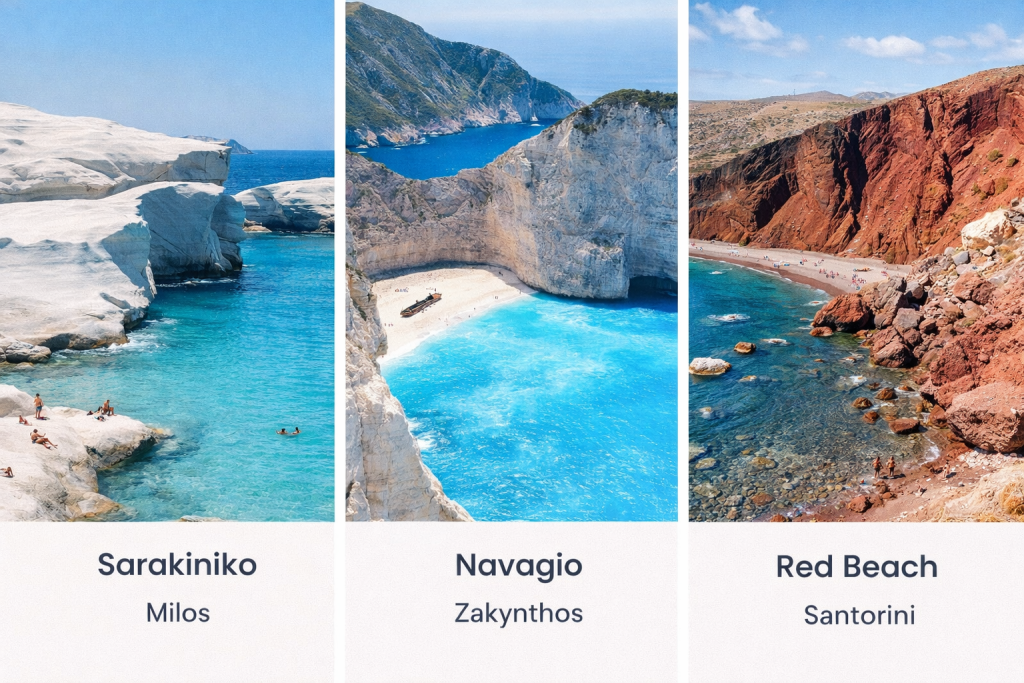
These locations are defined by striking rock formations, volcanic landscapes, and strong visual impact.
Best Party Beaches
Mykonos – Paradise Beach
Paros – Punda Beach
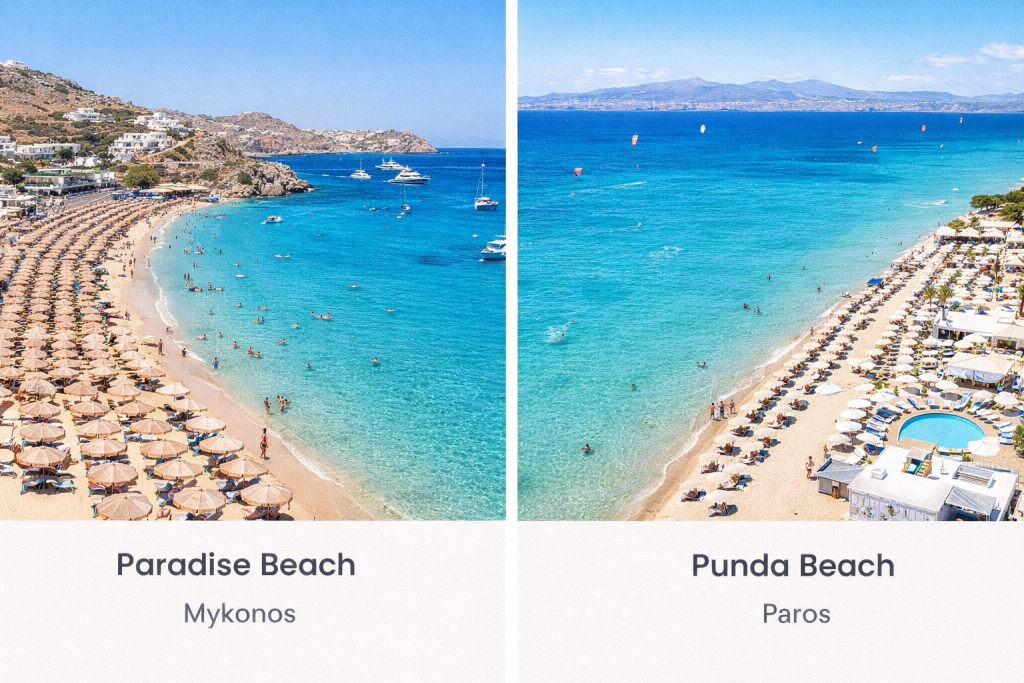
Expect music, beach clubs, and a social atmosphere that lasts from afternoon into night. Beach experiences vary greatly depending on the island, with some focused on nightlife and others on calm swimming conditions.
Best Family-Friendly Beaches
Crete – Falassarna
Corfu – Glyfada
Naxos – Plaka Beach
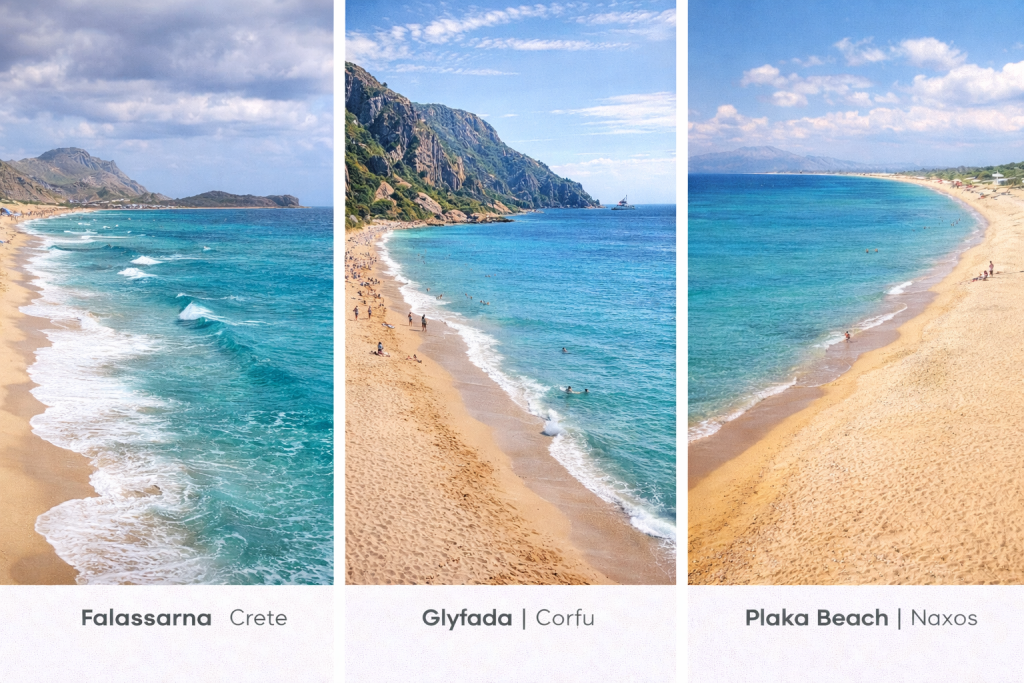
These beaches offer space, softer entry into the sea, and a more relaxed environment.
Choosing beaches based on travel style will shape your experience more than simply selecting the most photographed location.
Greek Food and Drink
Greek cuisine focuses on freshness, simplicity, and high-quality ingredients.
Must-Try Foods
Moussaka
Souvlaki
Greek salad
Tzatziki
Spanakopita
Fresh grilled fish
Drinks
Ouzo
Raki
Greek coffee
Meals in Greece are not rushed. Dining is social, extended, and deeply connected to conversation.
Culture and Atmosphere
Filoxenia
Greek hospitality, known as filoxenia, is genuine and visible in everyday life.
It is common for locals to offer small gestures such as complimentary fruit, dessert, or extended conversation without expectation of return.
Orthodox Traditions
Greek Orthodox churches and monasteries remain central to community identity. Visitors should dress respectfully when entering religious sites.
Summer Lifestyle
During warmer months, daily rhythm shifts:
Late dinners after 9 PM
Long beach days
Outdoor cinemas
Evenings that stretch past midnight
What Travelers Often Don’t Expect
• Summer temperatures can exceed 38°C
• The Meltemi wind strongly affects the Cyclades
• Sunset dining in Santorini often comes with premium pricing
• Public transportation on islands may be limited
• Some beaches require hiking access
Understanding these realities improves comfort and planning.
Where to Stay in Greece
Athens
Plaka – central and historic
Koukaki – local atmosphere
Kolonaki – upscale and refined
Santorini
Oia – iconic cliff views
Fira – energetic and lively
Imerovigli – quieter and scenic
Mykonos
Mykonos Town – nightlife hub
Ornos – relaxed setting
Psarou – upscale area
Crete
Chania – best overall balance
Heraklion – practical base
Rethymno – charming atmosphere
Your neighborhood choice often influences your experience more than hotel category.If you’re choosing between Greece’s most famous islands, our guides to Santorini, Mykonos, Skiathos, and Lefkada will help you match the right island to your travel style and budget.
Greece for Digital Nomads & Long Stays
Greece is increasingly attractive for remote workers.
Best Locations
Athens
Crete
Naxos
Estimated Monthly Budget
Athens – €900–1,500
Islands – €1,200–2,000
Longer stays are more comfortable outside peak summer season.
Transport and Getting Around Greece
Domestic flights provide fast connections between major islands.
Ferries link island groups but may be slow and weather-dependent.
The Athens metro system is modern and efficient.
Car rental is strongly recommended for:
• Crete
• Mainland Greece
• Larger islands
Transportation planning is especially important during summer.
Important Ferry Realities & Travel Warnings
Ferries are an essential part of the Greek travel experience, but they require flexibility and preparation.
Delays occur frequently.
Strong winds, particularly in the Cyclades, can cancel or postpone departures with minimal notice.
Ports are not always located near town centers.
Upon arrival, you may require taxis or pre-arranged transfers, especially on larger islands.
Boarding procedures can appear disorganized.
Announcements are sometimes unclear, and passengers handle their own luggage. Arriving early and confirming the correct dock is advisable.
High-speed ferries travel faster but are more affected by rough sea conditions.
Conventional ferries move slower but provide greater stability.
During peak summer months (July–August), tickets may sell out several days in advance. Booking early reduces unnecessary stress.
Island hopping becomes significantly smoother when buffer time is included.
Avoid tight same-day connections between ferries and flights.
Weather and Sea Reality
Summer temperatures: 28–38°C
Spring and Autumn: balanced and comfortable
Winter: mild yet quieter
Sea conditions:
• Warmest waters between July and September
• Strong winds in the Cyclades
• Certain beaches may have strong currents
Best Time to Visit Greece
April–June: Overall best period
July–August: Peak tourist season
September–October: Excellent balance
Winter: Calm and budget-friendly
May, June, and September offer optimal conditions.
Travel Costs and Budget Expectations
Athens and mainland Greece are generally affordable.
Santorini and Mykonos operate at premium pricing levels.
Typical expenses:
Coffee: €2–4
Gyro: €3–5
Mid-range meal: €15–25
Hotels: starting from €70
Tipping is typically 5–10%.
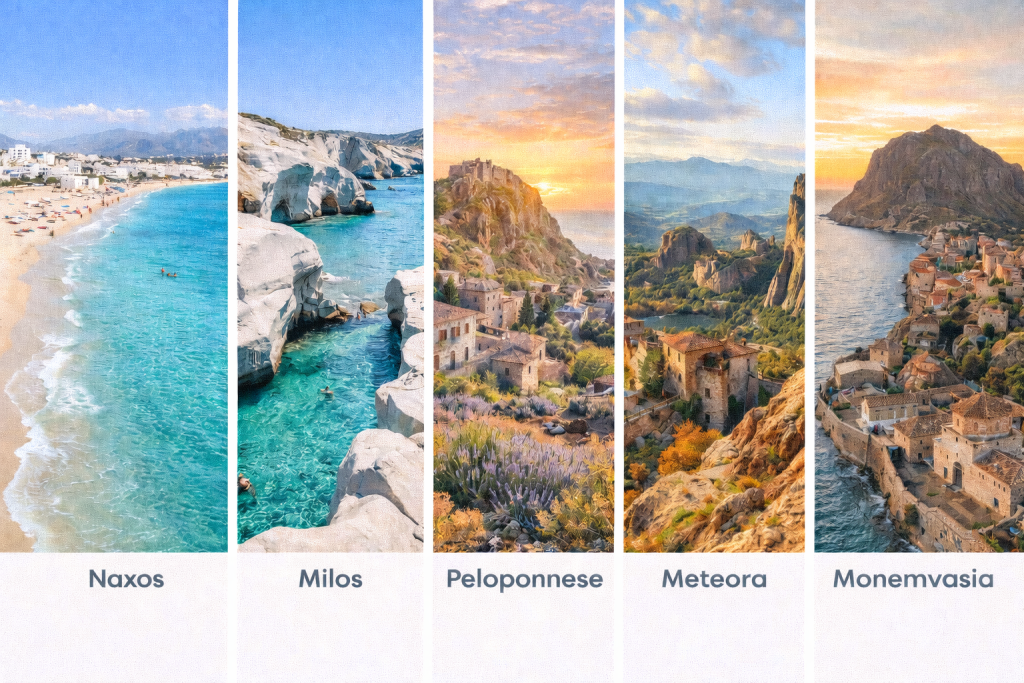
Hidden Places Worth Exploring
Naxos
Milos
Peloponnese
Meteora
Monemvasia
Safety and Awareness
Greece ranks among the safer countries in Europe.
Basic precautions are sufficient in busy areas and ferry ports.
Heat exposure and sun intensity pose greater risk than crime.
Common Mistakes Travelers Make
Visiting only Santorini and Mykonos
Underestimating summer heat
Skipping smaller islands
Booking ferry tickets too late
Traveling too quickly
Greece rewards patience and slower pacing.
How Many Days Do You Need?
3–4 days: Athens
7–10 days: Athens and one island
14 days: Athens and multiple islands
Island hopping requires realistic timing.
Mini FAQ
Is Greece expensive?
Pricing depends on the island.
Is Greece safe?
Yes, overall very safe.
Do you need a car?
Often recommended, especially outside Athens.
Is English widely spoken?
Yes, particularly in tourist areas.
Explore Greece Travel Guides
- Athens Travel Guide
- Santorini Travel Guide
- Mykonos Travel Guide
- Lefkada Travel Guide
- Skiathos Travel Guide
More Mediterranean Destinations
- Amalfi Coast Travel Guide
- Sicily Travel Guide
- Sardinia Travel Guide
- Balearic Islands Travel Guide
- Canary Islands Travel Guide
Final Thoughts
Greece appears bright and effortless on the surface, yet its depth lies underneath.
It is ancient and contemporary, vibrant and tranquil, simple yet powerful. The sea influences everything — cuisine, mood, architecture, and daily rhythm.
If you travel slowly, respect the climate, select your islands carefully, and embrace long evenings by the water, Greece becomes unforgettable.
This Greece Travel Guide is created to help you move beyond postcard imagery and experience the country at the right pace.