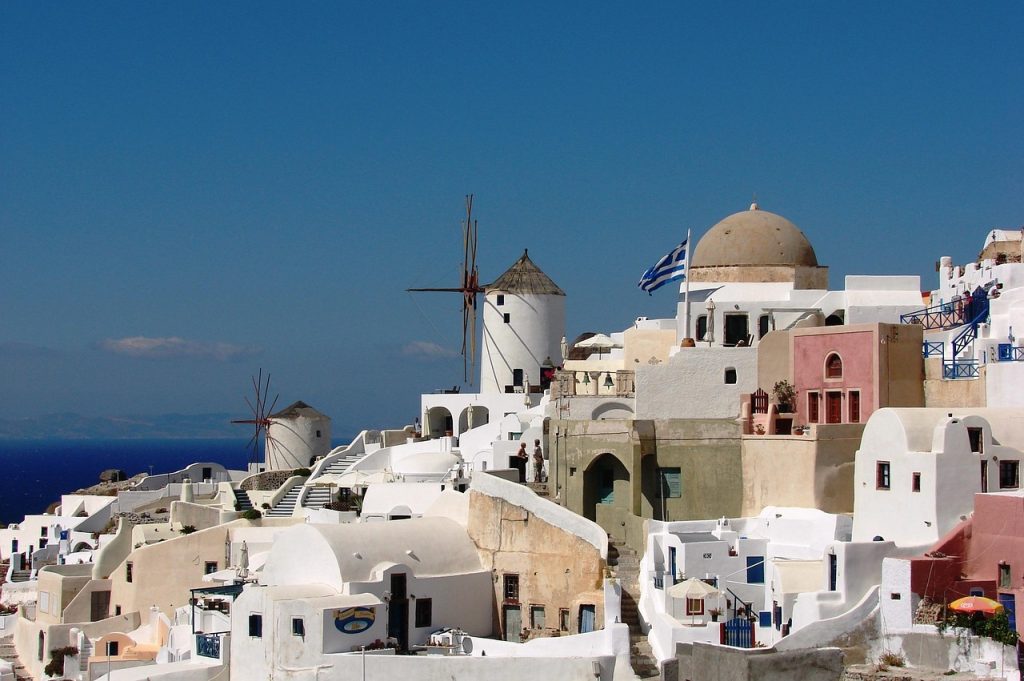
In this Santorini Travel Guide, you will discover that Santorini is far more than a visually striking Greek island — it is a dramatic volcanic formation shaped by eruption, wind patterns, sunlight, and centuries of human resilience.
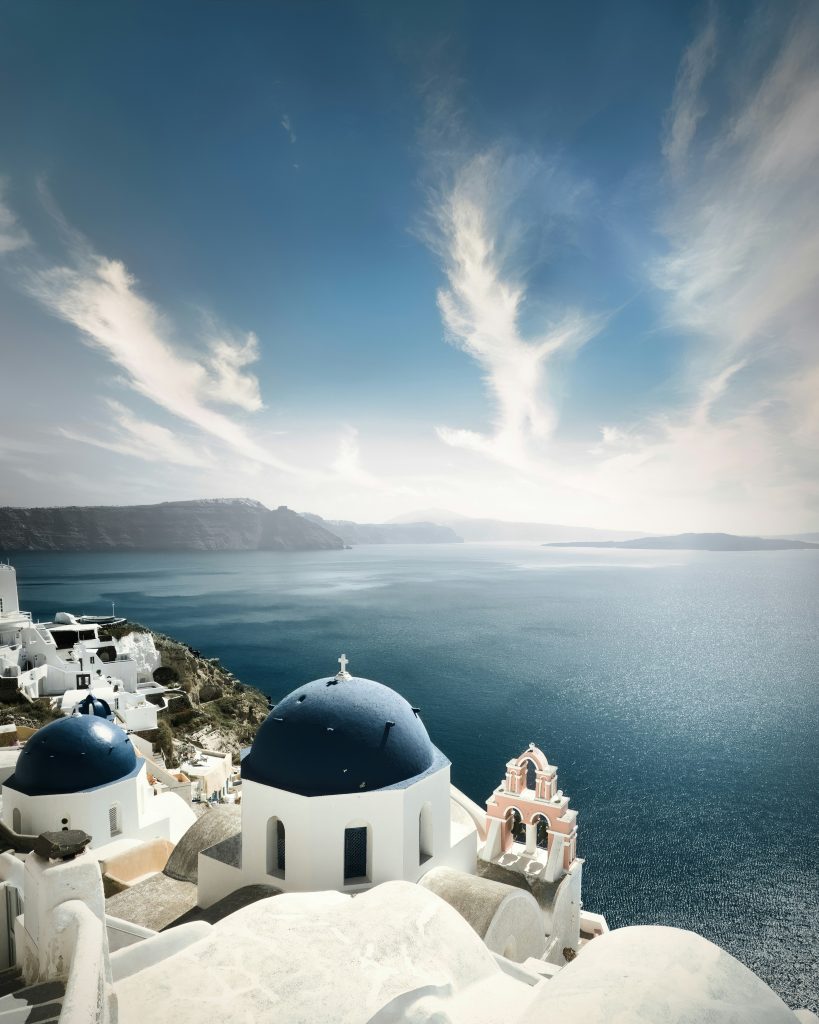
Whitewashed houses cascade down steep cliffs carved by an ancient explosion. Blue-domed churches rise above the Aegean horizon.
Travelers exploring the Greek islands often notice how different each island feels — from lively and social destinations to quieter, nature-focused escapes.
Stone pathways connect villages suspended along the rim of a flooded caldera. The scenery feels cinematic, yet beneath the beauty lies complex geology, layered history, and a living island culture that continues beyond sunset photographs.
This Santorini Travel Guide covers everything you need to plan your trip: villages, beaches, food, transport, costs, and practical tips.
Santorini often looks perfect in photos, but the real experience depends heavily on timing, location, and expectations.
Entry Requirements, Currency & Connectivity
Santorini follows Greece’s national entry regulations as part of the Schengen Area.
Travelers from the European Union and many Western countries may enter visa-free for up to 90 days within a 180-day period. Entry requirements vary by nationality, so always confirm regulations before departure.
Currency
The official currency in Santorini and throughout Greece is the Euro (€).
Credit and debit cards are widely accepted in hotels, restaurants, and shops. However, small tavernas, beach kiosks, and local businesses may prefer cash, especially outside peak tourist areas.
SIM Cards & Internet
Prepaid SIM cards are available at Santorini Airport and in Fira. Internet access in hotels and restaurants is generally reliable, though connectivity may fluctuate in cliffside accommodations or remote areas.
Airports & Arrival Information
Santorini International Airport (JTR) connects the island with Athens year-round and with major European cities during the summer season. For many visitors, Athens serves as the main entry point before continuing to Santorini by flight or ferry.
Arrival options include:
• Taxi – availability is limited in high season
• Pre-booked private transfer – highly recommended during summer
• Car rental – ideal for flexibility
Santorini is also accessible by ferry from:
• Athens (Piraeus Port)
• Mykonos
• Naxos
• Paros
Ferry arrivals are scenic but depend on weather conditions, particularly strong winds.
Santorini Travel Guide: Main Areas & Villages
Understanding the island’s geography is essential when choosing accommodation and planning daily movement.
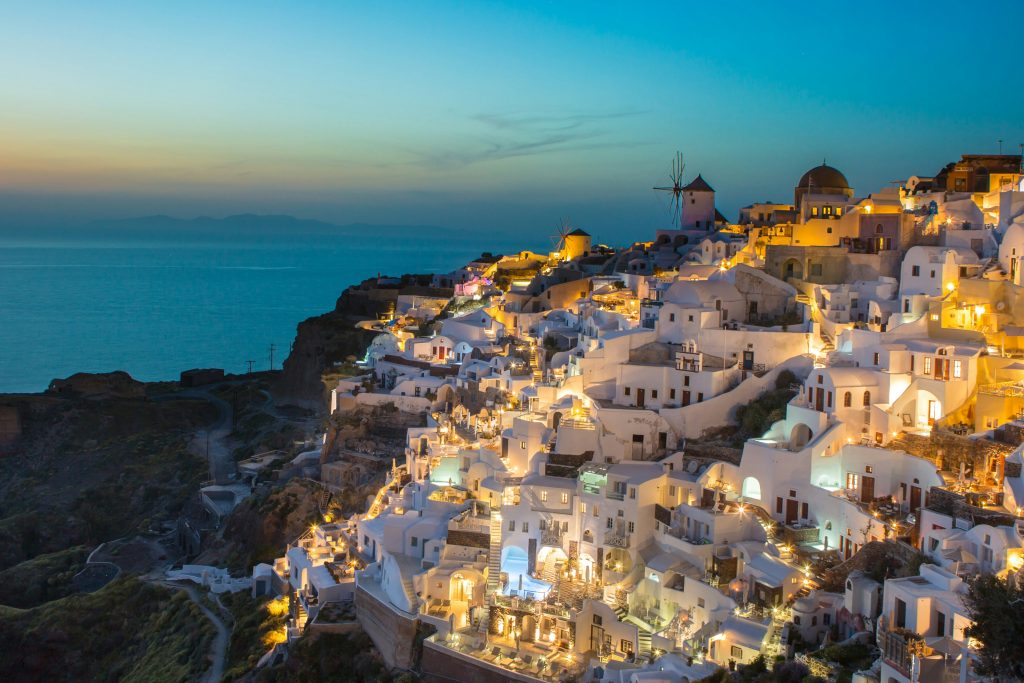
Oia
Oia is the most photographed village in Santorini.
It is famous for sunset views, luxury cave hotels, boutique shopping, and elegant architecture. While refined and romantic, Oia becomes heavily crowded during peak summer months.
Best for:
• Sunset photography
• Romantic getaways
• Luxury stays
Fira
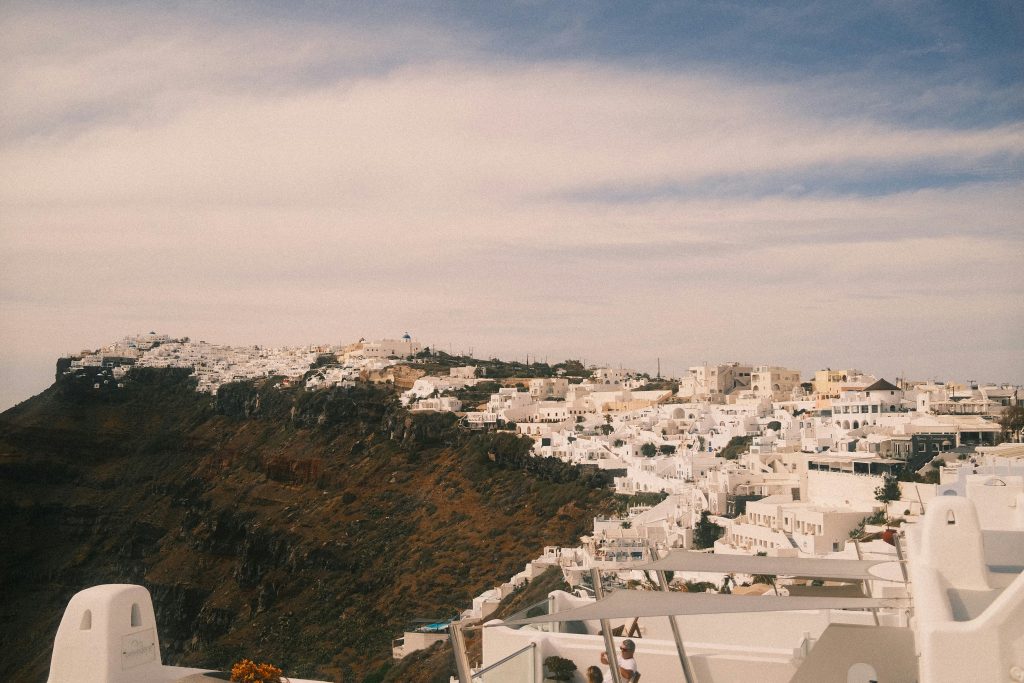
Fira is Santorini’s capital and transport center.
It combines caldera views with nightlife, shopping, restaurants, and bus connections. More dynamic and accessible than Oia, Fira serves as the island’s logistical hub.
Best for:
• Central positioning
• Rooftop dining
• Nightlife access
Imerovigli
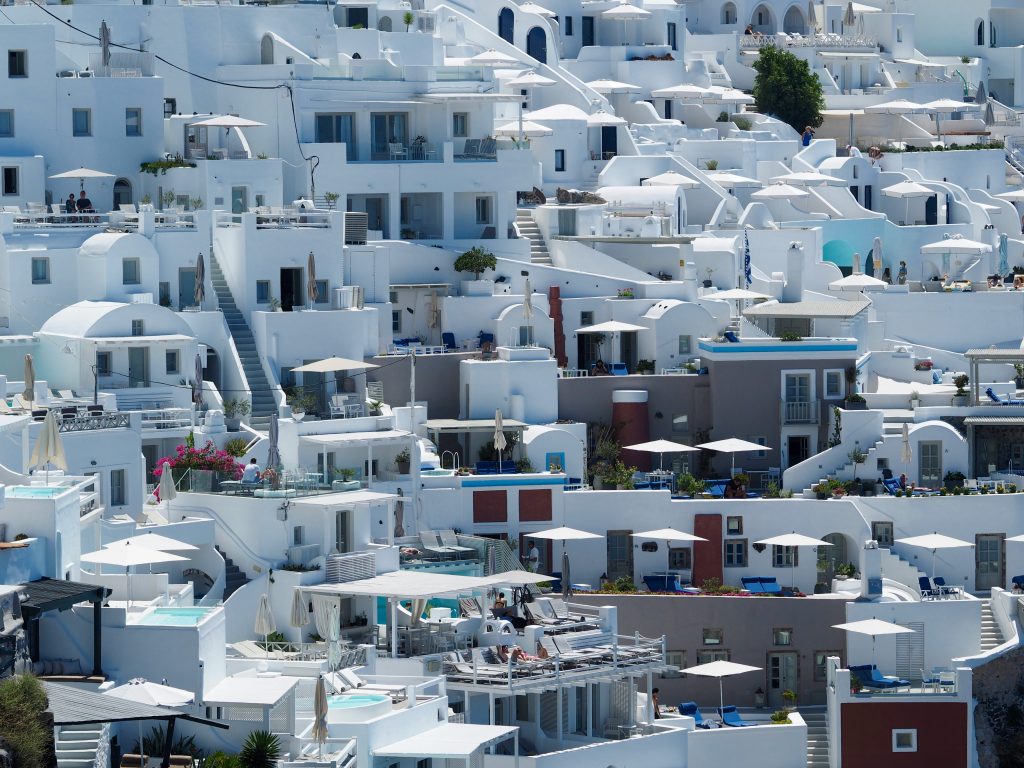
Imerovigli sits between Fira and Oia at one of the island’s highest elevations.
It offers dramatic cliff views, fewer crowds, and direct access to the caldera hiking path.
Best for:
• Honeymoons
• Quiet luxury
• Scenic walking routes
Pyrgos
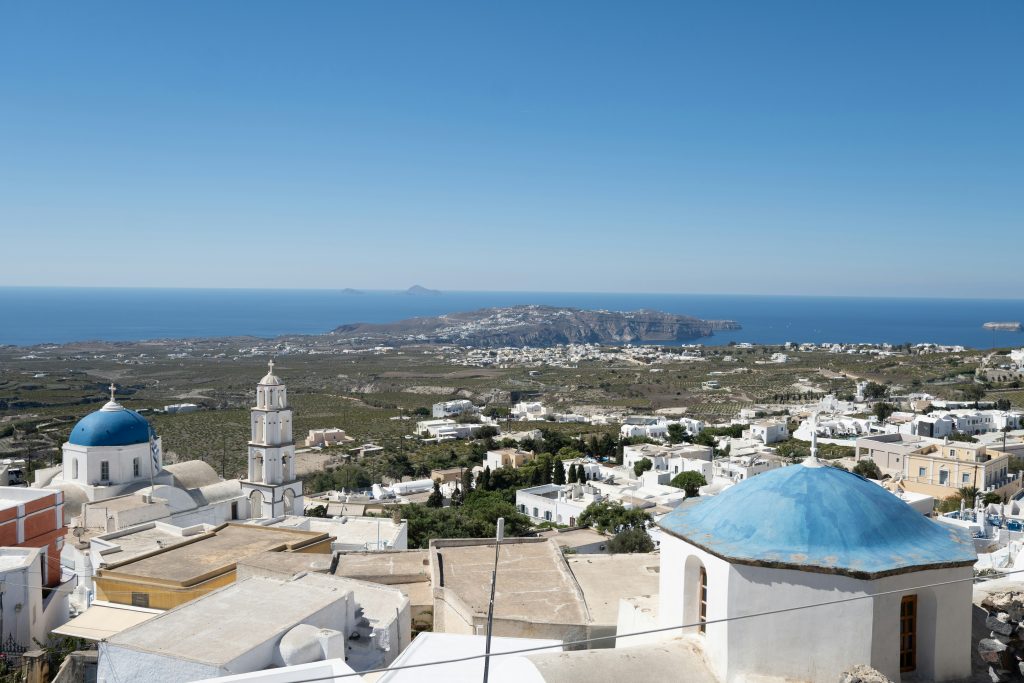
Pyrgos is an inland village with panoramic views.
More traditional and less commercial than caldera villages, it provides a slower rhythm and more local atmosphere.
Best for:
• Sunset without intense crowds
• Authentic tavernas
• Relaxed stays
Best Things to Do in Santorini
Caldera Walk (Fira to Oia)
A roughly 10-kilometer cliffside trail connecting Fira, Imerovigli, and Oia. The walk provides uninterrupted sea views and volcanic scenery. Begin early in the day to avoid heat.
Sunset Viewing
Oia Castle ruins attract the largest crowds, but alternative viewpoints include:
• Imerovigli cliff terraces
• Skaros Rock
• Pyrgos hill
Caldera Boat Tour
Boat excursions typically include:
• Volcanic hot springs
• Stop at Thirassia island
• Coastal views of Red Beach
A boat tour provides geological perspective that cannot be understood from land alone.
Akrotiri Archaeological Site
Often described as the “Greek Pompeii,” this Bronze Age settlement was preserved by volcanic ash and offers insight into Santorini before its catastrophic eruption.
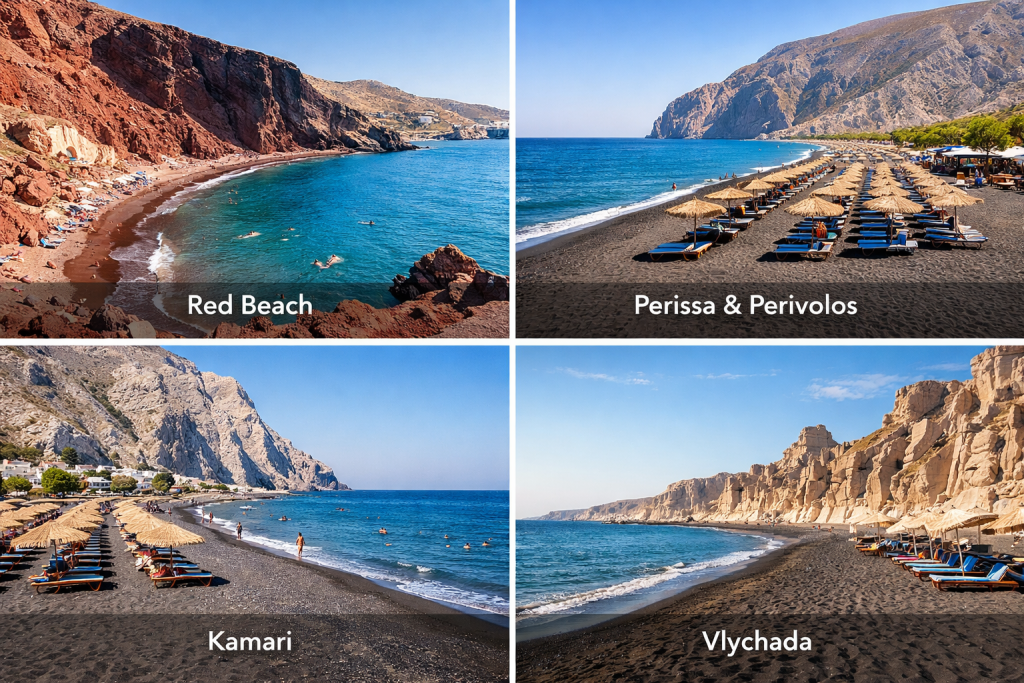
Santorini Travel Guide: Beaches Explained
Santorini beaches are volcanic in origin and differ from white-sand Mediterranean or Caribbean beaches.Travelers looking for dramatic turquoise cliff beaches may also enjoy destinations such as Lefkada, known for its striking Ionian coastline.
Red Beach
Surrounded by red volcanic cliffs and dark sand.
Perissa & Perivolos
Long black-sand beaches with organized facilities.
Kamari
Accessible and family-friendly.
Vlychada
Distinctive rock formations and fewer visitors.
Sea conditions vary depending on wind direction and seasonal currents.
Santorini Food & Wine
The island’s volcanic soil creates unique agricultural products.
Must-try dishes:
• Fava (yellow split pea purée)
• Tomato fritters
• White eggplant specialties
• Fresh seafood
Wine
Santorini is internationally known for Assyrtiko wine, grown in low basket-shaped vines to protect grapes from strong winds.
Wine tastings with caldera views are popular experiences, though premium-priced.
Where to Stay in Santorini
Caldera Side (Oia, Fira, Imerovigli)
• Iconic views
• Premium pricing
• Cliffside hotels
East Side (Kamari, Perissa)
• More affordable
• Beach access
• Easier parking
Your location choice significantly influences both cost and daily logistics.
Transport on the Island
Santorini is small but not easily navigated entirely on foot.
Options:
• Car rental – most flexible
• ATV rental – popular but accident-prone
• Public buses – economical but crowded
• Taxis – limited availability
Parking in Oia and Fira can be difficult during peak season.
Cruise Ship Reality in Santorini
Santorini ranks among the Mediterranean’s busiest cruise destinations.
During summer, multiple cruise ships may arrive simultaneously, bringing thousands of day visitors within hours. This dramatically increases crowd density in Fira and Oia between late morning and mid-afternoon.
Key considerations:
• Cruise arrivals usually occur between 10:30 AM and 4:30 PM
• Oia sunset zones become extremely congested
• Cable car lines in Fira can exceed one hour
• Major photo viewpoints fill quickly
To reduce congestion impact:
• Explore Oia before 9 AM
• Schedule caldera walks after 5 PM
• Visit inland villages during peak ship hours
• Review cruise schedules in advance
Understanding cruise patterns is essential for realistic planning.
Caldera Hotels: Practical Expectations
Caldera-view hotels are visually iconic but require realistic expectations.
Many infinity pools are semi-private. Public pathways often pass directly in front of terraces, limiting privacy.
Additional realities:
• Numerous steep stairs
• Minimal midday shade
• Premium pricing for direct sunset exposure
• Manual luggage handling
The views are extraordinary, but mobility and budget flexibility are necessary.
Where NOT to Stay in Santorini
Avoid caldera-side accommodation if:
• You are traveling on a tight budget
• You have mobility limitations
• You require easy parking
Avoid remote inland villas if:
• You are not renting a car
• You rely on public transportation
Families may prefer flatter beach areas like Kamari or Perissa over cliffside villages.
Santorini for Honeymoon vs Budget Travel
Santorini attracts diverse travelers but is not universally ideal.
Best suited for:
• Honeymoon couples
• Luxury-focused travelers
• Photography enthusiasts
• Slow, scenic experiences
Less ideal for:
• Backpackers seeking low-cost options
• Travelers prioritizing nightlife only
• Visitors expecting tropical beaches
Best Photo Spots in Santorini
Top locations include:
• Oia blue domes viewpoint
• Imerovigli cliff paths
• Skaros Rock
• Pyrgos castle
• Fira caldera terraces
Early morning offers softer light and fewer visitors. Sunset brings dramatic color but heavier crowds.
Similar dramatic coastal landscapes can also be found in other parts of southern Europe, but Santorini’s caldera setting remains unique.
How to Avoid Crowds in Santorini
• Travel in May, early June, late September, or October
• Explore early morning
• Stay outside central caldera zones
• Walk at sunrise
• Dine before peak sunset hours
Strategic timing reshapes the experience.
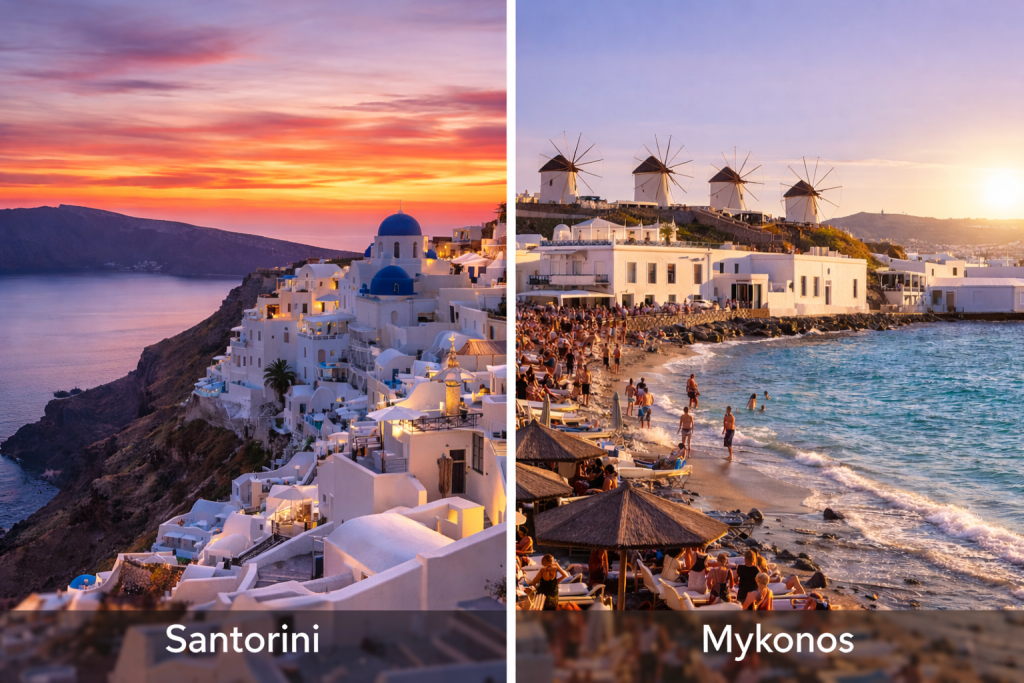
Santorini vs Mykonos: Choosing the Right Island
Santorini offers volcanic drama and romantic scenery, while Mykonos is known for beach clubs, nightlife, and cosmopolitan energy.
Travel style determines preference.
Safety & Practical Awareness
• ATV accidents are common
• Cliff edges may lack guardrails
• Tourist menus can be overpriced
• Taxi availability is limited
General awareness ensures safety.
Weather & Best Time to Visit
Spring (April–June): ideal
Summer (July–August): hot and crowded
September–October: excellent balance
Winter: quiet, limited services
Meltemi winds influence summer comfort.
Travel Costs & Budget Expectations
Santorini ranks among Greece’s most expensive islands.
Coffee: €3–5
Cocktails: €15–25
Mid-range dinner: €20–40
Luxury hotels: premium rates
Affordable stays exist outside caldera zones.
Prices in Santorini can vary significantly depending on the exact view, location, and season, even within the same village.
Important Realities
• Extreme sunset congestion
• Cruise ship impact
• Steep pathways
• Limited shade
• View-based pricing
Planning improves comfort.
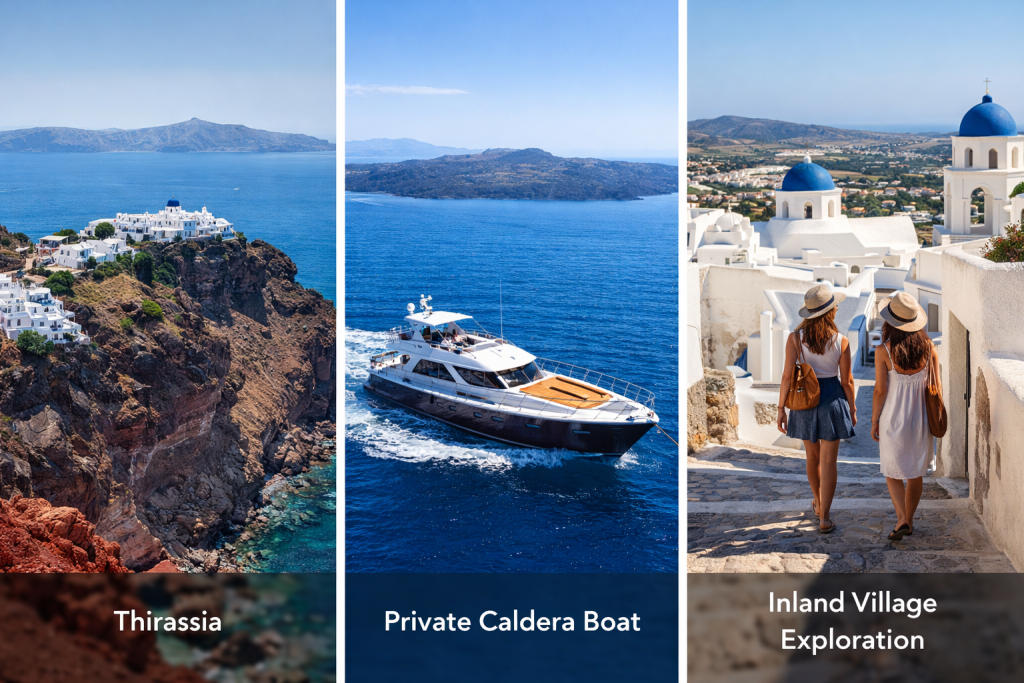
Best Day Trips
• Thirassia
• Private caldera boat
• Inland village exploration
Travelers exploring Mediterranean islands often notice that each destination offers a very different experience depending on landscape, culture, and pace.
Santorini works best when combined with slower exploration rather than trying to compare too many islands in one trip.
Common Mistakes
Visiting only Oia
Booking too few nights
Ignoring heat
Skipping boat tours
Expecting white sand beaches
How Many Days Do You Need?
2–3 days: highlights
4–5 days: relaxed
Longer: ideal off-season
Mini FAQ
Is Santorini expensive?
Yes.
Is Santorini safe?
Very safe.
Do you need a car?
Recommended.
Is English spoken?
Widely.
Explore More Greece Travel Guides
If you are planning a wider trip across Greece, these guides may help:
- Greece Travel Guide
- Athens Travel Guide
- Mykonos Travel Guide
- Lefkada Travel Guide
- Skiathos Travel Guide
More Mediterranean Island Destinations
If you enjoy island landscapes, these destinations may inspire your next trip:
- Amalfi Coast Travel Guide
- Sicily Travel Guide
- Sardinia Travel Guide
- Balearic Islands Travel Guide
- Canary Islands Travel Guide
Final Thoughts
Santorini is dramatic, volcanic, and defined by light.
Its identity is shaped by eruption, wind, architecture, and sea. Beyond its global imagery lies an island with agriculture, history, and everyday rhythm.
This Santorini Travel Guide is structured to help you plan realistically, navigate crowds intelligently, and experience the island with depth rather than illusion.