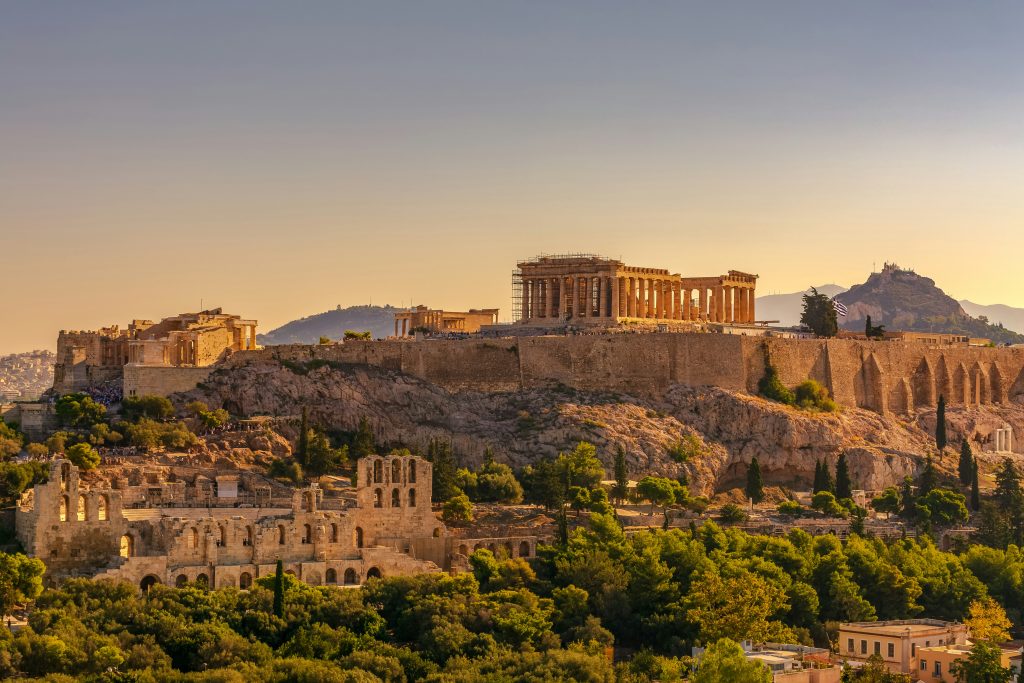
This Athens Travel Guide explores a city where ancient history and modern life exist side by side in Greece’s vibrant capital.
Here, classical marble temples tower above crowded boulevards. Contemporary rooftop lounges look directly at monuments that shaped Western philosophy. Street markets, political debates, creative expression, and daily routines unfold beneath the bright Attic sky. Many travelers begin their journey in Athens before continuing to famous Greek islands such as Santorini or Mykonos, two destinations that offer very different island experiences.
Athens is textured, intellectual, energetic, imperfect, and undeniably alive.
This in-depth Athens Travel Guide explores the city’s iconic landmarks, essential neighborhoods, culinary culture, public transport system, accommodation strategy, travel costs, safety realities, seasonal differences, common mistakes, and practical advice to help you understand the Greek capital beyond surface impressions.
Entry Requirements, Currency & Connectivity
Athens follows Greece’s Schengen regulations.
Visitors from EU countries and many Western nations can stay visa-free for up to 90 days within a 180-day period. Entry policies depend on nationality, so always confirm official requirements before departure.
Currency
Greece uses the Euro (€).
Payment cards are widely accepted in hotels, museums, restaurants, and retail stores throughout Athens. However, smaller kiosks, bakeries, and open markets may prefer cash transactions. Keeping small bills on hand is recommended.
SIM Cards & Internet
Local SIM cards are available at Athens International Airport (ATH), city kiosks, and telecom providers. eSIM services are practical for short visits. Internet coverage across Athens is generally reliable, including in cafés and public spaces.
Airports & Arrival Information
Athens International Airport (ATH) is located approximately 20 kilometers from the historic center.From Athens, travelers can easily reach many Greek islands, including destinations such as Santorini, Mykonos, and quieter islands like Skiathos.
Travel options to central Athens include:
• Metro Line 3 – around 40 minutes
• Taxi – typically 30–40 minutes depending on traffic
• Airport bus – operates 24 hours daily
For most travelers, the metro provides the best combination of cost and reliability.
Athens Travel Guide: Key Areas & Neighborhood Overview
Understanding Athens begins with understanding its districts.
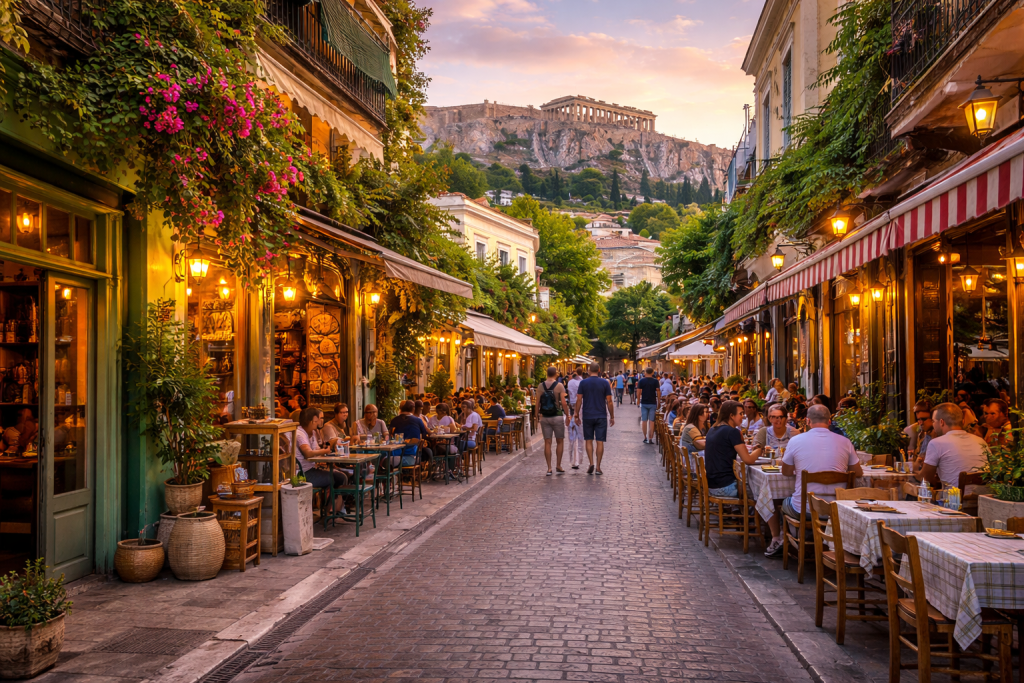
Acropolis & Plaka
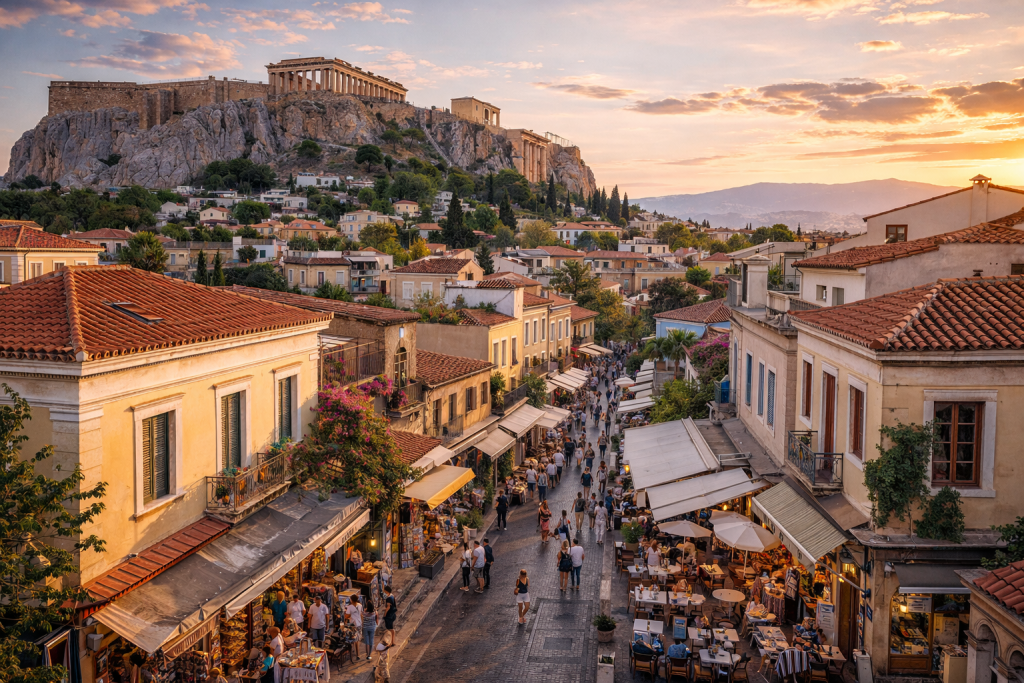
This is the historic core of Athens.
Plaka stretches beneath the Acropolis and features narrow pedestrian streets, neoclassical façades, traditional tavernas, and souvenir shops. It is extremely central and walkable, though often crowded during peak season.
Ideal for first-time visitors who want immediate access to major landmarks.
Koukaki
A more residential and authentic area.
Located near the Acropolis Museum, Koukaki offers a calmer atmosphere with independent cafés and better-value dining options.
Suitable for travelers seeking proximity to historic sites without heavy tourist density.
Monastiraki & Psiri
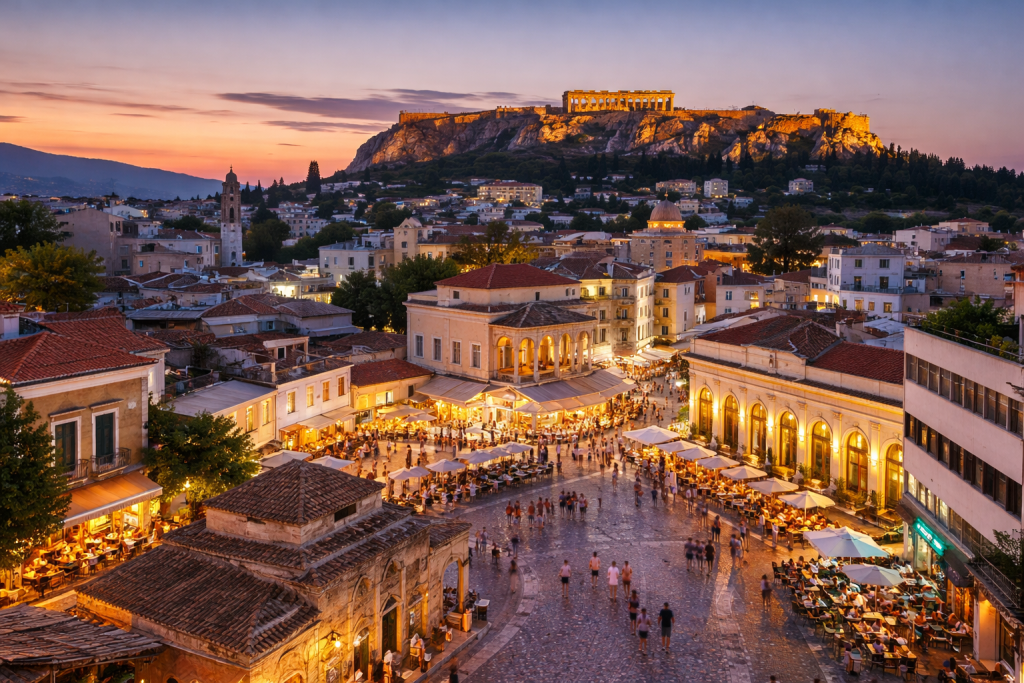
Energetic and commercial.
Open markets, rooftop terraces, flea stalls, street art, and nightlife define this district. It offers strong energy and short-stay convenience.
Kolonaki
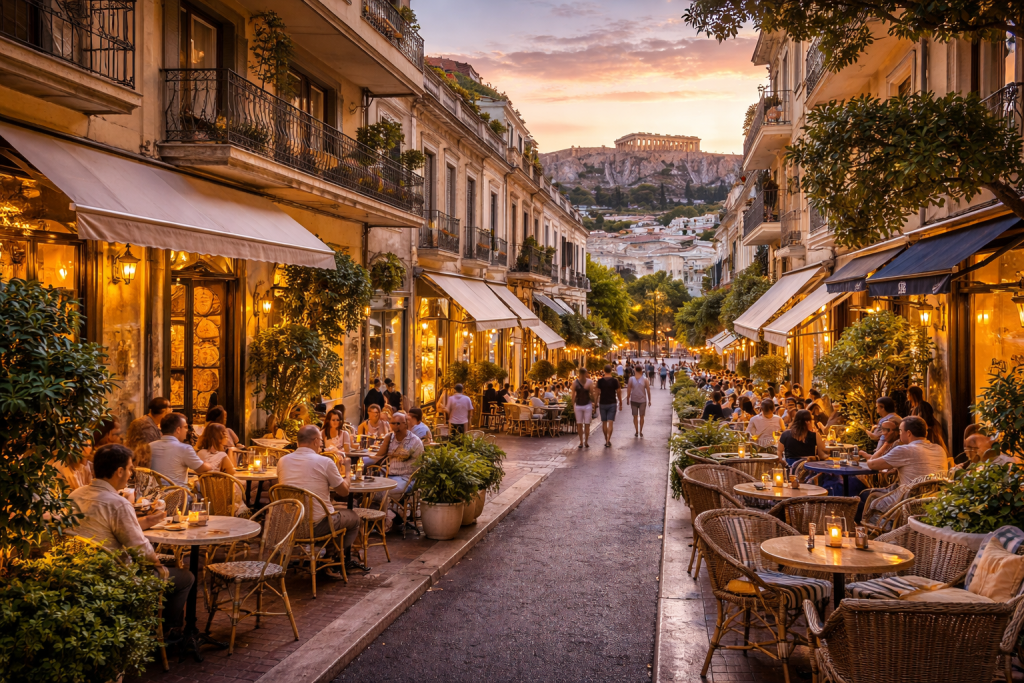
Elegant and upscale.
Situated on the slopes of Lycabettus Hill, Kolonaki is known for boutique shopping, galleries, and refined cafés. It feels more polished and less chaotic than central tourist zones.
Top Attractions in Athens
Acropolis & Parthenon
The Acropolis remains one of the most influential architectural complexes in world history.
Visit early in the morning to avoid heat and tour groups. The Parthenon dominates the skyline and remains the symbolic heart of Athens.After exploring the historic capital, many visitors continue their trip to the Greek islands, including scenic destinations such as Lefkada or the famous caldera landscapes of Santorini.
Acropolis Tickets & Crowd Strategy
Planning is essential, particularly during summer months.
A combined archaeological pass includes:
• Acropolis
• Ancient Agora
• Roman Agora
• Temple of Olympian Zeus
• Hadrian’s Library
Online booking is strongly recommended in high season.
Arrive at opening time (around 8:00 AM) or later in the afternoon for reduced crowd levels.
Certain public holidays offer free museum entry days.
Strategic timing dramatically improves the overall experience.
Acropolis Museum
A modern architectural space that contextualizes artifacts from the Acropolis site.
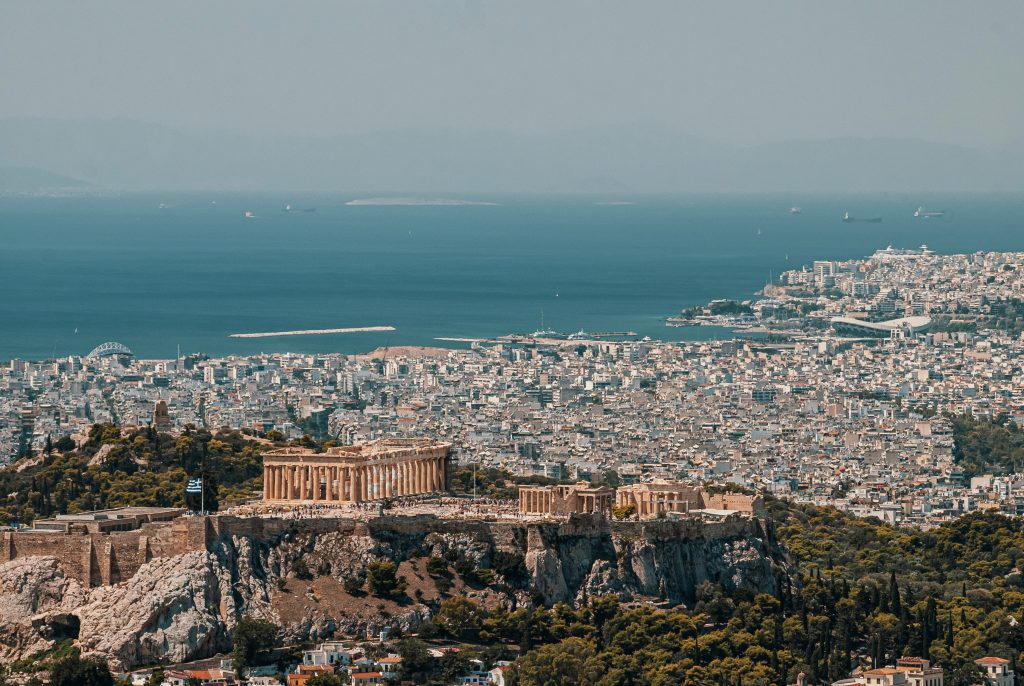
Lycabettus Hill
Provides panoramic views across Athens and toward the Saronic Gulf.
Ancient Agora
The birthplace of democracy and public debate. Typically quieter than the Acropolis.
National Archaeological Museum
Houses some of the most important artifacts from ancient Greek civilization.
Athens Food Scene
Athens combines traditional Greek cooking with modern reinterpretations.
Essential Foods to Try
Souvlaki
Gyros
Greek salad
Tzatziki
Spanakopita
Fresh seafood
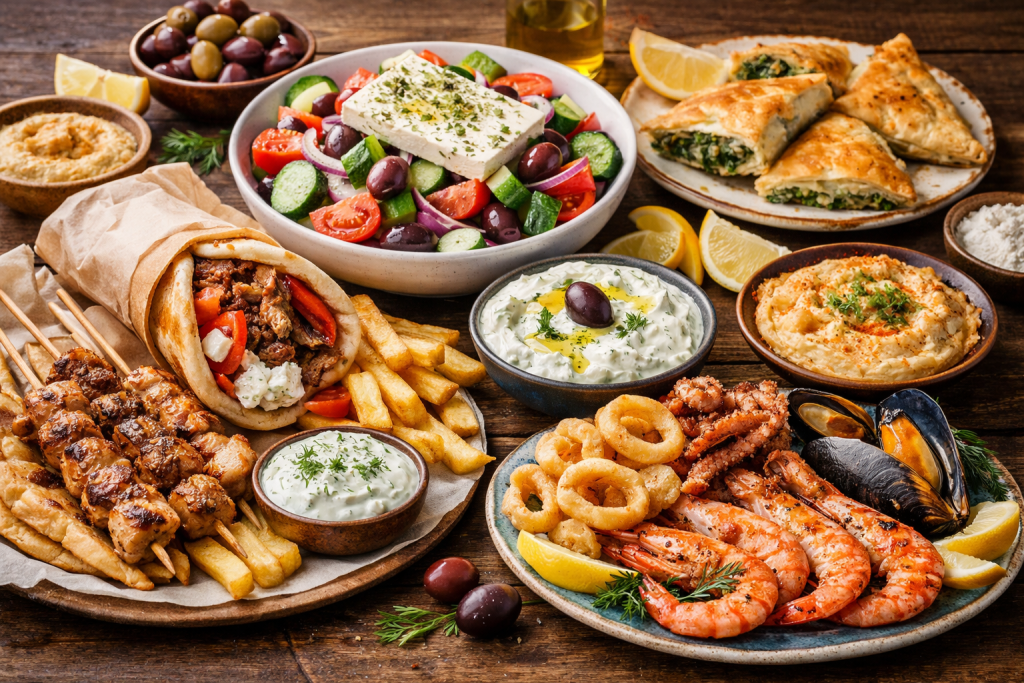
Dining culture in Athens is slow and social. Meals are meant to be shared and extended.
Best Rooftop Bars with Acropolis Views
Athens is known for rooftop venues overlooking the illuminated Acropolis.
Recommended locations include:
• 360 Cocktail Bar
• A for Athens
• Couleur Locale
Expect premium pricing compared to standard cafés. Sunset hours offer the most impressive lighting conditions.
How to Avoid Tourist Restaurants
For more authentic dining:
• Choose places with Greek-language menus
• Avoid establishments with aggressive street promoters
• Observe where locals dine during lunch hours
Street food often delivers stronger value and authenticity than restaurants near major landmarks.
Accommodation Strategy in Athens
Neighborhood selection influences experience more than hotel star rating.
Plaka – central and historic
Koukaki – balanced and local
Syntagma – strong transport connections
Monastiraki – nightlife access
Kolonaki – upscale environment
Getting Around Athens
Central Athens is highly walkable.
Metro
Efficient and modern.
Public Transport & ATH.ENA Ticket System
Athens uses the ATH.ENA ticket system.
Standard tickets allow 90 minutes of travel across metro, buses, and trams.
Airport metro tickets are priced separately from regular city tickets.
A 5-day tourist pass may offer savings for extended stays.
Tickets must be validated before use.
Taxi & Ride Apps
Relatively affordable compared to many Western European cities.
Car Rental
Not recommended for use within the city center.
Important Realities About Athens
• Pavements are uneven
• Marble surfaces become slippery
• Summer heat can be extreme
• Graffiti is visible across many districts
• Traffic patterns are unpredictable
Athens feels authentic rather than curated.
Safety Considerations
Athens ranks as generally safe.
• Omonia Square late at night may feel uncomfortable
• Parts of Exarchia are politically active
• Pickpocketing may occur in crowded metro stations
Standard awareness is sufficient for most visitors.
Weather & Best Seasons to Visit
Spring (April–June) – ideal climate
Summer (July–August) – extremely hot
Autumn (September–October) – excellent balance
Winter – mild and quieter
May and September offer the best combination of weather and crowd levels.These months are also ideal for exploring Mediterranean destinations such as the Amalfi Coast, Sicily, or the scenic beaches of Sardinia.
Seasonal Variations
August:
Many residents leave the city; some smaller businesses close.
Winter:
Better for museum exploration and reduced tourist crowds.
Shoulder seasons provide optimal balance between cost and comfort.
Practical Travel Information
Electricity: Type C and F plugs, 230V
Tap water: Safe for consumption
Footwear: Good grip recommended due to marble streets
Sun protection: Essential during summer months
Typical Travel Costs in Athens
Coffee: €2–4
Street food: €3–6
Mid-range restaurant meal: €15–25
Hotels: from approximately €70 per night
Rooftop venues charge higher prices due to location and views.
Common Travel Mistakes
Focusing only on the Acropolis
Ignoring summer heat
Using Athens purely as transit
Skipping neighborhood exploration
Rushing the itinerary
Athens deserves at least two to three days.
Recommended Day Trips
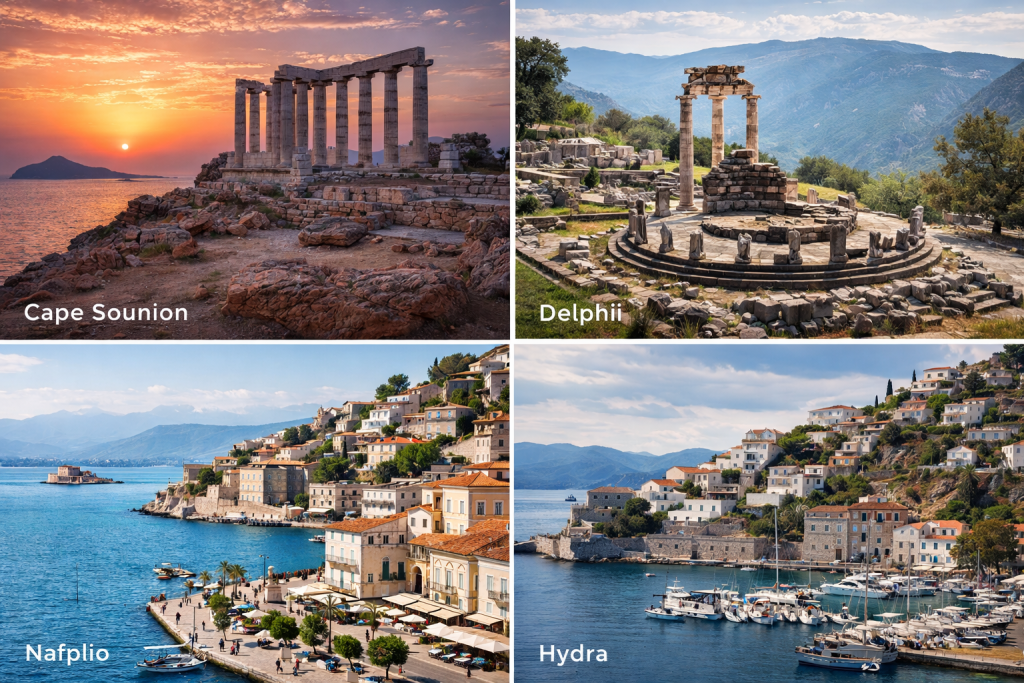
Cape Sounion
Cape Sounion is a dramatic coastal escape from Athens, famous for the Temple of Poseidon and unforgettable sunset views over the Aegean Sea.
Delphi
Delphi is one of Greece’s most important ancient archaeological sites, once considered the center of the ancient world and home to the legendary Oracle of Apollo.
Nafplio
Nafplio is a charming seaside town with neoclassical architecture, a Venetian fortress, and a relaxed atmosphere perfect for a scenic day trip from Athens.
Hydra
Hydra is a picturesque island near Athens where cars are banned, stone mansions overlook the harbor, and life moves at a calm, traditional pace.Travelers interested in island scenery may also enjoy exploring destinations such as Santorini, Mykonos, or the turquoise coastlines of Lefkada.
Frequently Asked Questions
Is Athens expensive?
Moderately priced compared to Western Europe.
Is Athens safe?
Yes, with standard precautions.
Is a car necessary?
No, not within the city.
Is English widely spoken?
Yes, especially in tourist areas.
This Athens Travel Guide is designed to help you explore the city with confidence.
Explore More Greece Travel Guides
If you are planning a wider trip across Greece, these travel guides may help:
- Greece Travel Guide
- Santorini Travel Guide
- Mykonos Travel Guide
- Lefkada Travel Guide
- Skiathos Travel Guide
More Mediterranean Destinations
If you enjoy coastal landscapes and historic cities, these Mediterranean guides may inspire your next trip:
- Amalfi Coast Travel Guide
- Sicily Travel Guide
- Sardinia Travel Guide
- Balearic Islands Travel Guide
- Canary Islands Travel Guide
Final Thoughts
Athens is layered rather than polished.
It is ancient and contemporary at once, chaotic yet magnetic. The Acropolis shapes the skyline, but everyday life defines the city’s rhythm.
If you slow your pace, explore multiple districts, and engage with the atmosphere beyond monuments, Athens becomes far more than a gateway to the islands.
This Athens Travel Guide is structured to help you navigate the Greek capital confidently, thoughtfully, and with deeper understanding.