Why Visit Egypt
This Egypt travel guide covers a destination where ancient civilization and modern travel experiences meet in a way that is difficult to replicate anywhere else.
Egypt stands out for three reasons:
- A concentration of world-famous historical landmarks
- Diverse landscapes including river valleys, deserts and coastlines
- A travel experience that combines culture, history and relaxation
Within a single itinerary, you can move from iconic monuments to tranquil beaches and scenic river journeys.Egypt is often compared to destinations like Morocco, Dubai, and Cappadocia for its cultural depth and unique landscapes.
Egypt Travel Quick Facts
- Best time to visit: October to April
- Currency: Egyptian Pound (EGP)
- Main airport: Cairo International Airport
- Ideal trip length: 7–10 days
- Language: Arabic
Best Places to Visit in Egypt
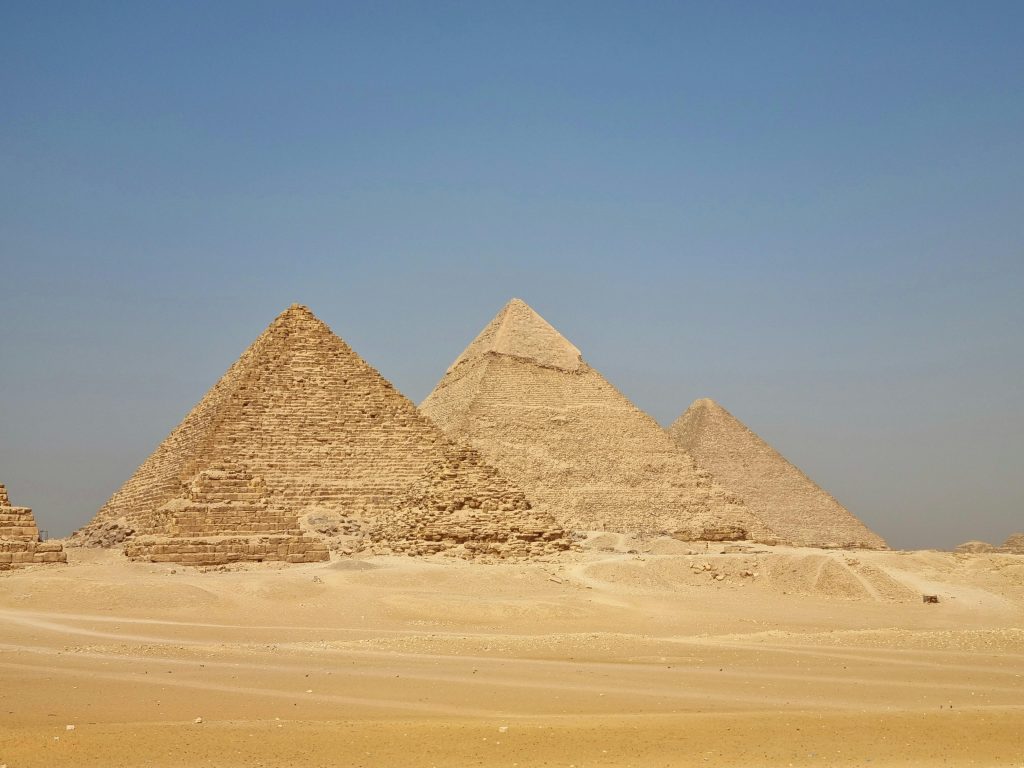
Cairo and the Pyramids of Giza
Cairo is the gateway to Egypt and home to some of the most recognizable landmarks in the world.
Key highlights:
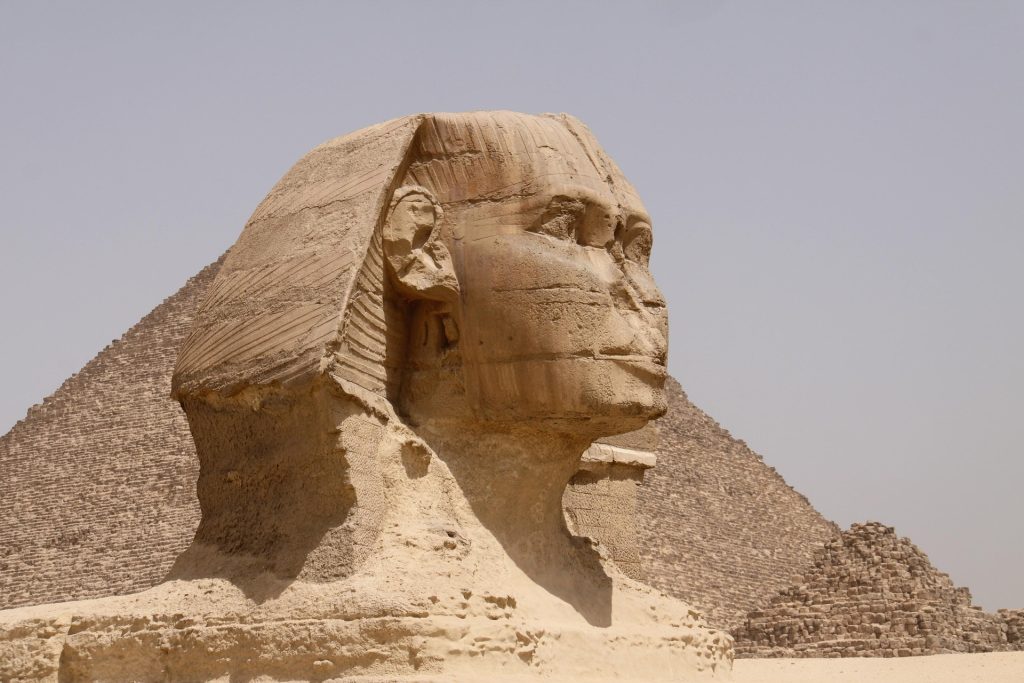
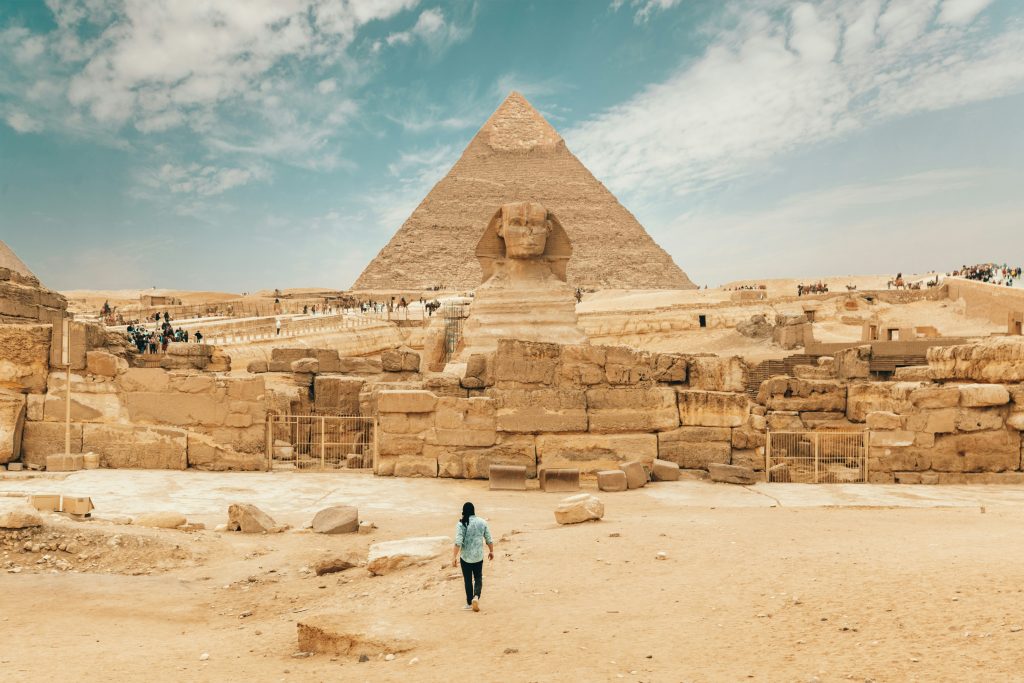
- The Pyramids of Giza and the Great Sphinx
- Major museum collections with ancient artifacts
- A fast-paced city with a mix of old and new districts
This is the essential starting point for any first visit.For similar large city experiences, travelers also visit Dubai and Barcelona.
Luxor
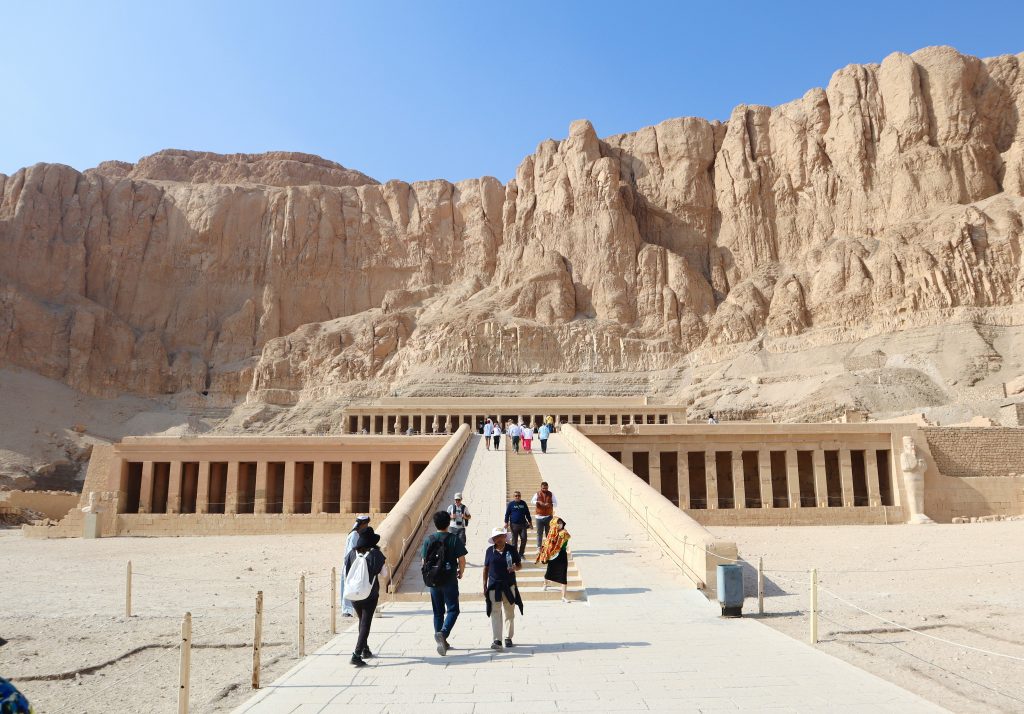
Luxor is often described as the largest open-air museum in the world.
What makes it unique:
- Large temple complexes such as Karnak and Luxor Temple
- The Valley of the Kings with royal tombs
- Scenic views along the Nile
It offers one of the most concentrated historical experiences in Egypt.For similar cultural destinations, travelers also explore Italy and Greece.
Red Sea Coast (Hurghada and Sharm El Sheikh)
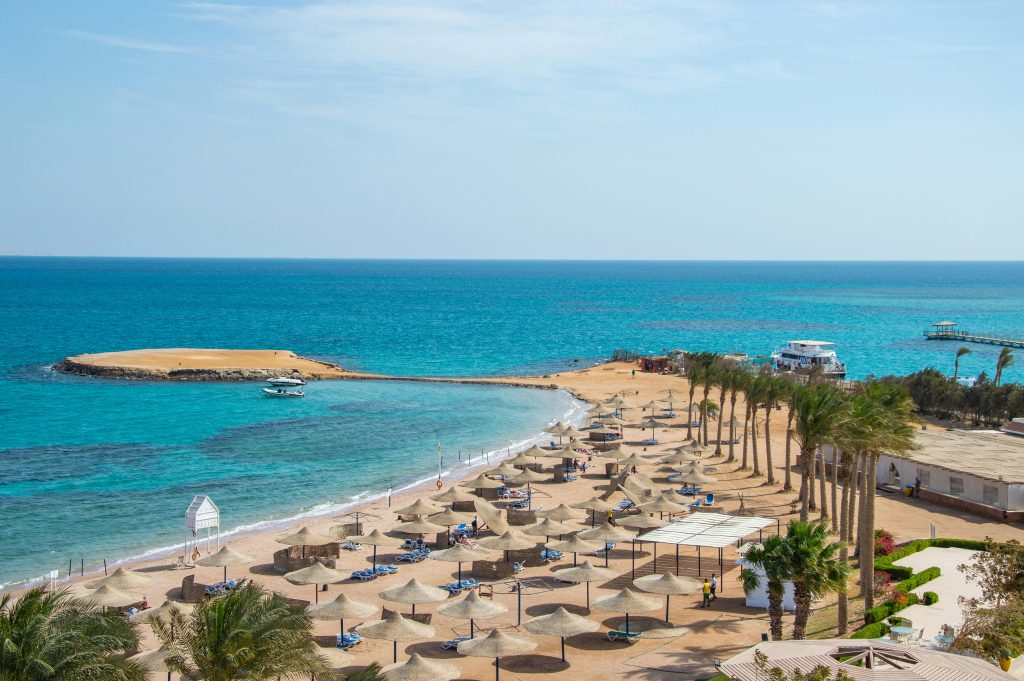
The Red Sea coastline is known for its clear water and marine life.
Reasons to include it:
- Strong conditions for snorkeling and diving
- Resort-style accommodation
- A relaxing contrast to city and historical sites
This region is ideal for adding a slower pace to your trip.This is often compared to destinations like Maldives and Caribbean islands.
Nile River Experience
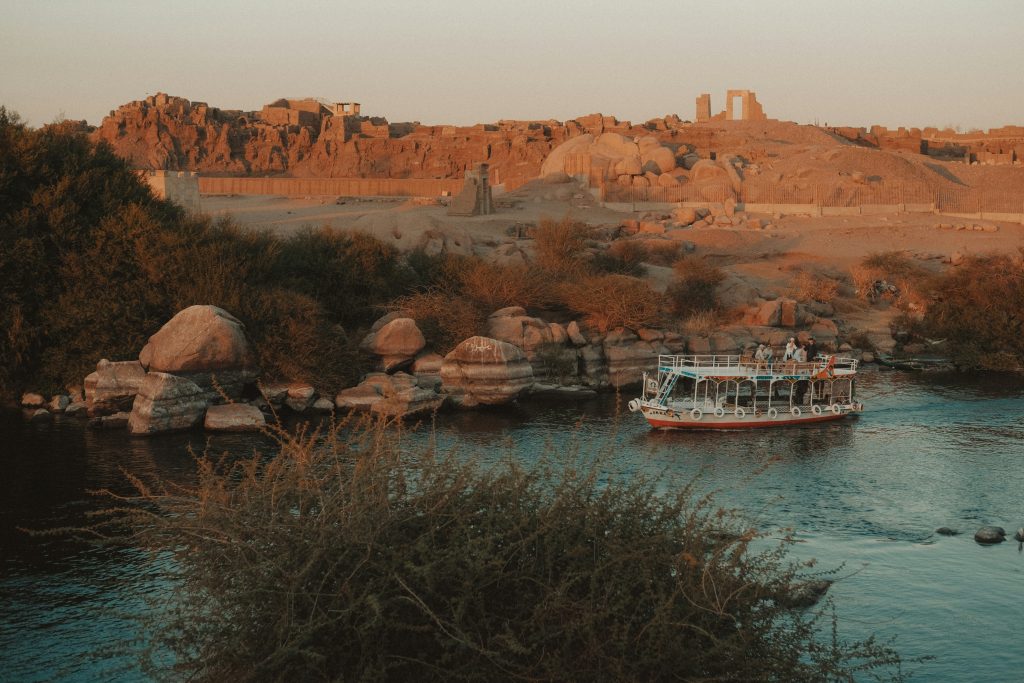
Traveling along the Nile offers a different perspective of Egypt.
Typical experiences:
- Multi-day cruises between Luxor and Aswan
- Visits to temples located along the river
- Quiet landscapes and sunset views
It is one of the most efficient ways to connect major sites.For similar scenic experiences, travelers also visit Norway fjords and Lake Bled.
Hidden Gems in Egypt
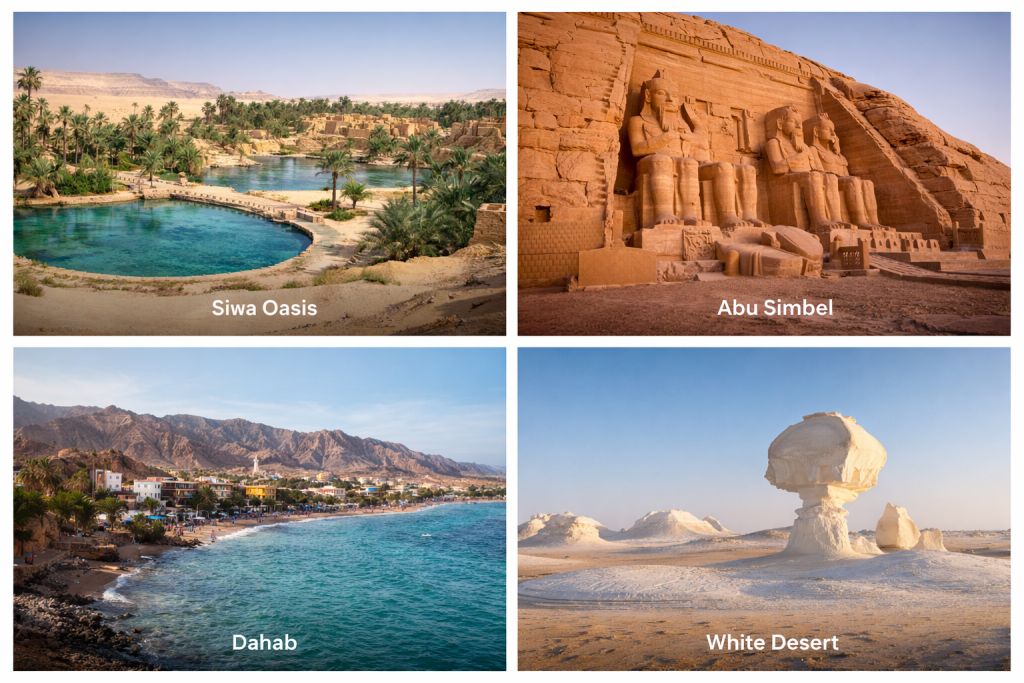
Beyond the main highlights, Egypt offers locations that are less crowded but equally memorable.
- Siwa Oasis – a remote destination with natural springs and desert landscapes
- Abu Simbel – monumental temples carved into rock near the southern border
- Dahab – a coastal town known for a more relaxed atmosphere
- White Desert – unusual rock formations shaped by wind and time
These places provide variety and depth to a standard itinerary.For more unique destinations, travelers also visit Cappadocia, Bali, and Morocco.
Best Day Trips in Egypt
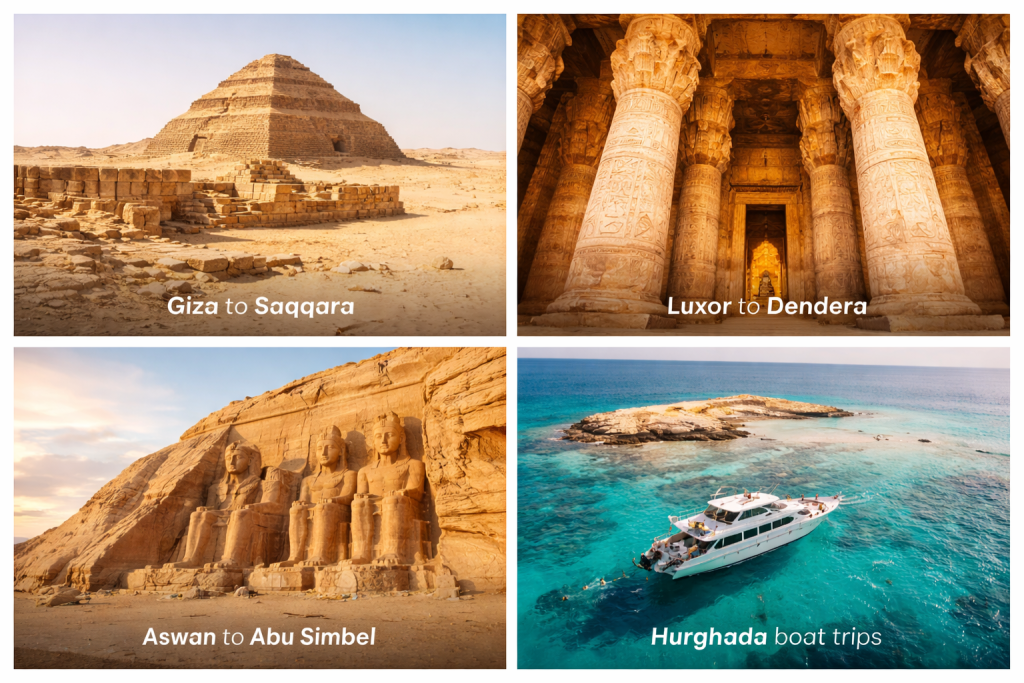
Egypt offers several day trips that can easily be added to your itinerary.
- Giza to Saqqara – explore older pyramids and historical sites
- Luxor to Dendera – visit one of the best-preserved temples
- Aswan to Abu Simbel – one of the most impressive temple complexes
- Hurghada boat trips – explore nearby islands and coral reefs
Day trips add variety without requiring major travel changes.
Best Time to Visit Egypt
- October to April – best conditions for sightseeing
- May to September – very hot, especially inland
- Winter months – ideal for cities and historical sites
Planning around weather is important due to high temperatures in certain regions.These months are also ideal for visiting destinations like Italy, Spain, and Greece.
Best Time for Specific Experiences in Egypt
- Visiting pyramids: early morning or late afternoon
- Nile cruise: October to April
- Red Sea: year-round, best visibility in warmer months
- Desert trips: cooler seasons recommended
Timing your activities improves the overall experience.
Best Things to Do in Egypt
- Visit the Pyramids of Giza
- Explore temple complexes in Luxor
- Take a Nile cruise
- Relax by the Red Sea
- Discover local markets and food
Combining history and leisure creates a balanced travel experience.
Unique Experiences in Egypt
Some experiences go beyond standard sightseeing.
- Watching sunrise at the Pyramids of Giza
- Hot air balloon ride over Luxor
- Sailing on a traditional felucca on the Nile
- Snorkeling in the Red Sea
These moments often become the highlight of a trip.
Where to Stay in Egypt
Accommodation varies widely depending on location and travel style.
Options include:
- Hotels in Cairo for city access
- Resorts along the Red Sea
- Cruise ships on the Nile
- Boutique stays in Luxor
Choosing the right type of stay depends on your itinerary.
Best Areas to Stay in Egypt
- Downtown Cairo – central location for sightseeing
- Giza – close to the pyramids
- Hurghada Marina – convenient for beach access
- Sharm El Sheikh – resort-focused stays
Location plays a key role in saving time and improving comfort.
Egyptian Food Guide
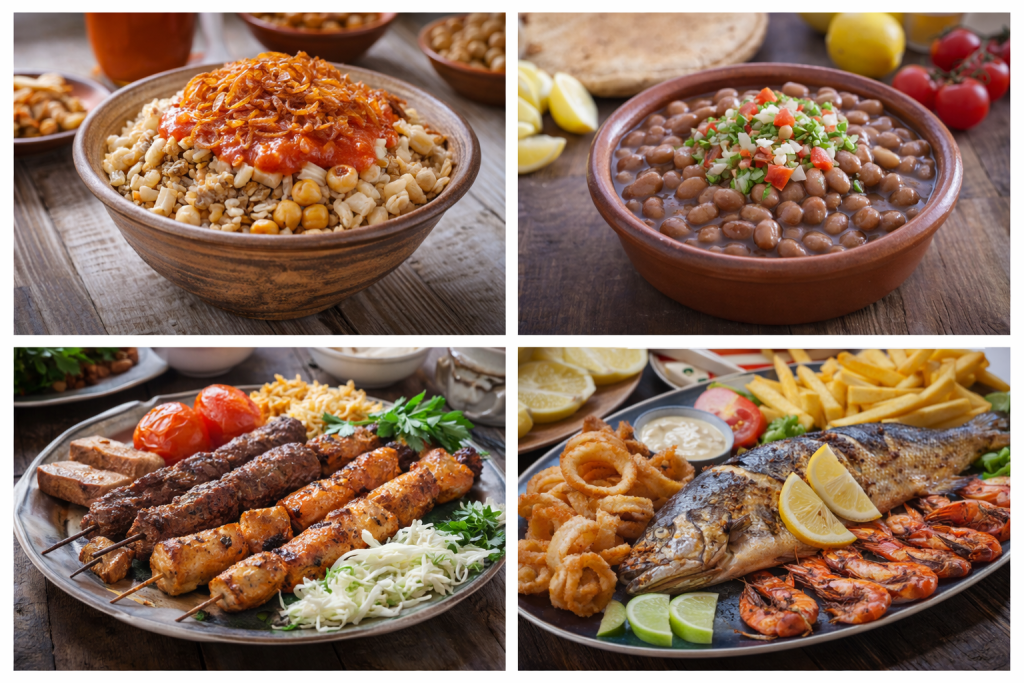
Local cuisine is simple, filling and widely available.
Popular dishes:
- Koshari – a mix of rice, pasta and lentils
- Ful Medames – a staple breakfast dish
- Grilled meats and kebabs
- Fresh seafood along the coast
Food is affordable and varies slightly by region.For more diverse cuisine, travelers also explore Italy and Spain.
Is Egypt Safe for Tourists
Egypt is a well-established tourist destination with structured travel routes.
Basic guidelines:
- Use official transport and tours
- Stay in known areas
- Follow local guidance when visiting sites
With standard precautions, travel is straightforward.
Cost of Travel in Egypt
Egypt is considered budget-friendly compared to many global destinations.
Typical daily costs:
- Budget: 25–50 USD
- Mid-range: 60–120 USD
- Luxury: 150+ USD
Prices vary depending on accommodation and activities.
Money and Payments in Egypt
- Currency: Egyptian Pound (EGP)
- Cash is widely used
- Cards accepted in larger hotels and restaurants
- ATMs available in major cities
Carrying small cash amounts is recommended.
Transportation in Egypt
- Domestic flights for long distances
- Trains between major cities
- Private drivers and taxis
- Organized tours for efficiency
Planning ahead improves travel time management.
Travel Times Between Major Cities
Understanding distances helps with better planning.
- Cairo to Luxor: 1 hour by flight, 9–10 hours by train
- Luxor to Aswan: 3–4 hours
- Cairo to Hurghada: 1 hour by flight or 5–6 hours by road
Choosing flights can save significant time during short trips.
Entry Requirements for Egypt
Before traveling, it is important to check entry requirements.
- Many travelers can obtain a visa on arrival
- An e-visa option is also available online
- Your passport should be valid for at least 6 months
Always verify requirements based on your nationality before traveling.
Internet and SIM Cards in Egypt
- Local SIM cards available at airports
- Reliable mobile data in cities
- Affordable packages for short stays
Useful for navigation and bookings.
Egypt Travel Tips
- Start sightseeing early in the day
- Stay hydrated
- Plan routes in advance
- Confirm prices before services
These small adjustments improve overall experience.
Common Travel Mistakes to Avoid in Egypt
Many travelers make avoidable mistakes when visiting Egypt.
- Trying to see too many places in a short time
- Not planning transportation in advance
- Visiting major sites at peak hours
- Ignoring local customs and dress expectations
Avoiding these mistakes can improve both comfort and efficiency.
What to Wear in Egypt
- Light, breathable clothing
- Comfortable walking shoes
- Modest outfits for cultural sites
- Sun protection is essential
Clothing choice affects comfort during travel.
Cultural Etiquette in Egypt
- Respect local customs
- Ask before taking photos of people
- Dress appropriately in religious areas
- Be polite in interactions
Understanding local culture improves communication.
Complete Egypt Itinerary (10 Days)
Day 1–2: Cairo
Explore the Pyramids of Giza, the Sphinx and major museums. Walk through local markets and experience the city atmosphere.
Continue your journey to Luxor on day 3.
Take a flight or train and settle in Luxor.
The fourth day is dedicated to the East Bank of Luxor.
Visit Karnak Temple and Luxor Temple.
On day 5, explore the West Bank of Luxor.
Discover the Valley of the Kings, Hatshepsut Temple and surrounding sites.
Day 6 brings a Nile experience.
Travel along the Nile and visit temples on the way.
Next, head to Aswan on day 7.
Visit Philae Temple and enjoy a calmer environment.
Days 8–9 are perfect for the Red Sea.
Relax in Hurghada or Sharm El Sheikh, swim, snorkel and enjoy the coast.
Finally, return to Cairo on day 10.
How Many Days Do You Need in Egypt
- 3–4 days: Cairo
- 5–7 days: Cairo and Luxor
- 7–10 days: Full experience including coast
More time allows deeper exploration.
How to Plan a Trip to Egypt
Planning a trip to Egypt is easier when you structure your journey in advance.
Start by choosing your main destinations such as Cairo, Luxor and the Red Sea. Book domestic flights early to save time, especially between Cairo and Luxor.
It is recommended to:
- Plan key activities in advance
- Choose accommodation in central locations
- Combine historical sites with relaxation
A well-structured plan makes the experience smoother and more enjoyable.
Best Photo Spots in Egypt
Egypt offers some of the most iconic photo locations in the world.
- Pyramids of Giza at sunrise or sunset
- Luxor temples with symmetrical columns
- Nile river views during golden hour
- Red Sea coastline with clear turquoise water
- Abu Simbel temples for dramatic scale
These locations are ideal for both photography and social media content.
Is Egypt Worth Visiting
Egypt offers a combination of historical depth and diverse travel experiences.
It is particularly suitable for travelers interested in:
- Ancient history
- Cultural exploration
- Mixed itineraries with relaxation
FAQs
Do you need a visa for Egypt?
Many travelers can obtain a visa on arrival.
Is Egypt suitable for first-time travelers?
Yes, especially with a planned itinerary.
What language is spoken in Egypt?
Arabic is the official language, but English is widely used in tourist areas.
Where to Go After Egypt
Many travelers continue their journey with these destinations:
Explore More Travel Guides
If you are planning more destinations, explore:
Final Thoughts
Egypt remains one of the most distinctive destinations available to travelers.
From historical landmarks to coastal environments, it offers a range of experiences that can be adapted to different travel styles.