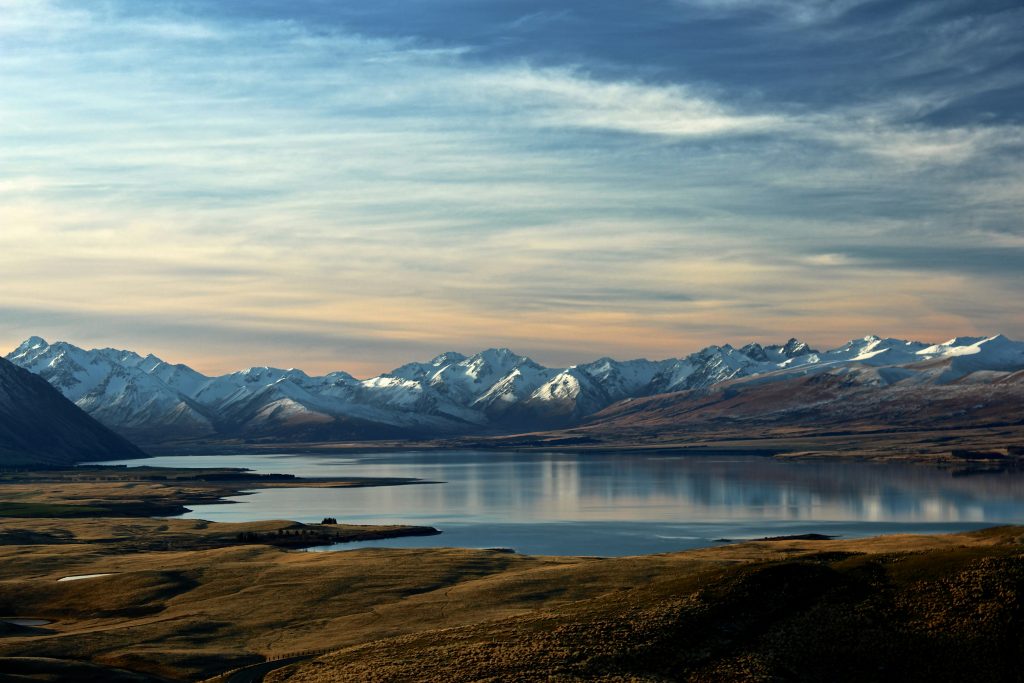
This New Zealand Travel Guide explores a country where nature defines everything — scale, atmosphere, travel pace, and experience. Travelers who enjoy large and diverse landscapes may also want to explore our Australia Travel Guide, which covers another massive destination known for coastlines, wildlife, and road trips. Travelers planning a wider trip may also want to compare destinations like Greece, Italy, and Portugal for different types of landscapes and travel experiences. Unlike destinations built around cities, New Zealand is built around landscapes. Snow-covered mountains rise sharply from turquoise lakes. Volcanic craters steam beneath open skies. Fjords cut through cliffs shaped by glaciers. Coastlines stretch into remote horizons where roads disappear into silence.
New Zealand does not overwhelm with size — it overwhelms with beauty.
Divided into two main landmasses — the North Island and the South Island — the country delivers two distinct travel identities within one destination. Planning intelligently is essential, because even though New Zealand appears compact on a map, the experience on the ground requires thoughtful pacing.
This complete guide covers everything essential:
• What New Zealand is famous for
• North Island vs South Island differences
• Best cities and natural landmarks
• Road trip planning and driving realities
• Budget breakdown by travel style
• Seasonal weather warnings
• Best photography locations
• Transport logistics and internal travel
• Cultural awareness
• Wildlife and food
• Common mistakes travelers make
If you are planning to travel to New Zealand, this guide will help you avoid rushed itineraries and unrealistic expectations.
Planning your route in advance can help you avoid common mistakes, reduce wasted travel time, and make your New Zealand trip feel much smoother.
What Is New Zealand Famous For?
New Zealand is globally recognized for landscapes that appear almost unreal.
It is famous for:
• Lord of the Rings and Hobbit filming locations
• The Hobbiton Movie Set in Matamata
• Milford Sound fjords
• Glowworm caves in Waitomo
• Māori cultural heritage
• The birthplace of commercial bungee jumping
• Alpine lakes such as Lake Tekapo and Lake Pukaki
• Untouched national parks
Because of geographic isolation for millions of years, New Zealand developed ecosystems unlike anywhere else in the world. There are no native land predators. Many species evolved flightless. Nature remains dominant.
If you enjoy destinations shaped by nature and islands, our Zanzibar Travel Guide also explores a unique island culture and tropical beaches in the Indian Ocean.
This identity is central to understanding New Zealand travel.
Entry Requirements, Currency & Connectivity
Most visitors must apply for the New Zealand Electronic Travel Authority (NZeTA) before arrival.
Visa-free travelers are typically allowed stays of up to 90 days, depending on nationality. Always confirm official requirements before booking flights.
Currency: New Zealand Dollar (NZD)
Card payments are widely accepted. Even small towns use contactless systems.
SIM cards are available at Auckland and Christchurch airports. Internet coverage is strong in cities but weaker in alpine areas and remote regions.
Geography & Travel Reality
New Zealand appears small compared to Australia — but travel time is deceptive.
Roads are often:
• Narrow
• Curved
• Mountainous
• Slower than expected
Driving 300 kilometers may take far longer than anticipated due to terrain.
Weather changes rapidly in alpine regions, particularly in the South Island.
Traveling in New Zealand requires flexibility.
Many first-time visitors underestimate how physically demanding long drives can be, especially on winding mountain roads. Planning shorter driving days and allowing time for stops can significantly improve the experience.
North Island Travel Guide
The North Island is warmer, culturally layered, and geologically active.
It offers volcanic landscapes, geothermal parks, and strong Māori heritage.
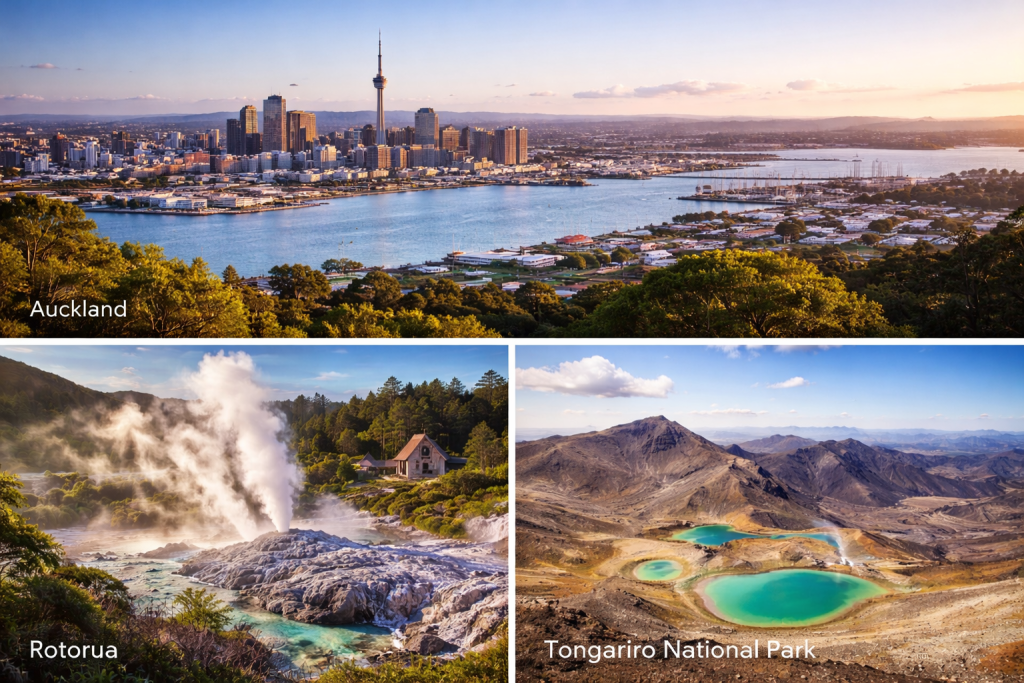
Auckland
New Zealand’s largest city.
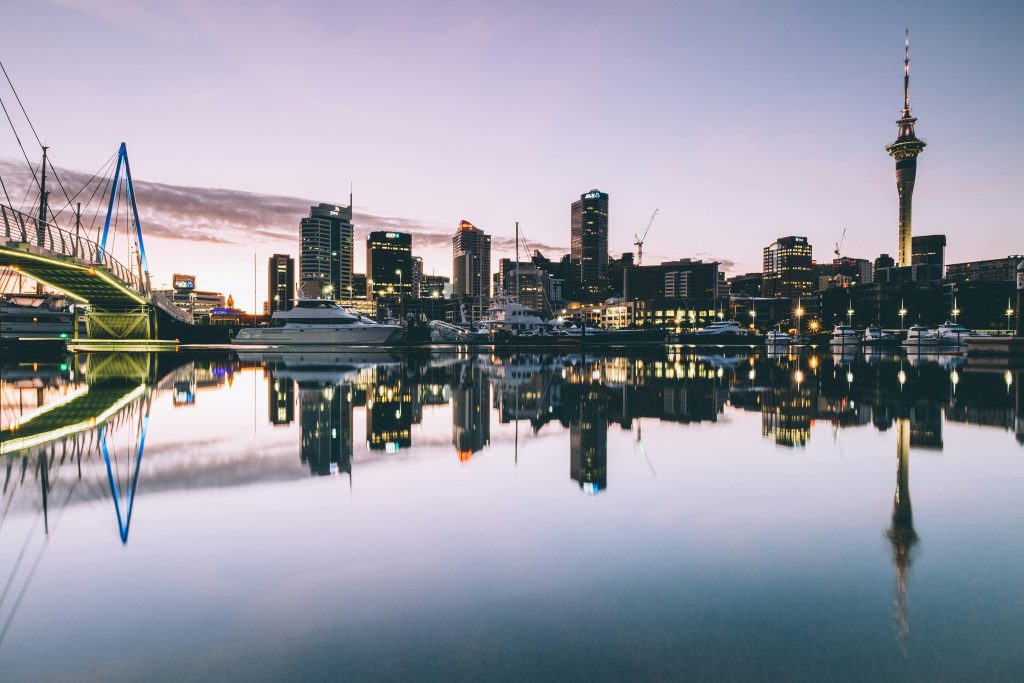
Built between two harbors and surrounded by volcanic cones, Auckland offers urban comfort combined with coastal access.
Highlights include:
• Waiheke Island wine tours
• Sky Tower observation deck
• Harbour sailing
• Rangitoto Island hiking
Auckland is a strong starting point for a North Island itinerary.
Rotorua
The geothermal heart of New Zealand.
Here you will experience:
• Active geysers
• Mud pools
• Sulfur steam vents
• Traditional Māori performances
Rotorua provides cultural depth alongside geological activity.
Tongariro National Park
Home to the Tongariro Alpine Crossing — often described as one of the best one-day hikes in the world.
- Volcanic craters.
- Emerald-colored lakes.
- Active geothermal features.
Weather conditions must be checked before hiking.
South Island Travel Guide
The South Island is visually more dramatic and remote.
It is known for alpine scenery, glaciers, and fjords.
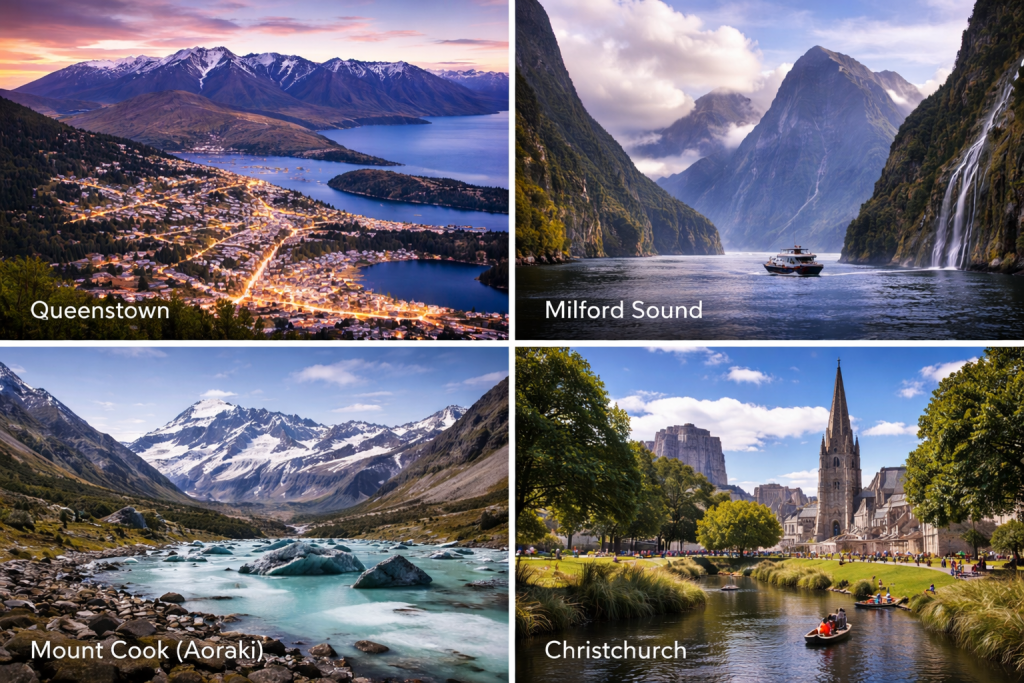
Queenstown
Often referred to as the adventure capital of New Zealand.
Activities include:
• Bungee jumping
• Skydiving
• Jet boating
• Alpine hiking
Queenstown combines adrenaline and luxury tourism.
Milford Sound
A fjord system characterized by:
• Sheer cliffs
• Powerful waterfalls
• Heavy rainfall
• Dramatic mist
Rain enhances its beauty rather than diminishing it.
Mount Cook (Aoraki)
The highest mountain in New Zealand.
Ideal for:
• Glacier viewpoints
• Scenic helicopter flights
• Stargazing in dark sky reserves
New Zealand works best when you plan by region instead of trying to see everything too quickly.
Christchurch
Modern, rebuilt, and structured.
Serves as a major South Island gateway.
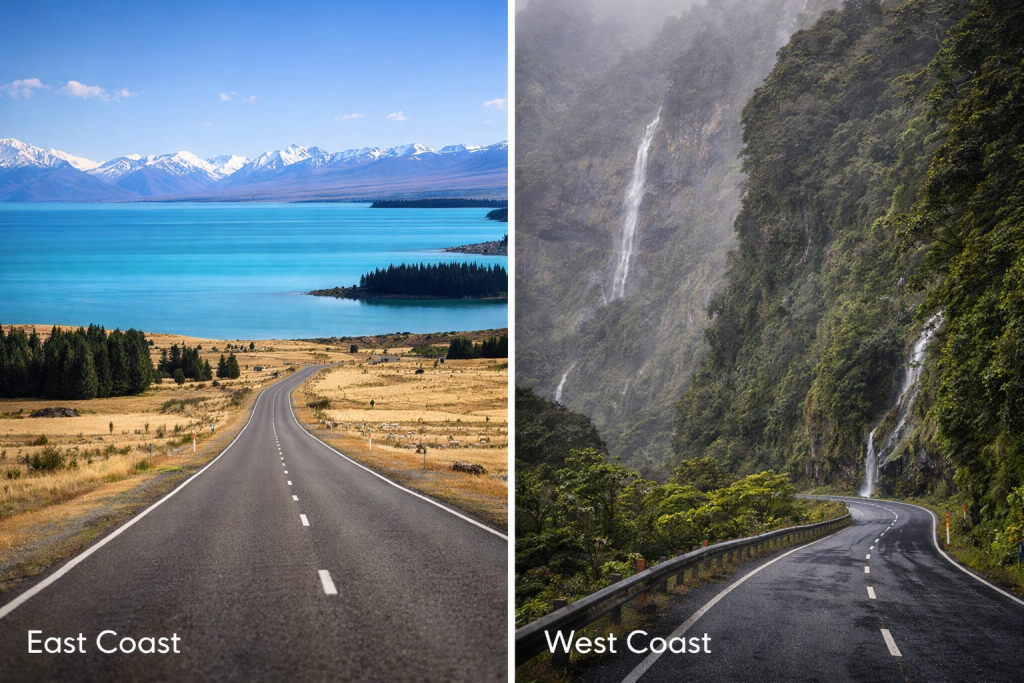
East vs West Coast (South Island Comparison)
Understanding this difference improves itinerary planning.
East Coast (Christchurch, Lake Tekapo, Dunedin)
• Drier climate
• Wider roads
• Agricultural plains
• Clear night skies
West Coast (Franz Josef Glacier, Milford Sound)
• High rainfall
• Dense rainforest
• Dramatic cliffs
• Narrow highways
East offers calm.
West offers intensity.
Best Photo Locations in New Zealand
For photography-focused travelers, prioritize:
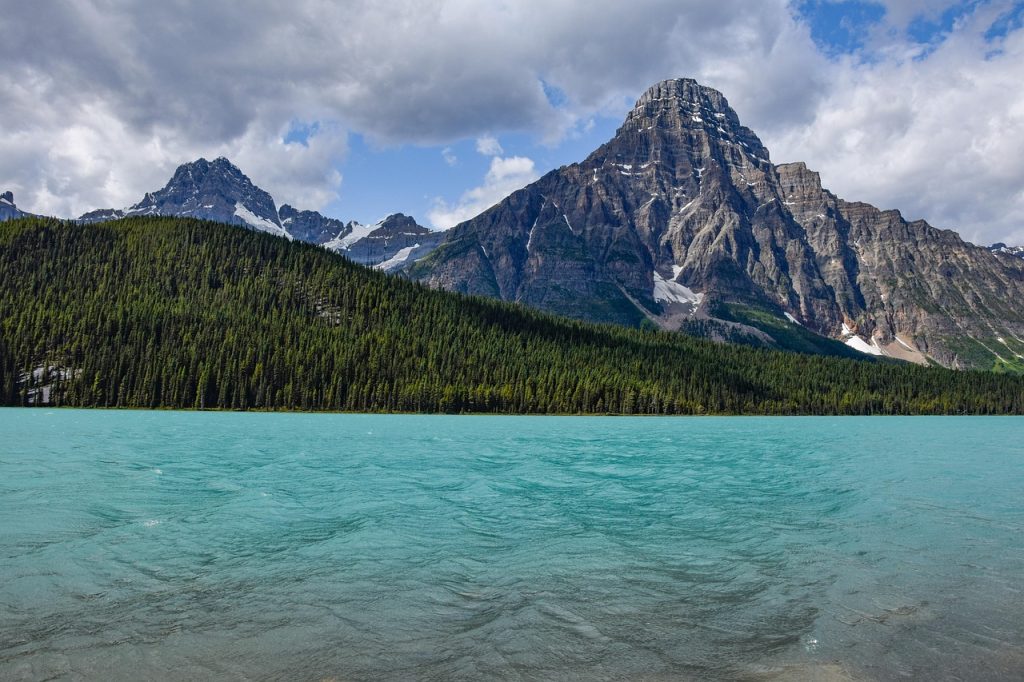
• Lake Tekapo (turquoise glacial water)
• Lake Pukaki with Mount Cook backdrop
• Roy’s Peak panoramic hike
• Milford Sound sunrise
• Hobbiton movie set
• Wanaka Tree
Golden hour dramatically transforms mountain landscapes.
Travelers interested in dramatic Mediterranean scenery may also want to see our Greece Travel Guide, which covers island landscapes and historic coastal towns. For coastal road trips and scenic drives, Spain is another destination worth exploring.
Road Trip Planning in New Zealand
New Zealand is one of the best road trip destinations globally.
Popular routes include:
• Auckland → Rotorua → Wellington
• Christchurch → Lake Tekapo → Queenstown
• West Coast Glacier Highway
Driving considerations:
• Driving on the left
• Single-lane bridges common
• Fuel stations limited in remote regions
• Mountain passes require caution
It’s common for travelers to plan routes based on distance instead of time, which often leads to rushed itineraries. In reality, even short distances can take several hours due to terrain and road conditions.
Campervan travel is extremely popular and offers flexibility.
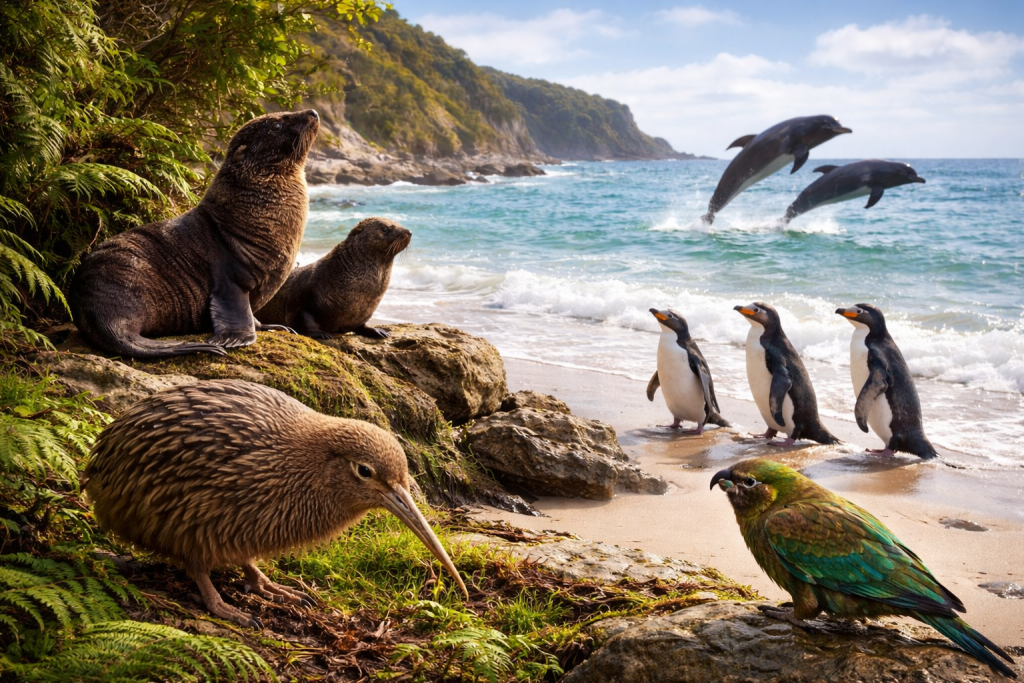
New Zealand Wildlife
New Zealand is known for birdlife rather than large mammals.
Famous animals include:
• Kiwi bird
• Kea alpine parrot
• Fur seals
• Little blue penguins
• Dolphins
Unlike Australia, there are no native snakes.
Best Beaches in New Zealand
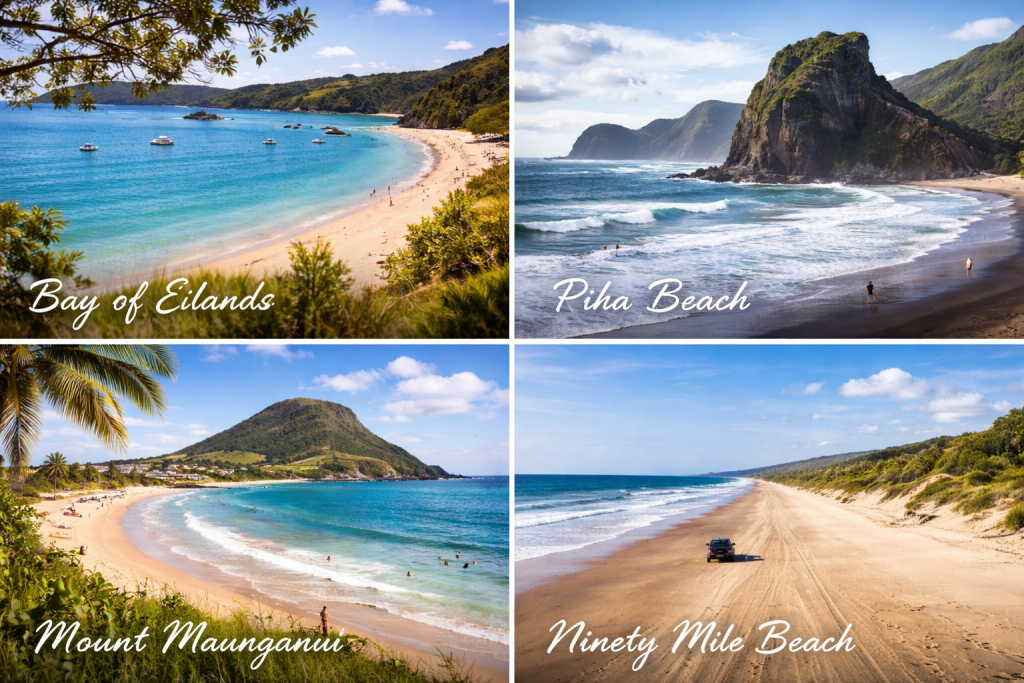
Although New Zealand is globally known for its mountains and fjords, the country also offers an impressive coastline with diverse beaches. From volcanic black sand to golden bays and remote coastal landscapes, beaches in New Zealand vary significantly between regions.
North Island Beaches
The North Island generally offers warmer water temperatures and more swimmable conditions during summer.
Bay of Islands
Located in the far north, this region offers calm, sheltered waters ideal for swimming, sailing, and boat excursions. It is one of the best coastal destinations in New Zealand for relaxed beach travel.
Piha Beach (near Auckland)
Famous for its dramatic black volcanic sand and rugged scenery. Strong waves make it popular with surfers, though swimmers should pay attention to safety flags.
Mount Maunganui
A well-developed beach town with long sandy stretches and consistent surf. It combines beach lifestyle with accessible facilities.
Ninety Mile Beach
Despite the name, it is approximately 88 kilometers long. This vast coastline offers a unique driving experience along hard-packed sand.
South Island Beaches
The South Island coastline is wilder and often less crowded. Water temperatures are cooler, but scenery is often more dramatic.
Abel Tasman National Park
One of the most beautiful beach regions in New Zealand. Golden sand, turquoise water, and forested hills create a visually striking setting. Accessible by hiking trails or water taxis.
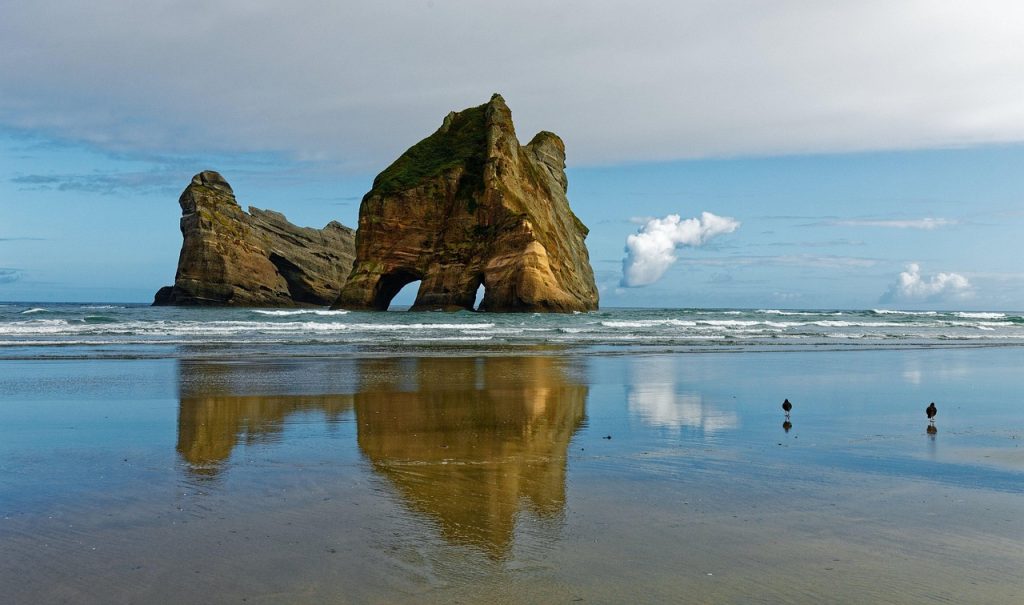
Wharariki Beach
Located near the northern tip of the South Island, this beach is known for wind-sculpted rock formations and expansive coastal views.
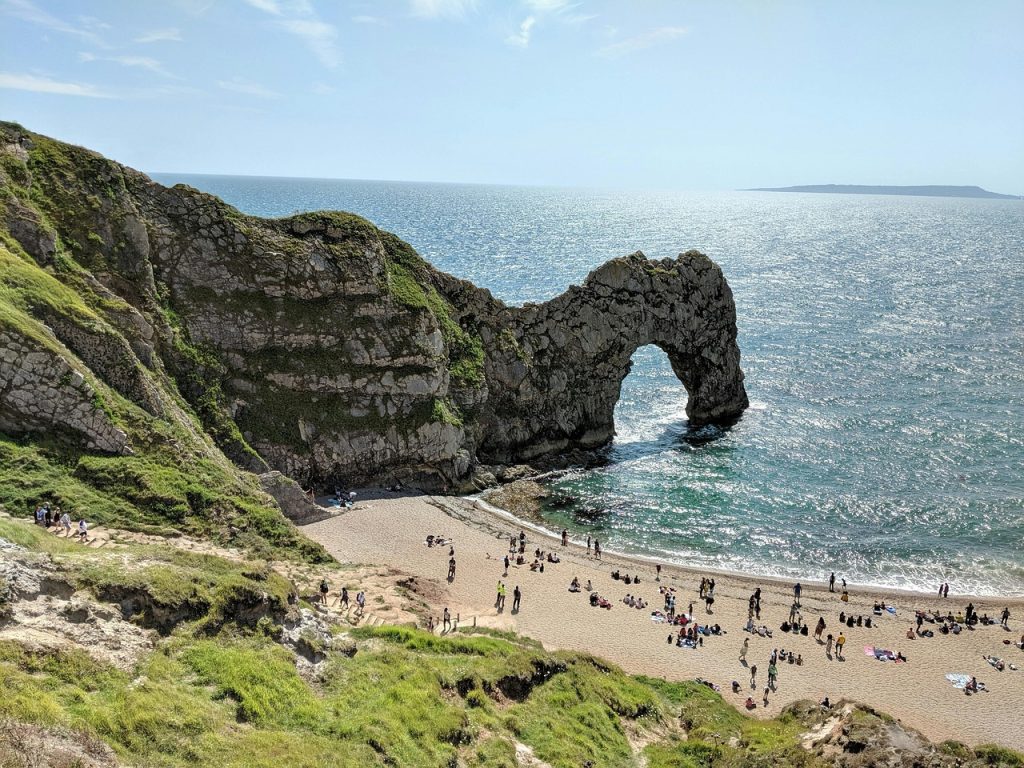
Dunedin Coast
This region combines wild beaches with wildlife viewing opportunities, including penguins and seals.
Travelers who love coastal destinations may also enjoy reading our Portugal Travel Guide, which covers the famous Atlantic coastline and the beaches of the Algarve.
New Zealand also has many smaller coastal areas that are worth exploring if you have extra time.
Swimming Conditions & Safety
New Zealand’s beaches are influenced by Pacific Ocean currents. Important considerations include:
• Water temperatures are cooler than in tropical destinations
• Rip currents can be strong
• Always swim between flagged areas on patrolled beaches
• Summer (December–February) offers the most comfortable conditions
While New Zealand is not primarily marketed as a tropical beach destination, its coastline offers raw, scenic, and often uncrowded beach experiences that complement the country’s mountain and fjord landscapes.
Famous Food & Drink in New Zealand
Cuisine emphasizes freshness and simplicity.
Signature items include:
• Lamb dishes
• Green-lipped mussels
• Fish and chips
• Meat pies
• Pavlova dessert
New Zealand is globally respected for:
• Marlborough Sauvignon Blanc
• Craft beer
• Flat white coffee

If you enjoy exploring food culture while traveling, our Italy Travel Guide highlights some of Europe’s most famous culinary destinations. France is another top destination for food-focused travel, especially for regional cuisine and wine culture.
New Zealand Travel Costs
New Zealand is not a low-budget destination.
Average daily expenses:
Accommodation → NZD 120–250
Meals → NZD 20–40
Coffee → NZD 4–6
Car rental → NZD 60–120
Budget Breakdown by Travel Style
Budget traveler → NZD 90–150 per day
Mid-range traveler → NZD 150–300 per day
Luxury traveler → NZD 350+ per day
Campervans reduce accommodation cost but increase fuel expense.
Climate & Seasonal Warnings
Weather varies dramatically by region.
Important considerations:
• Alpine snow in winter
• Avalanche zones in mountainous regions
• Heavy rainfall on West Coast
• Strong winds in Wellington
• Extremely high UV index year-round
Seasons:
Summer (Dec–Feb) → Peak season
Autumn (Mar–May) → Fewer crowds
Winter (Jun–Aug) → Ski season
Spring (Sep–Nov) → Variable weather
Weather conditions can change multiple times within a single day, especially in the South Island. Carrying layers and checking forecasts regularly is essential.
Transport in New Zealand
Domestic flights connect:
• Auckland
• Wellington
• Christchurch
• Queenstown
The Interislander Ferry connects North and South Islands.
Car rental is strongly recommended.
Public transport outside cities is limited.
If you enjoy scenic road trips and coastal drives, you may also enjoy our Spain Travel Guide, which explores both cities and Mediterranean coastline. Portugal is also known for scenic coastal drives and compact travel routes that are easy to plan.
Common Mistakes Travelers Make
• Attempting both islands in one week
• Underestimating driving time
• Ignoring weather forecasts
• Booking campervans too late
• Skipping travel insurance
New Zealand rewards slow pacing.
Trying to see too much in a short time is one of the biggest reasons travelers leave New Zealand feeling rushed instead of fulfilled.
How Many Days Do You Need?
Even with two weeks, careful planning is required to avoid excessive driving and to fully enjoy each region.
7 days → One island only
14 days → Both islands at faster pace
3+ weeks → Ideal experience
Mini FAQ
Is New Zealand expensive?
Yes, moderate to high.
Do you need a car?
Yes, especially outside cities.
Is New Zealand safe?
Extremely safe overall.
North or South Island?
North for culture and geothermal.
South for alpine scenery.
Other Travel Guides You May Like
If you are planning more international travel, explore our other detailed guides:
• Spain Travel Guide
• France Travel Guide
• Italy Travel Guide
• Portugal Travel Guide
• Greece Travel Guide
• Australia Travel Guide
• Zanzibar Travel Guide
Each guide includes destinations, itineraries, travel costs, and practical planning tips.
Before planning your trip, make sure your route, driving times, weather expectations, and accommodation choices are realistic.
Final Thoughts
New Zealand feels cinematic without trying.
Mountains rise abruptly.
Lakes reflect sky perfectly.
Roads stretch into valleys where silence dominates.
It is not about rushing.
It is about immersion.
If you plan regionally, allow time, and embrace road travel, New Zealand becomes unforgettable.
This New Zealand Travel Guide is designed to help you experience the country intelligently, safely, and without unnecessary stress.