In this Australia Travel Guide, you’ll discover a country that feels less like a single destination and more like a continent shaped by extremes — endless coastlines, tropical reefs, urban skylines, remote desert highways and vast national parks where silence stretches for miles.
Planning a trip to Australia requires understanding scale, climate variation, transport logistics, and realistic travel pacing. Unlike smaller destinations, Australia cannot be “done” quickly. It must be approached region by region.
If you enjoy large and diverse destinations, you will notice similar contrasts between landscapes, climates, and outdoor experiences.
This complete Australia travel guide covers:
• Major cities and state breakdown
• Best beaches in Australia by region
• The Outback and desert travel reality
• Great Barrier Reef travel planning
• Detailed visa information
• Transport strategy (flights, road trips, campervans)
• Cost breakdown by travel style
• Best time to visit each region
• Safety and wildlife awareness
• Practical itineraries (2–3 weeks)
• Common mistakes travelers make
If you want to plan Australia properly — this guide will give you the structure.
Australia often looks straightforward on a map, but planning becomes much more complex once distances and regional differences are understood.
Understanding Australia’s Scale
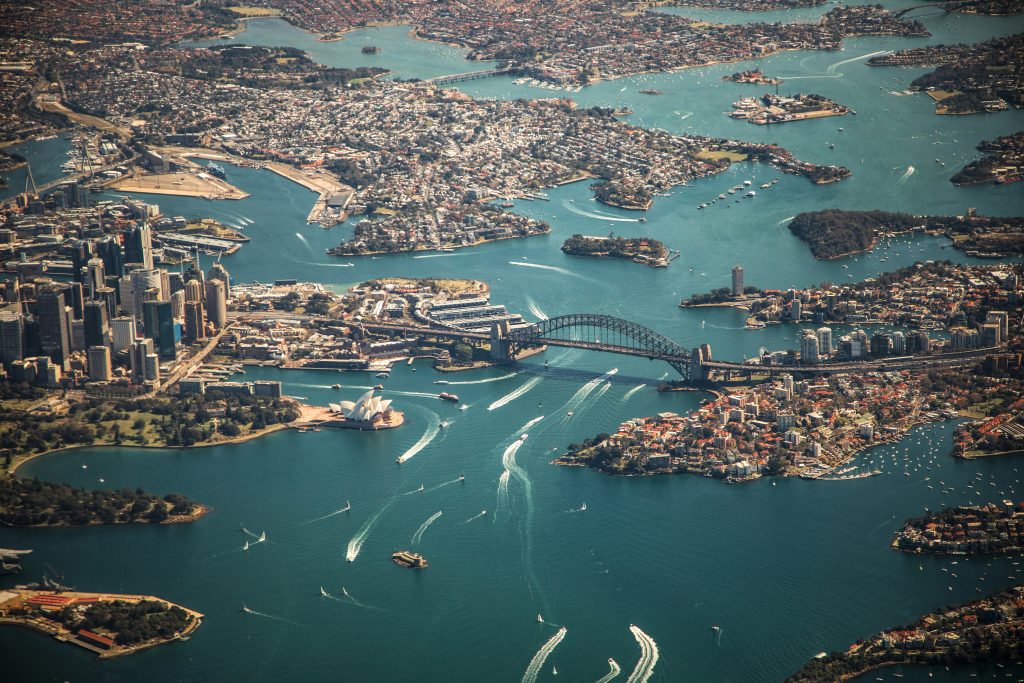
Australia is the sixth-largest country in the world. Distances between major cities are often longer than many travelers expect.
Sydney to Melbourne: ~1.5 hour flight
Sydney to Perth: ~5 hour flight
Driving Sydney to Cairns: over 25 hours without long stops
You cannot see all of Australia in one trip unless you have several months. Smart travel means choosing one or two regions per visit.
Entry Requirements & Visa Options
Most travelers require a visa or electronic authorization before entering Australia.
eVisitor Visa (Subclass 651)
Available for many EU passport holders.
• Free application
• Valid for 12 months
• Allows stays up to 3 months per visit
ETA (Subclass 601)
Available to selected nationalities including the USA.
• Small application fee
• Multiple entries
• 3-month stays per visit
Working Holiday Visa (Subclass 417 / 462)
Popular among young travelers.
• Age limits apply (typically 18–30 or 35 depending on country)
• Allows employment while traveling
• Valid for 12 months
• Extension possible through regional work
Always confirm official requirements before booking non-refundable flights.
Currency, Payments & Connectivity
Currency: Australian Dollar (AUD)
Australia is largely cashless in cities. However, remote areas may have limited payment systems.
Prepaid SIM cards are widely available at airports. Coverage is strong in metropolitan areas but inconsistent in rural and Outback regions.
Major Regions of Australia
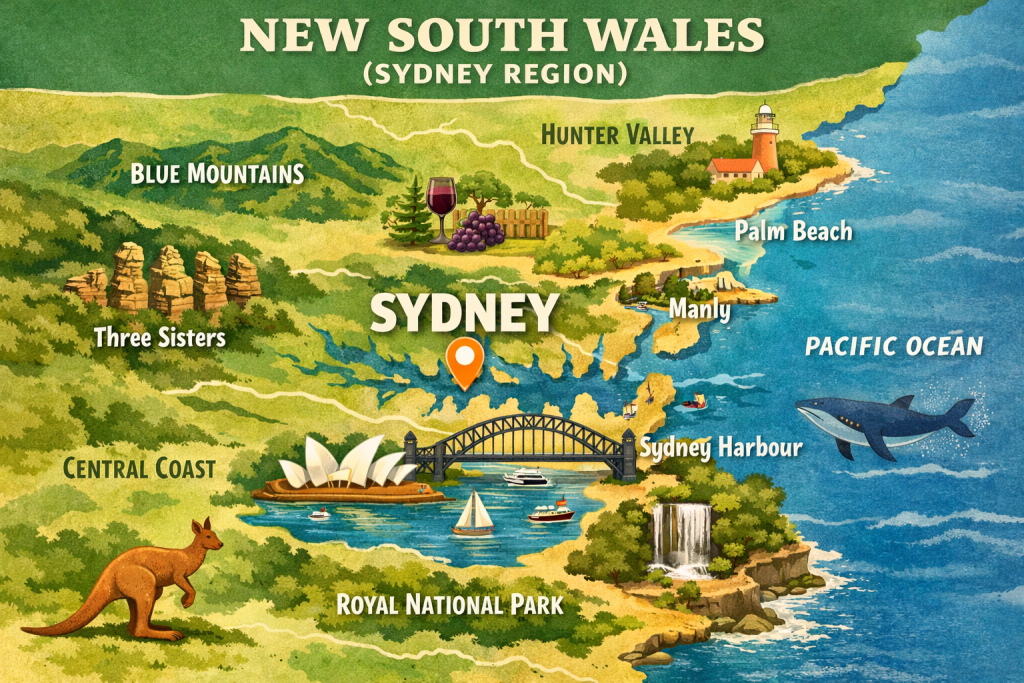
New South Wales (Sydney Region)
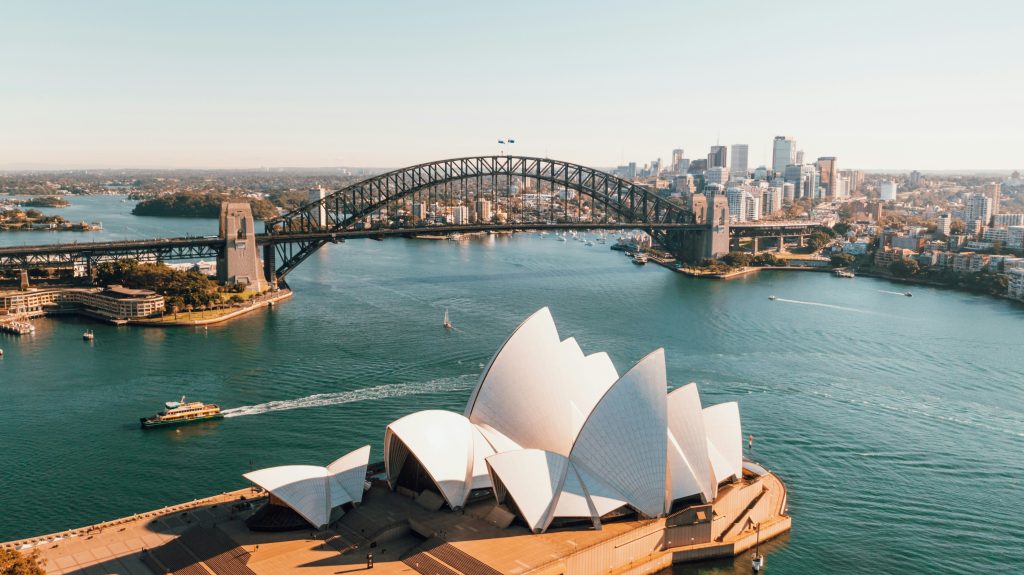
Sydney is Australia’s most globally recognized city. It combines coastal living with urban energy.
Key experiences:
• Sydney Opera House
• Sydney Harbour Bridge
• Bondi to Coogee coastal walk
• Blue Mountains National Park
Sydney is ideal for first-time visitors.
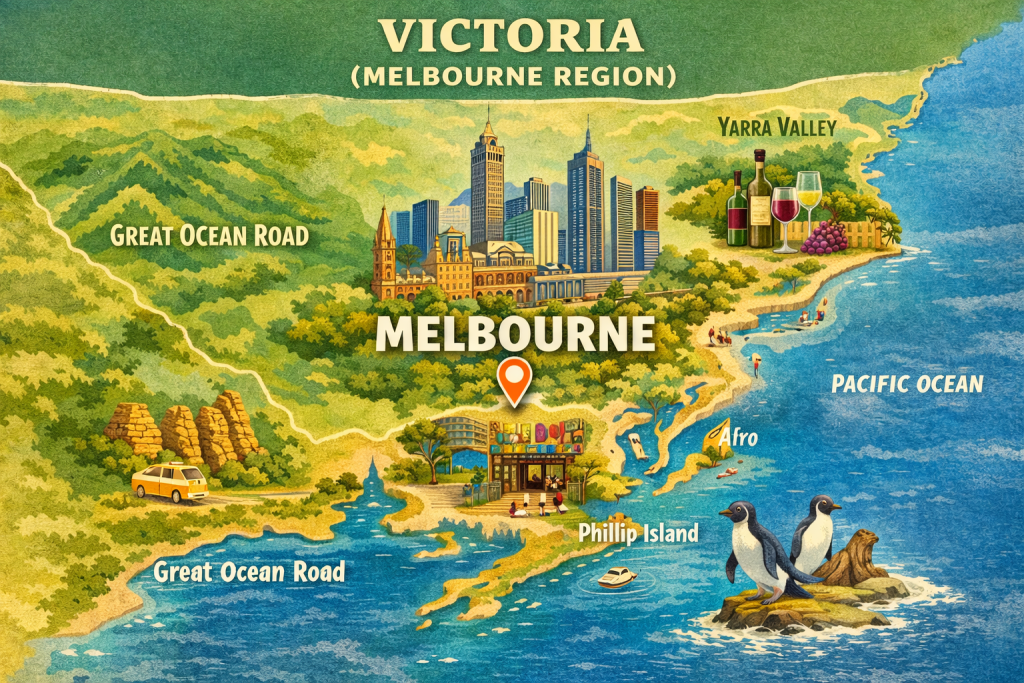
Victoria (Melbourne Region)
Melbourne is known for culture, coffee, and creative atmosphere.
Highlights:
• Great Ocean Road
• Phillip Island
• Yarra Valley
• Street art laneways
Victoria offers scenic coastal drives and cooler weather compared to northern states.
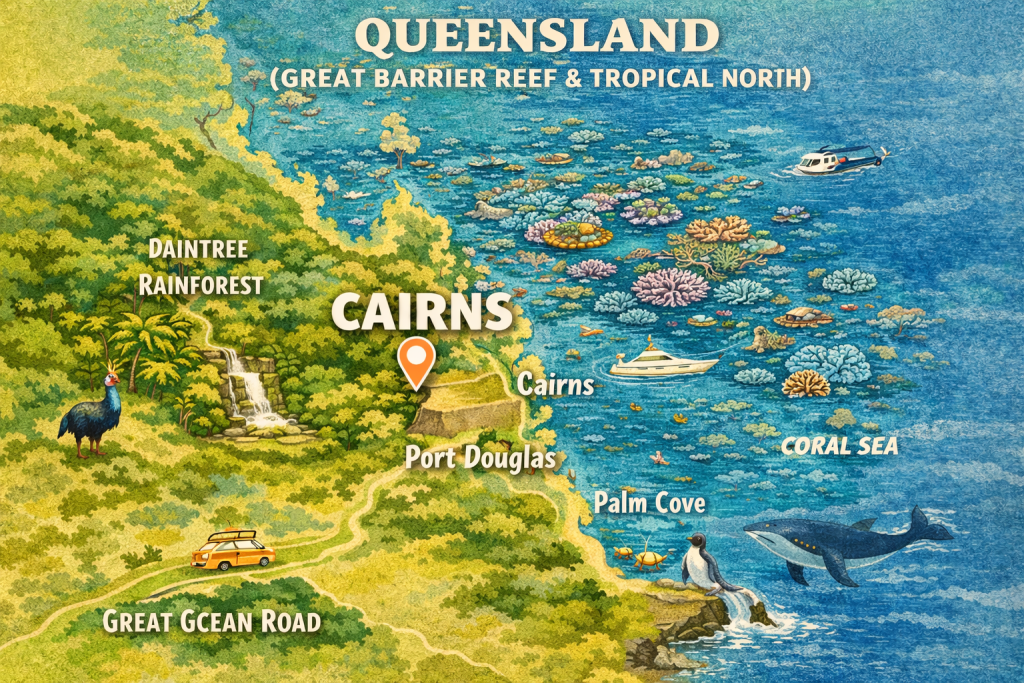
Queensland (Great Barrier Reef & Tropical North)
Queensland is home to the Great Barrier Reef — one of the most visited marine ecosystems in the world.
Best accessed from:
• Cairns
• Port Douglas
Expect tropical conditions, reef tours, and rainforest excursions.
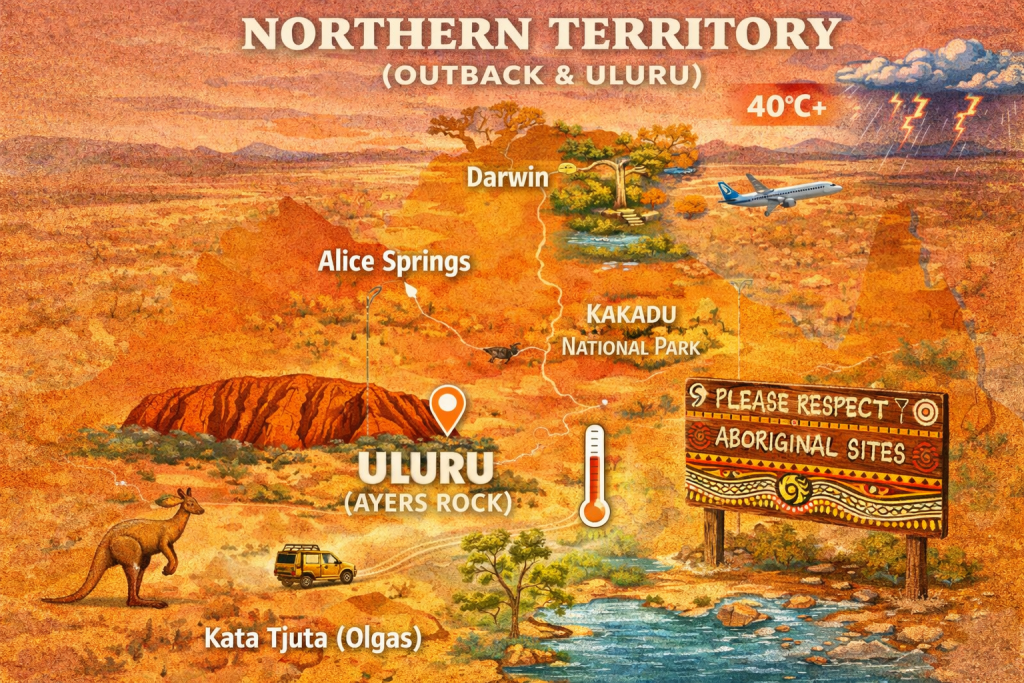
Northern Territory (Outback & Uluru)
The Northern Territory offers dramatic desert landscapes and Indigenous cultural heritage.
Uluru (Ayers Rock) is one of Australia’s most iconic landmarks.
Important:
• Summer temperatures can exceed 40°C
• Distances between towns are significant
• Respect Indigenous sites and restrictions
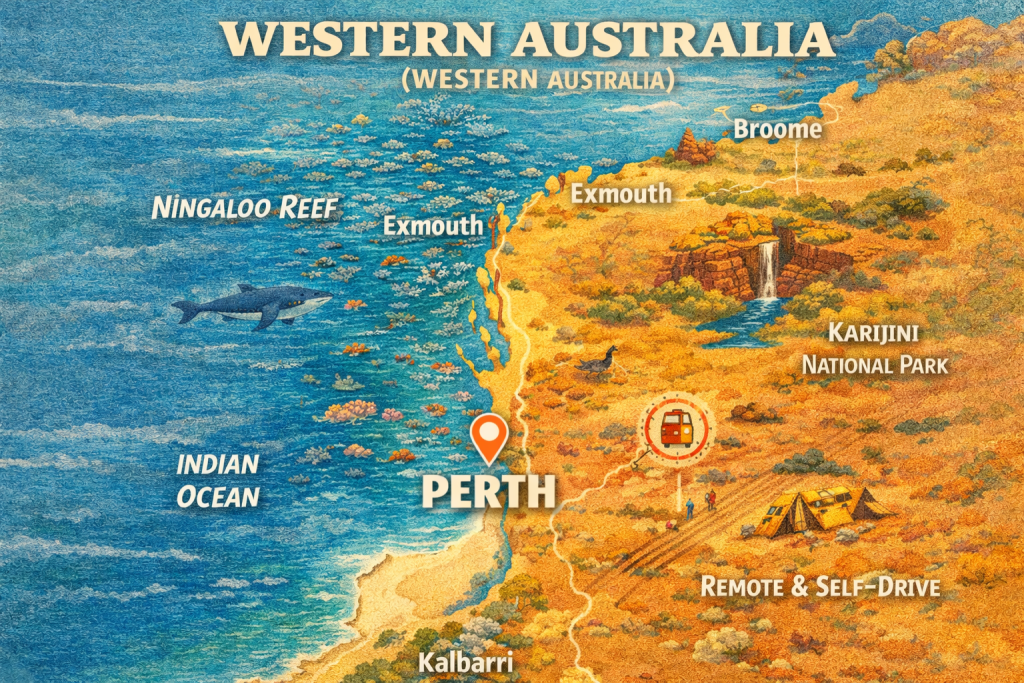
Western Australia
Less populated and more isolated.
Perth offers beaches and sunsets, while regions like Ningaloo Reef and Karijini National Park offer raw natural beauty.
Distances here are extreme. Self-driving is common.
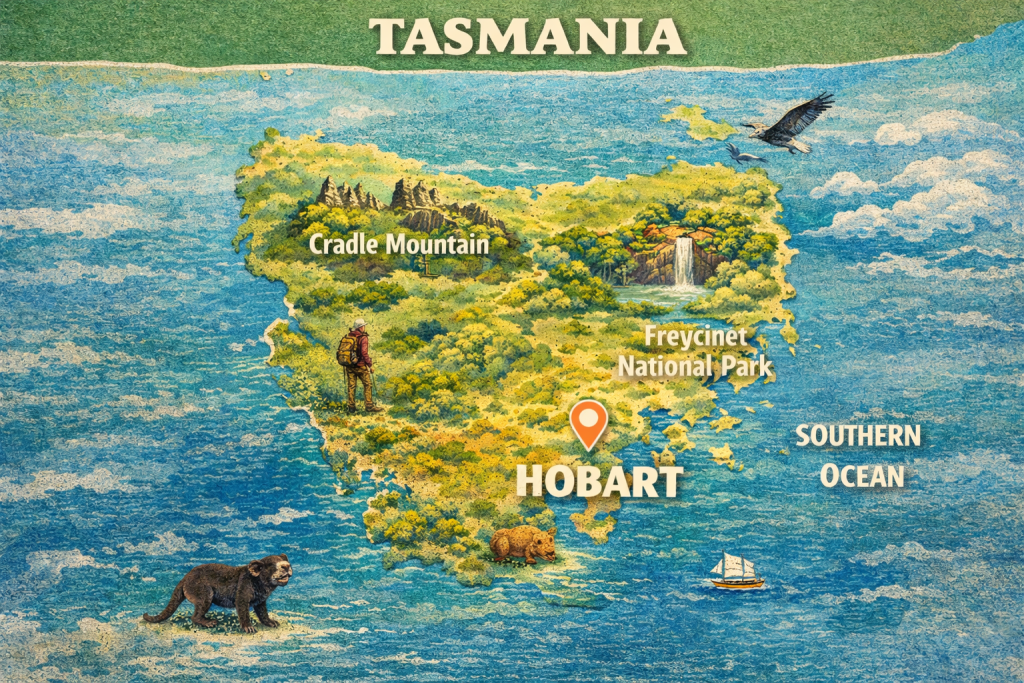
Tasmania
An island state south of the mainland.
Tasmania is known for:
• Wilderness
• Hiking
• Wildlife
• Cooler climate
Perfect for nature-focused travelers.
Travelers interested in vibrant cities and coastal regions will notice a very different travel style compared to Australia.
Best Beaches in Australia
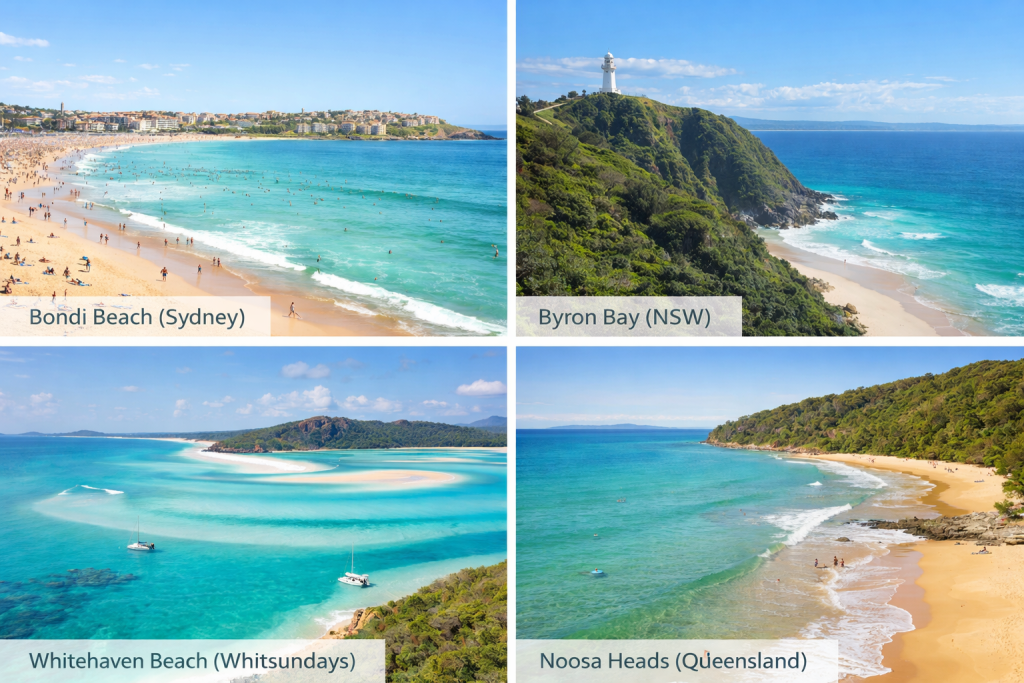
Australia has over 10,000 beaches. Conditions vary widely by region.
East Coast Highlights
• Bondi Beach (Sydney)
• Byron Bay (NSW)
• Whitehaven Beach (Whitsundays)
• Noosa Heads (Queensland)
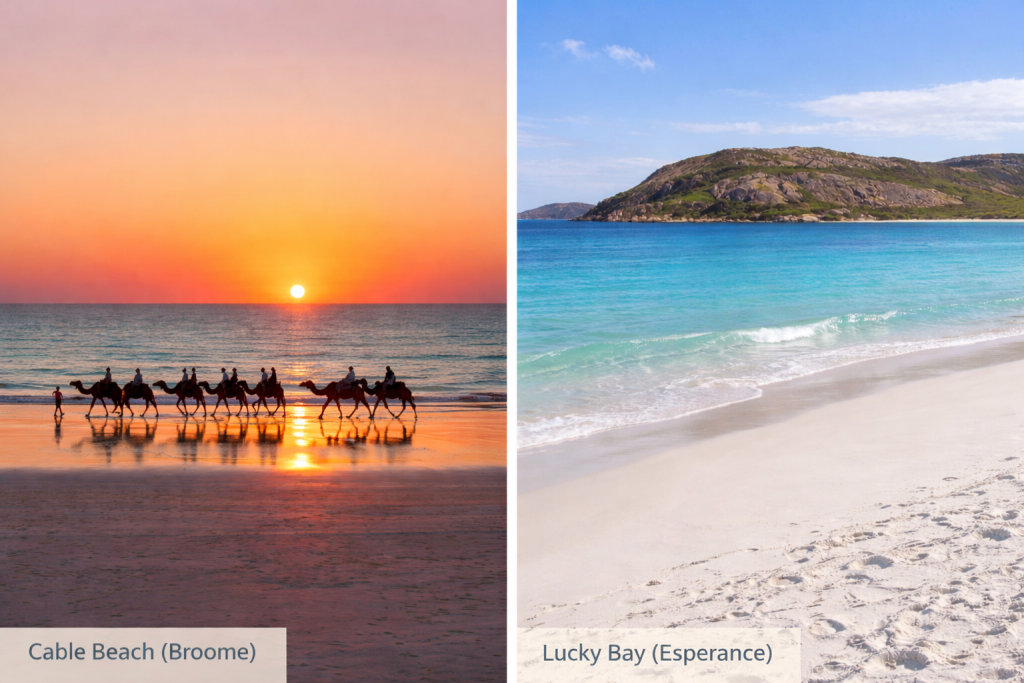
Western Australia Highlights
• Cable Beach (Broome)
• Lucky Bay (Esperance)
Ocean conditions differ — some beaches are strong surf zones, others are calm and family-friendly.
Travelers who love beach destinations will find very different conditions depending on ocean type, climate, and coastline.
The Outback Reality
The Australian Outback is not a quick stop — it is a serious travel environment.
Expect:
• Long stretches without fuel
• Limited phone signal
• Extreme temperatures
• Wildlife crossing roads
Always carry water when driving in remote areas.
Transport in Australia
Due to scale, domestic flights are often necessary.
Major airlines:
• Qantas
• Virgin Australia
• Jetstar
City Transport
Sydney and Melbourne have strong public transport systems.
Car Rental
Recommended for:
• Great Ocean Road
• Tasmania
• National parks
• Coastal drives
Campervan Travel
Very popular for long trips.
Requires campsite planning and understanding local regulations.
Driving is on the left side of the road.
If you enjoy scenic coastal drives, similar experiences can be found in other parts of the world with strong ocean-facing landscapes.
Famous Australian Food
Australian food reflects multicultural influence, fresh ingredients, and strong coastal culture. The country’s cuisine blends British roots with Asian, Mediterranean, and Indigenous influences.
Meat Pie
The classic Australian snack. A handheld savory pie filled with minced beef and gravy. Common at sports events, bakeries, and road stops.
Kangaroo Meat
Lean and high in protein, kangaroo meat is served grilled or as steak. It has a strong, slightly gamey flavor and is widely available in restaurants.
Avocado Toast
While globally popular, Australia helped elevate avocado toast into café culture. It is especially associated with Melbourne’s brunch scene.
Prawns
Seafood is central to Australian cuisine. Fresh prawns are common during summer and especially popular during Christmas celebrations.
Australian Burger
Often includes beetroot, fried egg, lettuce, tomato, and grilled beef patty — a distinct twist compared to American burgers.
Lamington
A traditional sponge cake coated in chocolate and rolled in coconut. A national dessert icon.
Tim Tams
Australia’s most famous chocolate biscuit. Often eaten using the “Tim Tam Slam” method with hot drinks.
Vegemite
A dark yeast spread typically eaten on toast with butter. Strong flavor and deeply associated with Australian identity.

Coffee Culture
Australia is globally known for specialty coffee. The flat white originated here and is now served worldwide. Melbourne is often ranked among the best coffee cities in the world.
If you enjoy food culture, you will notice that Australia’s cuisine focuses more on fresh ingredients and global influence than deep tradition.
Food Identity
Australian cuisine is less about heavy tradition and more about quality ingredients, coastal freshness, and relaxed dining culture.
Dining is casual.
Portions are generous.
Seafood is fresh.
Brunch culture is strong.
Australia Travel Costs
Australia is considered a mid-to-high budget destination.
Estimated daily costs:
Accommodation → AUD 120–250
Meals → AUD 20–40
Coffee → AUD 4–6
Car rental → AUD 60–120
Budget Traveler
AUD 90–150 per day
Mid-Range Traveler
AUD 150–300 per day
Luxury Travel
AUD 350+ per day
Flights between regions increase total cost significantly.
Domestic flights and accommodation prices can increase significantly during peak travel periods, so early booking is strongly recommended.
Best Time to Visit Australia
Australia’s seasons are opposite Europe.
Summer (Dec–Feb): Hot, peak season
Autumn (Mar–May): Pleasant and balanced
Winter (Jun–Aug): Cooler south, ideal tropical north
Spring (Sep–Nov): Excellent overall weather
Travelers used to seasonal destinations will notice that Australia’s climate varies significantly depending on the region.
Seasonal Warnings
• Cyclone season (north) Nov–April
• Bushfire risk in some regions during summer
• Very high UV levels year-round
• Wet season affects reef visibility
2-Week Australia Itinerary Example
Days 1–4: Sydney
Days 5–7: Melbourne + Great Ocean Road
Days 8–10: Cairns + Reef
Days 11–14: Uluru or Tasmania
3-Week East Coast Itinerary
Sydney → Byron Bay → Gold Coast → Brisbane → Whitsundays → Cairns
Balanced for beaches + reef + cities.
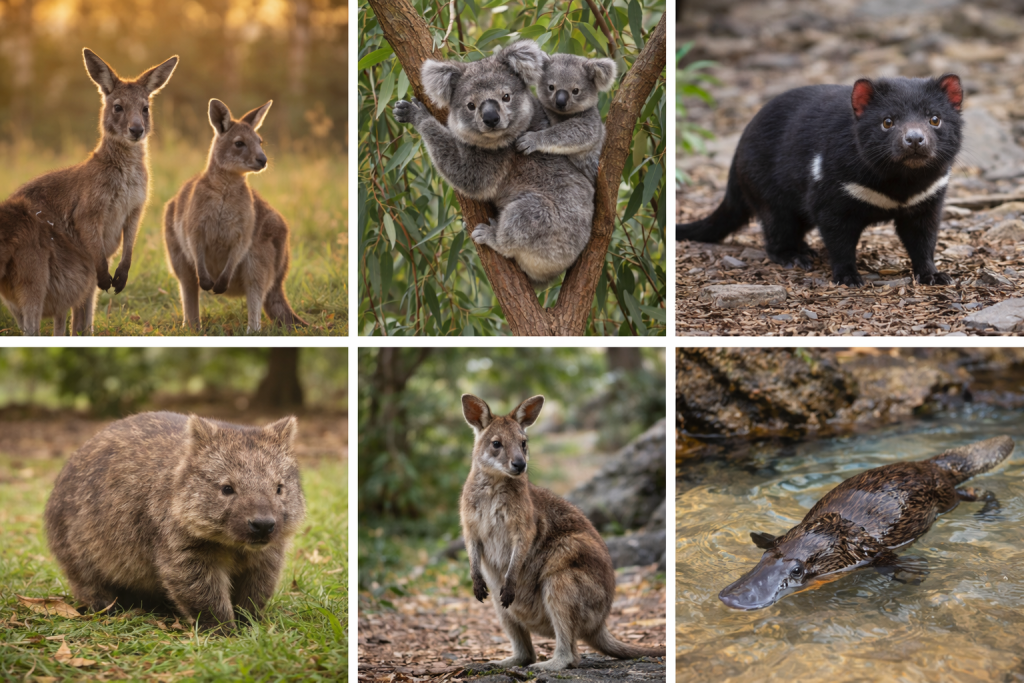
Famous Australian Animals
Australia is world-famous for its unique wildlife, with many species found nowhere else on Earth. The country’s long geographic isolation allowed animals to evolve in distinctive ways.
Kangaroos
Kangaroos are the national symbol of Australia. They live across grasslands, deserts, and bush areas, and are most active at dawn and dusk.
Koalas
Koalas are tree-dwelling marsupials found mainly along Australia’s east coast. They spend most of their time in eucalyptus trees and sleep up to 20 hours per day.
Wombats
Wombats are strong, burrowing marsupials native to southern Australia and Tasmania. They are known for their powerful build and underground tunnel systems.
Wallabies
Wallabies are smaller relatives of kangaroos and are common in forests and coastal regions.
Tasmanian Devil
Found only in Tasmania, the Tasmanian devil is known for its loud screeching sounds and powerful jaw.
Platypus
One of the rarest mammals in the world, the platypus lays eggs and has a duck-like bill. It is found in freshwater rivers in eastern Australia.
Safety & Wildlife Awareness
Australia is very safe overall, but nature requires awareness.
• Jellyfish in tropical waters (seasonal)
• Crocodiles in northern regions
• Snakes in remote areas
• Strong surf conditions at some beaches
Follow local advice and signage.
Digital Nomads & Long Stays
Sydney and Melbourne offer strong infrastructure for remote work, but cost of living is high.
Visa conditions vary depending on nationality.
Common Travel Mistakes
• Trying to see too much
• Underestimating distances
• Ignoring regional climate differences
• Booking domestic flights too late
Australia rewards slow travel.
How Long Do You Need?
7–10 days → One region
14 days → Two regions
3–4 weeks → Multi-region travel
Other Travel Guides You May Like
If you are planning more international travel, explore our other detailed guides:
• Spain Travel Guide
• France Travel Guide
• Italy Travel Guide
• Portugal Travel Guide
• Greece Travel Guide
• New Zealand Travel Guide
• Zanzibar Travel Guide
Each guide includes destinations, itineraries, travel costs, and practical planning tips.
Final Thoughts
Australia feels vast.
The coastline seems endless.
The desert silence feels absolute.
The sky appears larger than expected.
This is a destination that rewards planning, patience, and respect for distance.
Approach it region by region, not all at once — and Australia becomes unforgettable.