Some places look impressive in photos.
Others somehow look even more incredible in real life.
Pamukkale belongs to the second group.
Before visiting, I expected beautiful white terraces and a few ancient ruins. After all, that is what most people associate with Pamukkale.
What I did not expect was how unique the entire experience feels.
One moment you are walking barefoot across brilliant white mineral terraces filled with warm water. The next, you are exploring a 2,000-year-old Roman city, swimming among ancient columns, or watching the sunset over one of Turkey’s most unusual landscapes.
Pamukkale is one of those rare destinations that genuinely feels different from anywhere else.
While many travelers visit Turkey for Istanbul or Cappadocia, Pamukkale offers something completely unique.
Located in southwestern Turkey, Pamukkale is famous for its dazzling white travertine terraces, thermal waters, ancient ruins, and surreal scenery that attracts visitors from around the world.
Whether you are planning a road trip through Turkey, a day trip, or a longer adventure, Pamukkale deserves a place on your itinerary.
And once you see it in person, you’ll quickly understand why it has become one of Turkey’s most famous natural wonders.
Quick Overview
Country: Turkey
Continent: Asia (with a small part of Turkey in Europe)
Region: Denizli Province
Best For: Nature lovers, photographers, history enthusiasts, couples, families
Ideal Trip Length: 1–2 days
Currency: Turkish Lira (TRY)
Language: Turkish
Best Time to Visit: April–June and September–October
Nearest Airport: Denizli Çardak Airport (DNZ)
UNESCO Status: Yes
Is Pamukkale Worth Visiting?
Absolutely.
Many people initially think Pamukkale is simply a collection of white pools.
The reality is much more impressive.
Visitors can:
- Walk across natural travertine terraces
- Explore the ancient city of Hierapolis
- Swim in thermal pools
- Visit one of Turkey’s largest necropolises
- Watch incredible sunsets
- Enjoy panoramic countryside views
- Experience a UNESCO World Heritage Site
What makes Pamukkale special is that it combines nature and history in one location.
Few places in the world offer both.
Why Is Pamukkale Famous?
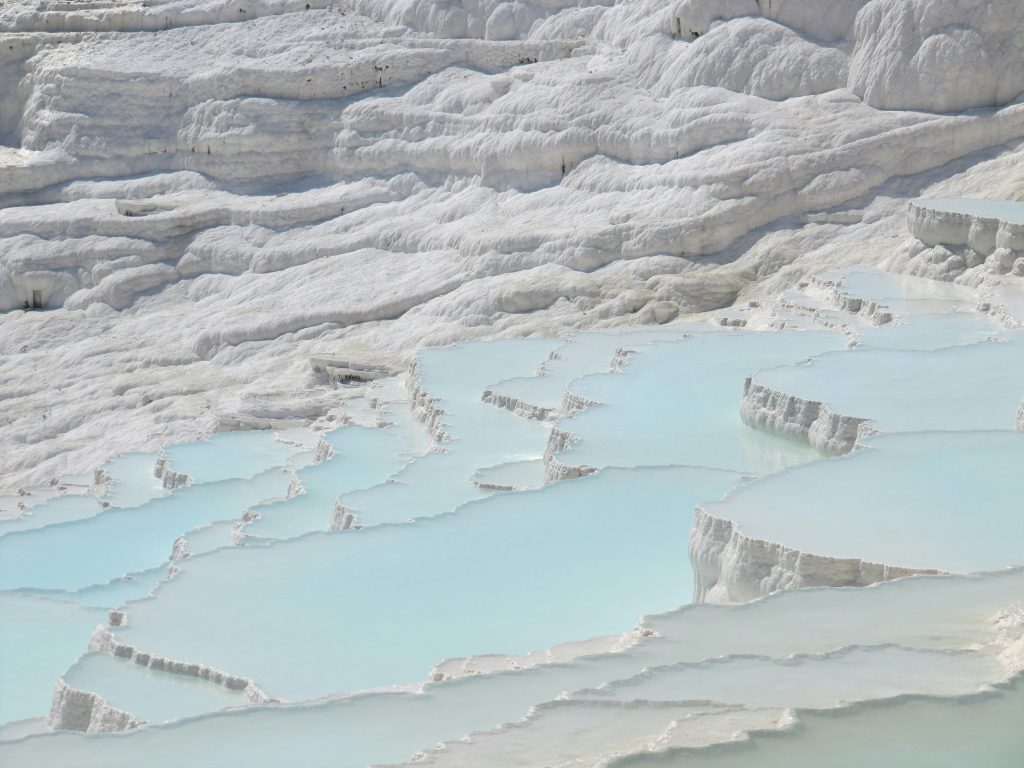
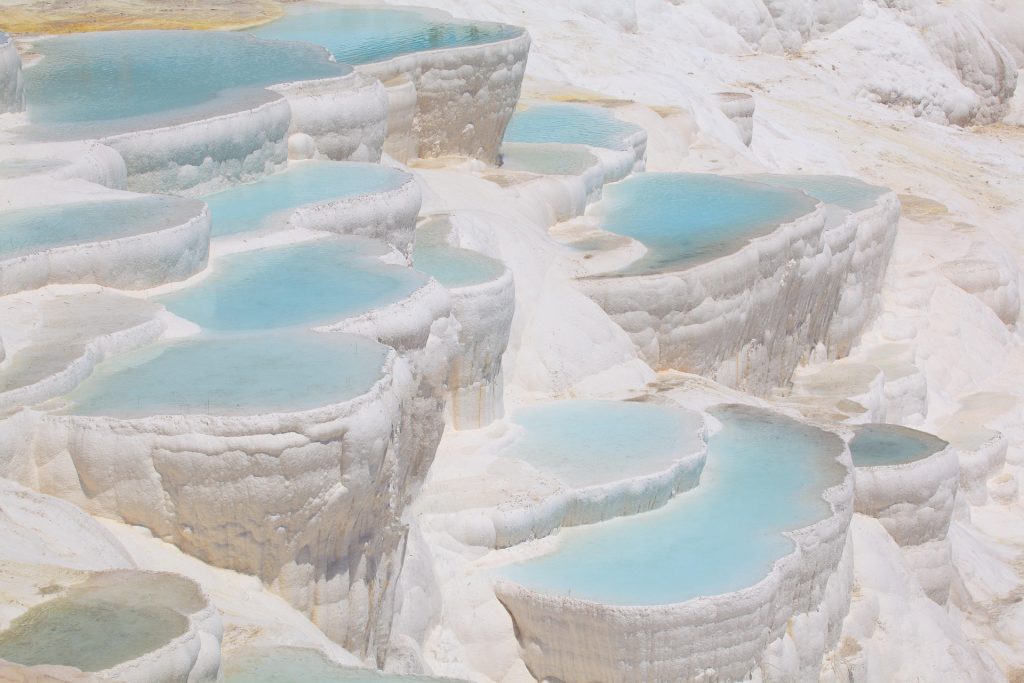
Pamukkale is famous for its brilliant white travertine terraces formed by mineral-rich thermal waters flowing down the hillside over thousands of years.
Combined with the ancient city of Hierapolis, thermal pools, and UNESCO World Heritage status, Pamukkale has become one of Turkey’s most iconic attractions and one of the most unique natural wonders in the world.
Many visitors arrive for the terraces but leave impressed by the history, scenery, and overall experience.
What Does Pamukkale Mean?
The name Pamukkale translates to:
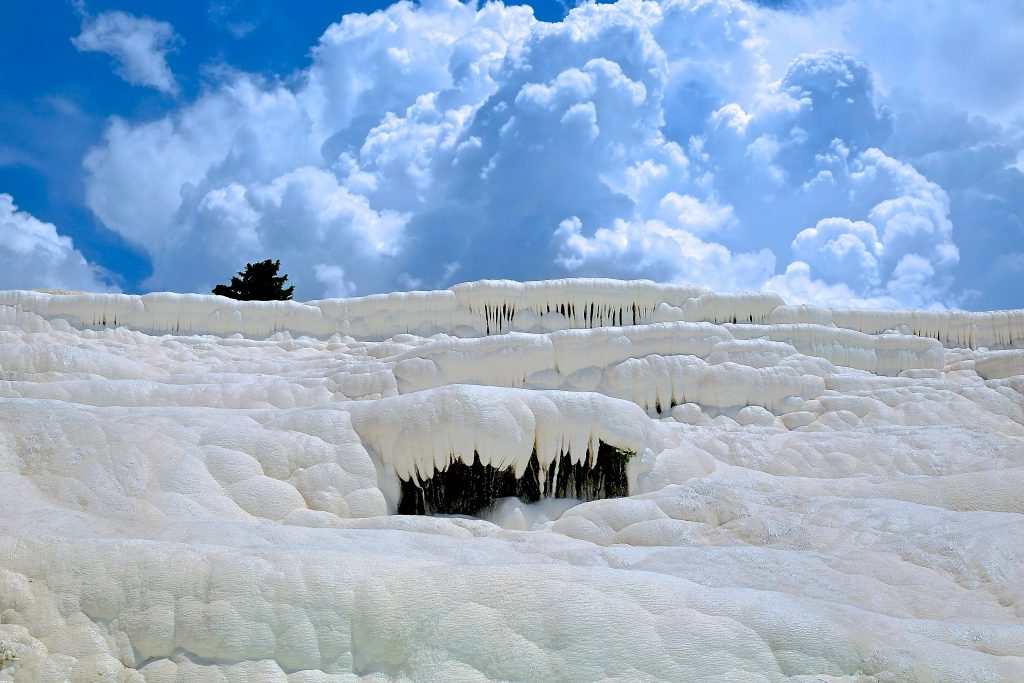
“Cotton Castle”
When viewed from a distance, the bright white terraces resemble giant layers of cotton spread across the hillside.
This nickname perfectly describes the landscape.
Why Pamukkale Feels Different From Other Destinations
Most natural attractions offer a beautiful view.
Pamukkale allows you to actually walk through the landscape.
The white terraces were formed over thousands of years as mineral-rich thermal waters flowed down the mountainside.
As the water cooled, calcium deposits accumulated and gradually created the famous white formations visible today.
The result feels almost otherworldly.
Many visitors compare the scenery to snow, ice, clouds, or even another planet.
Where Is Pamukkale Located?
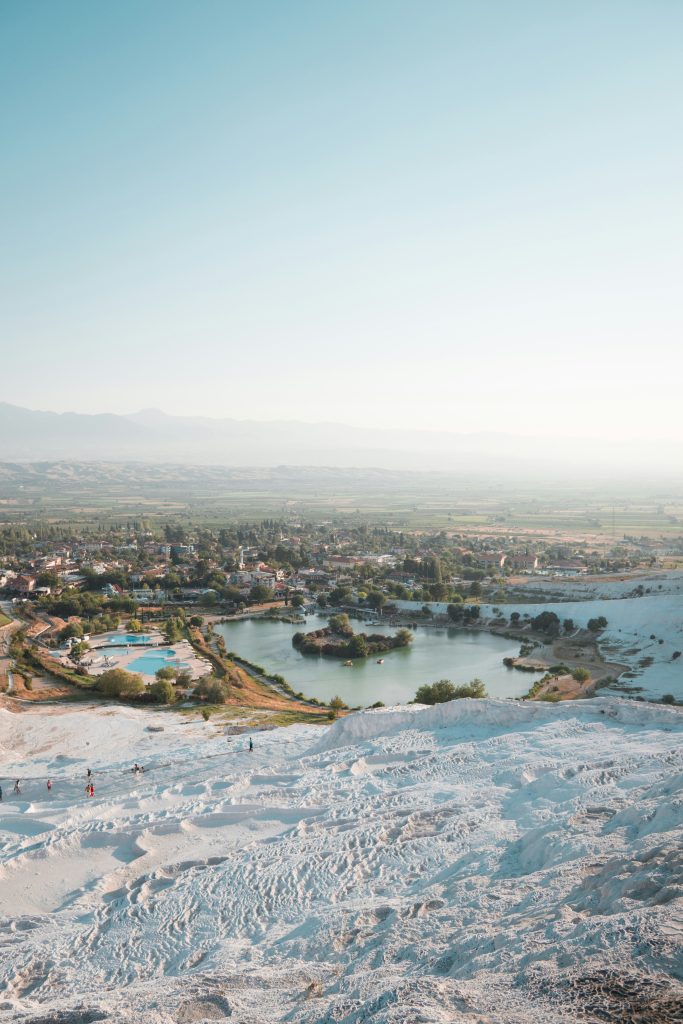
Pamukkale is located in southwestern Turkey near the city of Denizli.
It sits approximately:
- 3 hours from Antalya
- 3 hours from Izmir
- 7 hours from Istanbul
- 8 hours from Cappadocia
Many travelers include Pamukkale as part of a larger Turkey itinerary.
Best Time to Visit Pamukkale
Spring (April to June)
Many travelers consider spring the perfect season.
Pros
- Pleasant temperatures
- Green landscapes
- Fewer crowds than summer
Cons
- Occasional rain
Summer (July to August)
The busiest season.
Pros
- Long sunny days
- Great photography conditions
Cons
- Extremely hot surfaces
- Large crowds
The white terraces can become surprisingly hot under the summer sun.
Autumn (September to October)
Another excellent time to visit.
Pros
- Comfortable weather
- Smaller crowds
- Beautiful sunsets
Cons
- Slightly shorter days
Winter (November to March)
The least crowded season.
Pros
- Peaceful atmosphere
- Lower prices
Cons
- Cooler temperatures
- Some cloudy days
How Many Days Do You Need in Pamukkale?
Half Day
Enough to see the main terraces.
1 Full Day
Ideal for most visitors.
Allows time for:
- Travertines
- Hierapolis
- Cleopatra Pool
- Sunset
2 Days
Perfect for slower exploration and photography.
For most travelers, one full day is enough.
First-Time Visitor Mistakes to Avoid
Many visitors make the same mistakes.
- Arriving during midday heat
- Skipping Hierapolis
- Forgetting sunscreen
- Wearing shoes that are difficult to remove
- Not bringing water
- Rushing through the site
- Visiting only the terraces
Pamukkale offers much more than most people realize.
Top Things to Do in Pamukkale
1. Walk Across the Famous White Travertines
This is the main attraction.
The terraces contain shallow pools filled with mineral-rich thermal water.
Visitors must walk barefoot to protect the formations.
The experience feels unlike anything else in Turkey.
2. Explore Hierapolis
Many travelers are surprised to learn that an entire ancient city sits above Pamukkale.
Hierapolis was founded during the 2nd century BC and became a major Roman spa city.
Today visitors can explore:
- Ancient streets
- Temples
- Baths
- Gates
- Columns
- Historic ruins
For many travelers, Hierapolis is just as impressive as the terraces themselves.
3. Swim in Cleopatra Pool
One of the most unique swimming experiences in Turkey.
The thermal pool contains submerged Roman columns believed to have collapsed during ancient earthquakes.
Swimming among ancient ruins is something few destinations can offer.
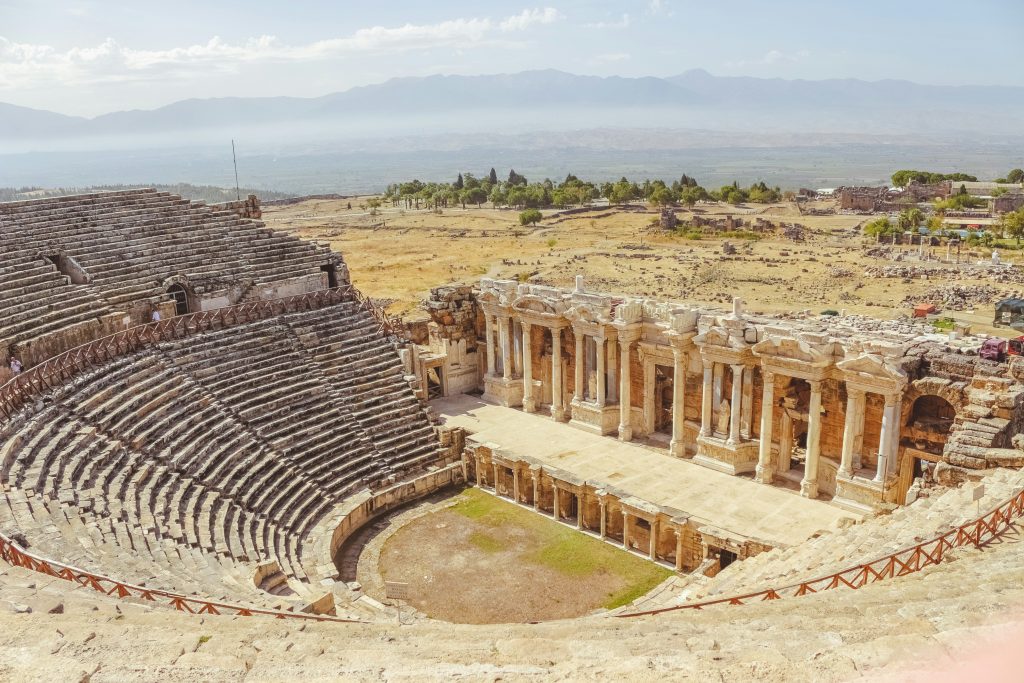
4. Visit the Ancient Theatre
The Roman Theatre is one of the best-preserved structures in Hierapolis.
Highlights include:
- Panoramic views
- Detailed stone carvings
- Incredible photography opportunities
It once accommodated thousands of spectators.
5. Explore the Necropolis
Hierapolis contains one of the largest ancient cemeteries in Turkey.
The site includes hundreds of tombs and sarcophagi dating back centuries.
History lovers should not skip this area.
Hidden Gems in Pamukkale
While most visitors focus on the famous white terraces, there are several lesser-known places worth exploring.
Hierapolis Archaeology Museum
Located inside a restored Roman bath complex, this museum contains fascinating artifacts discovered throughout the region.
Many visitors walk past it without realizing how impressive the collection is.
Northern Travertines
Most tourists gather around the main pools.
However, the northern section often feels much quieter and offers excellent photography opportunities.
Sunset Viewpoints
Many travelers leave before sunset.
This is a mistake.
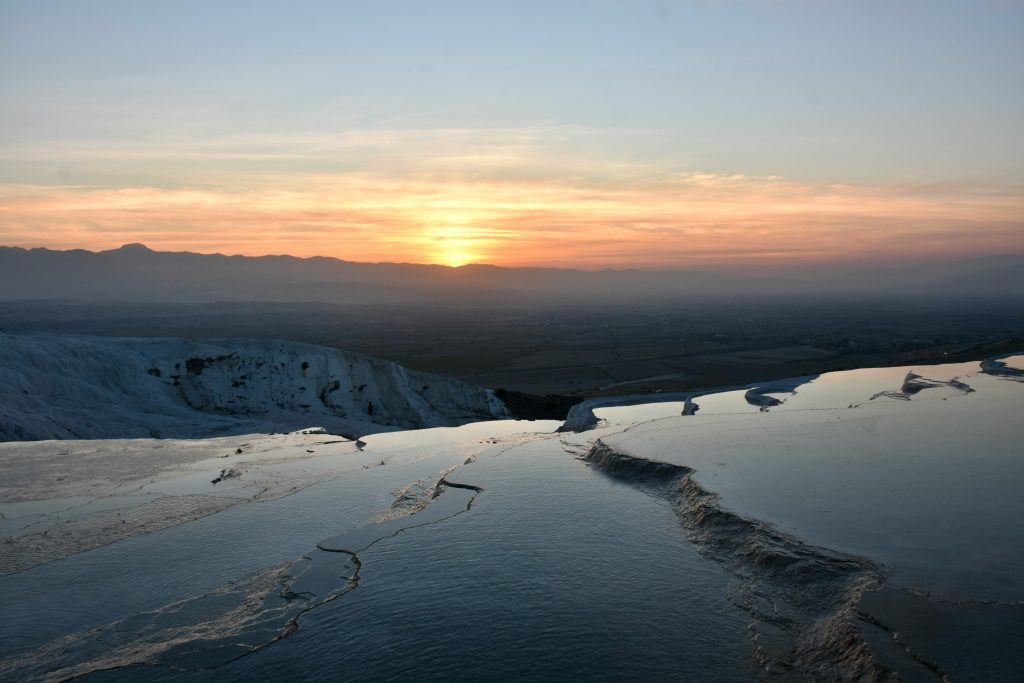
As the sun begins to set, the white terraces often reflect shades of gold, orange, and pink, creating some of the most beautiful views in Pamukkale.
Karahayıt Red Springs
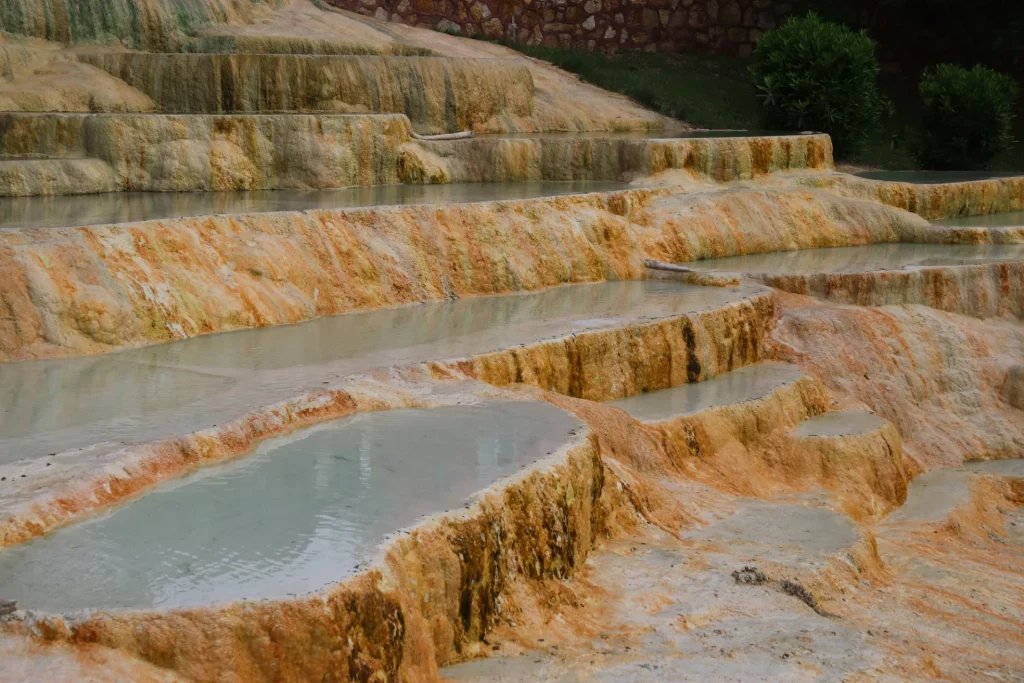
Located just a few kilometers from Pamukkale.
Unlike the famous white terraces, these thermal springs feature striking red, orange, and brown mineral deposits.
Many visitors never hear about them.
Where to Stay in Pamukkale
Most travelers stay either in Pamukkale Village or Denizli.
Pamukkale Village
Best for:
- First-time visitors
- Walking distance to attractions
- Sunrise and sunset visits
- Photography
Most visitors choose this area.
Denizli
Best for:
- Business travelers
- Larger hotels
- More restaurants
- Lower accommodation prices
Located around 20 minutes away by car.
Pamukkale Travel Costs
Pamukkale is surprisingly affordable compared to many major tourist destinations.
Budget Travelers
- Hostel or guesthouse: €20–€50
- Meals: €5–€15
- Daily budget: €40–€80
Mid-Range Travelers
- Hotels: €60–€150
- Meals: €15–€40
- Daily budget: €100–€200
Luxury Travelers
- Luxury hotels and thermal resorts
- Private tours
- Premium dining experiences
Daily budgets can exceed €300.
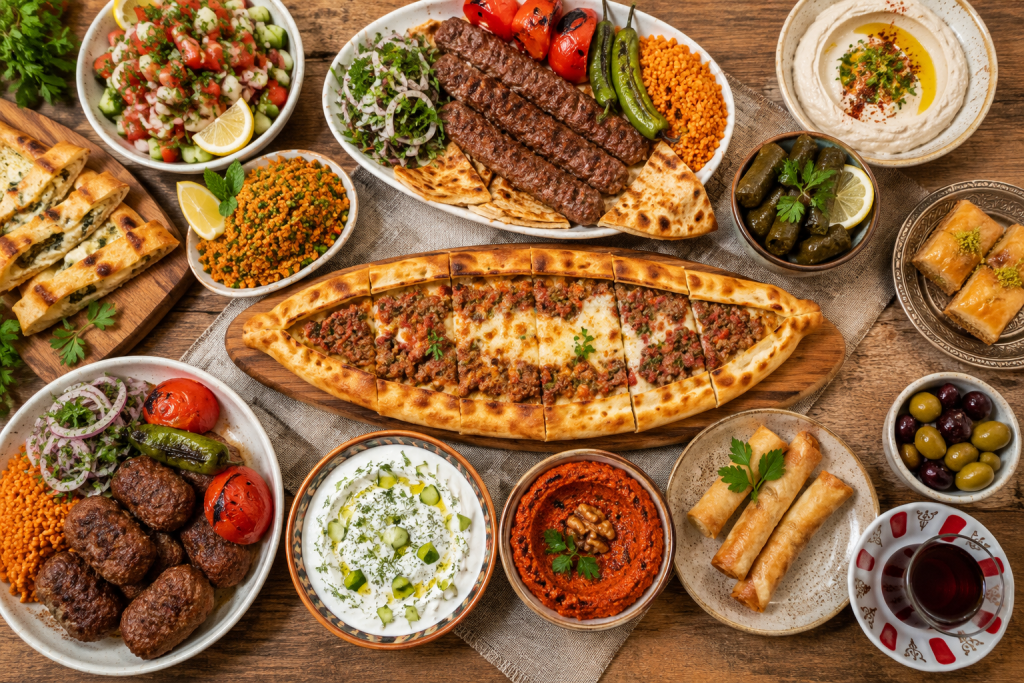
What Food Should You Try?
Turkish cuisine is one of the highlights of any visit.
Popular dishes include:
- Kebabs
- Pide
- Gözleme
- Köfte
- Menemen
- Baklava
- Turkish Delight
Do not leave without trying traditional Turkish tea and Turkish coffee.
Many travelers arrive for the scenery but end up remembering the food as well.
What Tourists Are Usually Surprised By
Pamukkale often surprises visitors in several ways.
The most common surprises include:
- The terraces are larger than expected
- Hierapolis is much bigger than most people imagine
- Walking barefoot is required
- The thermal water is warm, not hot
- The ancient ruins are just as impressive as the terraces
- One day is usually enough to see everything
Many travelers arrive expecting a quick photo stop and leave impressed by how much there is to explore.
How to Visit Pamukkale Without Crowds
One of the biggest mistakes visitors make is arriving in the middle of the day.
For the best experience:
- Arrive early in the morning
- Visit near sunset
- Avoid weekends if possible
- Visit during spring or autumn
Early mornings often provide the most peaceful atmosphere and the best photography conditions.
Is Pamukkale Better at Sunrise or Sunset?
Both offer beautiful views, but the experience is slightly different.
Sunrise usually brings fewer visitors, softer light, and cooler temperatures, making it ideal for photography and peaceful exploration.
Sunset often creates dramatic colors across the white terraces as the sunlight reflects shades of gold, orange, and pink.
If possible, many travelers recommend experiencing both.
Can You Swim in Pamukkale?
Yes, but not everywhere.
Swimming is only allowed in specific designated areas.
The most famous option is:
Cleopatra Pool
This thermal pool allows visitors to swim among ancient Roman columns while enjoying naturally warm mineral-rich water.
It remains one of the most unique experiences in Turkey.
Pamukkale vs Cappadocia
Many travelers planning a Turkey itinerary wonder which destination is better.
The truth is that they offer completely different experiences.
Pamukkale
Best for:
- Natural wonders
- Thermal pools
- Ancient history
- Day trips
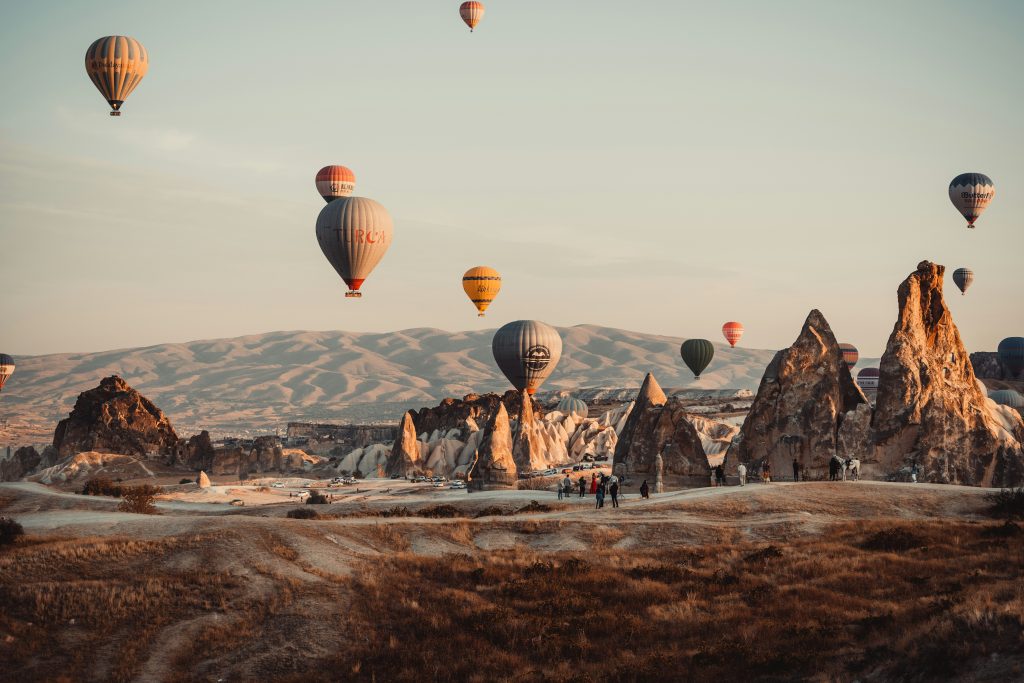
Cappadocia
Best for:
- Hot air balloons
- Unique rock formations
- Cave hotels
- Multi-day adventures
If possible, visit both.
They complement each other perfectly.
Best Day Trips From Pamukkale
If you have extra time, consider visiting:
Aphrodisias
One of Turkey’s most underrated ancient cities.
Many history enthusiasts consider it one of the country’s hidden treasures.
Lake Salda
Often called the “Turkish Maldives” because of its bright blue water and white shoreline.
Denizli City
Perfect for local food, shopping, and experiencing everyday Turkish life.
Useful Travel Tips
- Bring sunglasses because the white terraces reflect sunlight intensely.
- Wear comfortable clothing.
- Carry water, especially during summer.
- Visit early or late in the day.
- Bring a camera with extra battery life.
- Allow enough time for Hierapolis.
Small preparations can significantly improve your visit.
Frequently Asked Questions
Is Pamukkale worth visiting?
Absolutely. It is one of Turkey’s most unique natural and historical attractions.
How many days do you need?
One full day is enough for most travelers.
Can you swim in the white pools?
Swimming is restricted in many areas, but you can enjoy the thermal water and swim in Cleopatra Pool.
Is Pamukkale expensive?
No. Compared to many major tourist destinations, Pamukkale remains relatively affordable.
What is the best month to visit?
May, June, September, and October usually offer the best balance of weather and crowds.
Things I Wish I Knew Before Visiting Pamukkale
If I could give first-time visitors only a few pieces of advice, they would be:
- Arrive early.
- Spend more time in Hierapolis.
- Stay for sunset.
- Bring plenty of water.
- Explore beyond the main terraces.
- Do not rush your visit.
The best moments often happen away from the busiest areas.
What Surprised Me Most About Pamukkale
What surprised me most was how much history surrounds the famous terraces.
Before visiting, I expected a natural wonder.
What I found was an entire ancient city, thermal pools, Roman ruins, and landscapes that felt completely different from anywhere else I had visited.
The terraces were spectacular, but they were only part of the experience.
Pamukkale felt like several destinations combined into one.
Explore More Amazing Places in Turkey
If Pamukkale has inspired your next adventure, you may also enjoy exploring:
Cappadocia
Famous for hot air balloons, cave hotels, and unique rock formations.
Istanbul
A fascinating city where Europe meets Asia, filled with history, culture, and incredible food.
Final Thoughts
Pamukkale is one of those rare places that genuinely lives up to the hype.
The white terraces are unforgettable.
The ancient ruins are fascinating.
The thermal waters are unlike anything else in Turkey.
Whether you come for the scenery, history, photography, or simply curiosity, Pamukkale offers an experience that feels completely unique.
And long after you leave, it is often the image of those brilliant white terraces glowing in the sunlight that stays with you the most.